
I have not seen Whalefall, and its sales pitch has convinced me to preserve that achievement. A man spends an hour inside a whale processing his relationship with his dead father. Apparently, digestion now comes with character development. Give me Sharknado: at least its nonsense doesn’t expect to be mistaken for emotional depth.
Category: Rant
The Autobahn Hero Meets a Swiss Speed Camera

There is a particular kind of German motorist who finds Switzerland terribly amusing. Our motorways are too slow, our speed limits too restrictive, and our approach to driving evidently designed for people who consider arriving somewhere a rather vulgar ambition.…
Since When Is a Decade a Musical Genre?
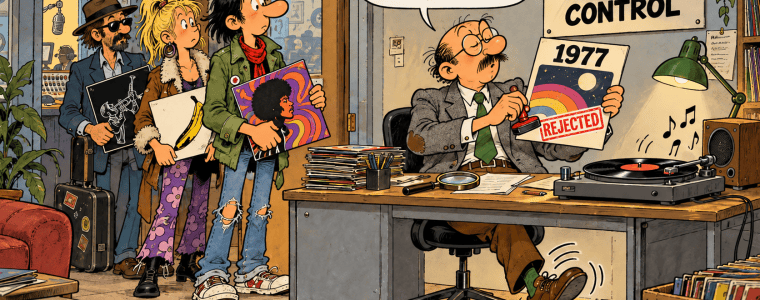
I grew up with the eighties and nineties, but apparently failed to notice that my musical taste was supposed to stop there. Radio has decades of extraordinary music at its disposal, from soul and funk to pop and rock. Yet choosing the next record often seems to involve checking its birth certificate before anybody bothers to listen.
Dear Packers, I’m Running Out of Next Years

The Packers have spent the money, traded the picks and extended the people in charge. I had assumed protecting the quarterback might also feature in the plan. As injuries expose the cracks, Titletown’s championship ambitions are testing even my capacity for denial. Naturally, I still believe we’re going to the Super Bowl next season.
The Melody Is Borrowed. The Chatter Is All Yours.
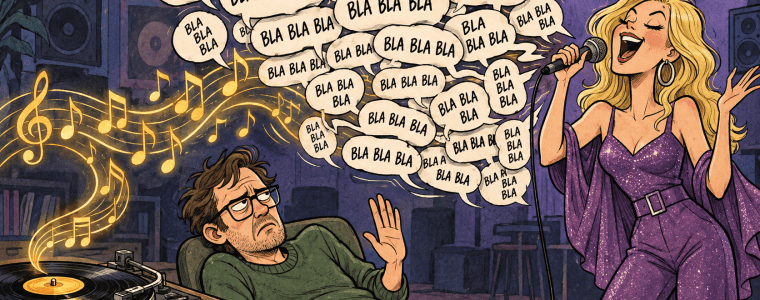
Pop has discovered a shortcut: borrow a tune people already love, then talk over it until nothing is left to enjoy. Bebe Rexha's “New Religion” does it to Faithless's “Insomnia”, one of the greatest club records ever made. Somebody else wrote the melody. The chatter is all hers.
All That Intelligence, and Still the Wrong Rectangle

Smartphone cameras can reconstruct faces, combine exposures and insert the photographer into the picture. Yet my Pixel cannot let me choose the familiar 3:2 format when shooting. While reviewers inspect brickwork for evidence of photographic genius, I spend my evenings cropping every single image. Apparently, artificial intelligence still requires considerable manual labour.
Zürich Has Started Shouting at Drivers in Yellow Paint

Zürich’s streets increasingly resemble a planning department’s art-school phase: green bands, giant bicycles, cheerful colours and enough visual guidance to leave ordinary road users more confused than informed. When every marking wants attention, clarity is inevitably the first casualty.
Travel Broadens the Mind. Getting Home Tests It.

A magnificent wedding in Albania was followed by a journey home seemingly designed to test patience, infrastructure, border control, traffic planning and basic faith in humanity. From Tirana queue warfare to Zürich bureaucracy, cancelled Ubers and supermarket inspections, the day became an escalating comedy of inconvenience, until someone else’s travel disaster made mine look almost civilised.
At FIFA, Criticism Has Become a Coup
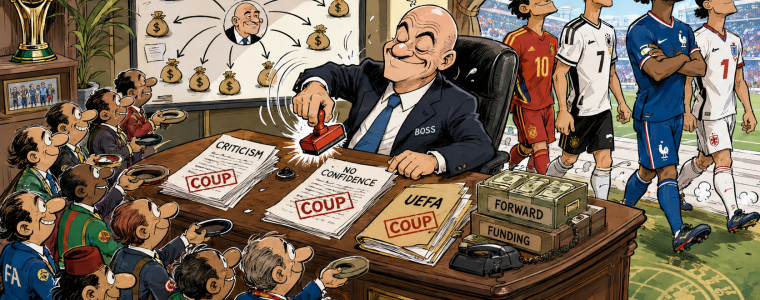
FIFA now treats criticism of Gianni Infantino as an attack on FIFA itself. Behind the rhetoric lies a political machine built on money, loyalty and 211 votes. The intriguing question is whether UEFA, having finally discovered that it can hurt FIFA where it matters, is prepared to use that power again.
Phishing Has Discovered Swiss German, and It Is Glorious

Phishing has discovered Swiss German, with predictably glorious results. Armed with AI, scammers are now localising their emails into synthetic dialect, apparently unaware that Swiss German is spoken everywhere but written very selectively. The result is less sophisticated social engineering than a cultural misunderstanding with a malicious link attached.

