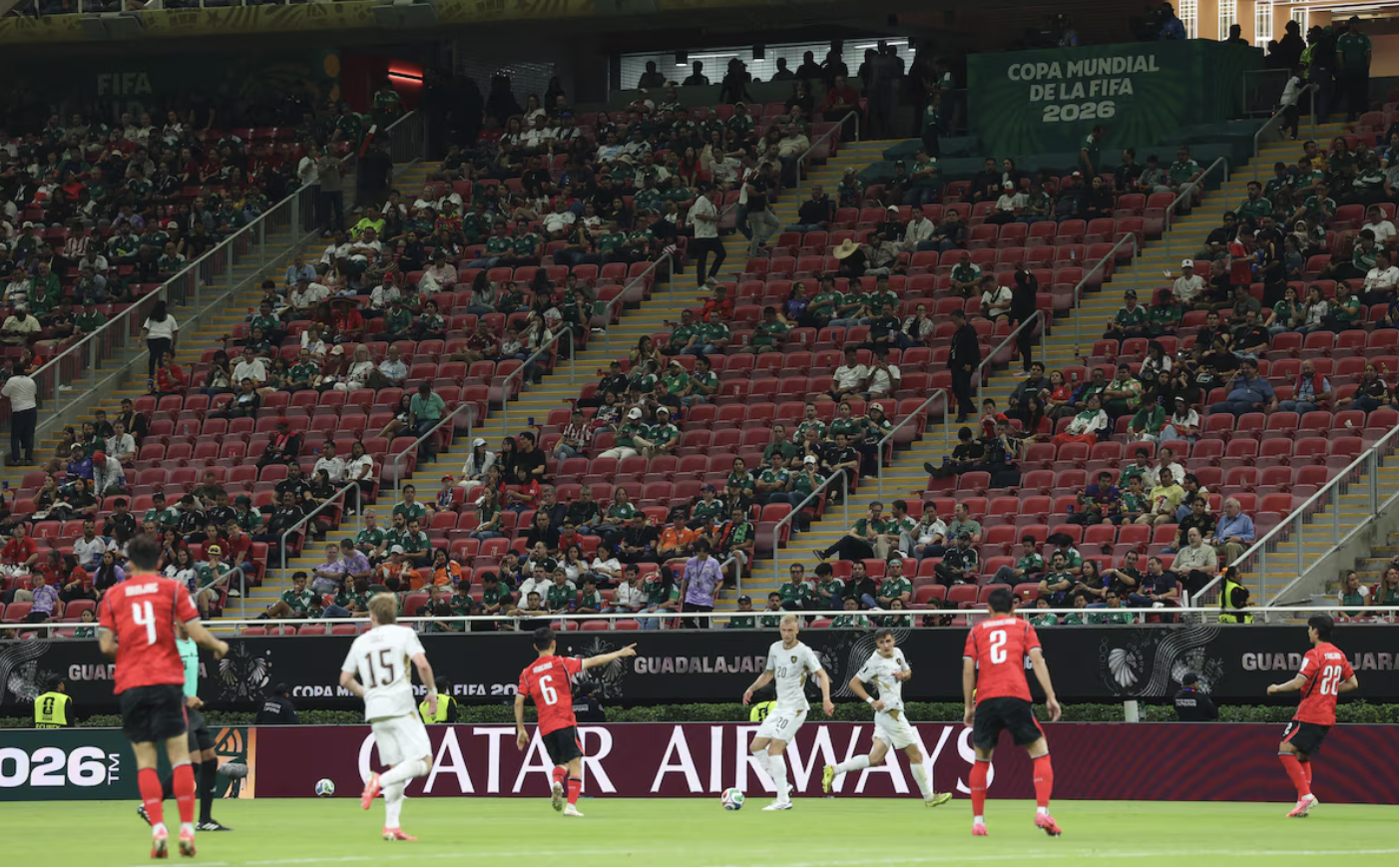
The first visible cracks in the 2026 World Cup did not appear in a political speech, a ticketing spreadsheet or another solemn FIFA statement about unity. They appeared in the stands. Empty red seats, scattered across a World Cup stadium in Guadalajara during South Korea against Czechia, while FIFA insisted that the official attendance figure was almost full.
The explanation was almost beautiful in its absurdity. According to FIFA, the empty seats were not really empty in the sense ordinary people might understand the word. Official attendance, we were told, reflected scanned tickets and people inside the stadium footprint, not visual assessments of who was sitting where at any given moment. Some ticketed fans, apparently, were standing in the concourses rather than staying in their assigned seats.
Of course they were. Nothing says World Cup passion quite like paying modern FIFA prices for a group-stage match and then choosing to spend large parts of it admiring concrete corridors, concession queues and sponsor signage instead of the actual football. Perhaps we are simply witnessing a new form of supporter culture, one where the most committed fans travel across continents to avoid their seats.
Or perhaps the simpler explanation is the correct one: FIFA finally pushed the market too far.
Not necessarily financially. That distinction matters. FIFA may still make grotesque amounts of money from this tournament. It may still present 2026 as the biggest, richest, most commercially successful World Cup in history. The sponsors will still smile. The broadcasters will still broadcast. The hospitality lounges will still hum with the soft confidence of people who never had to calculate whether a group-stage ticket was worth a family holiday.
But football is not only an income statement. A World Cup is supposed to be more than a licensing platform with flags attached. It needs supporters. Not merely scanned entries, corporate guests, blocked allocations, resale listings, hospitality clients and statistical attendance. It needs people who actually care enough to fill the stadium with life.
That is where FIFA’s calculation begins to look less brilliant.
The uncomfortable question is not simply whether seats were empty. They were. The more important question is what FIFA’s numbers actually mean. Were those seats sold? Were they scanned? Were they part of a hospitality allocation? Were they held back? Were they released late? Were they bought by people hoping to resell them at fantasy prices and then left unused when the fantasy met reality? Were they FIFA-controlled tickets suddenly made available through last-minute sales rather than the resale marketplace?
We do not know, because FIFA does not give the public a clean view of the machine. It asks fans to accept dynamic pricing, shifting availability, official resale portals, hospitality layers, late ticket drops and opaque categorisation, then expects everyone to treat the final attendance figure as a moral truth. That is rather a lot of trust to request from an organisation that has spent years treating trust as an optional accessory.
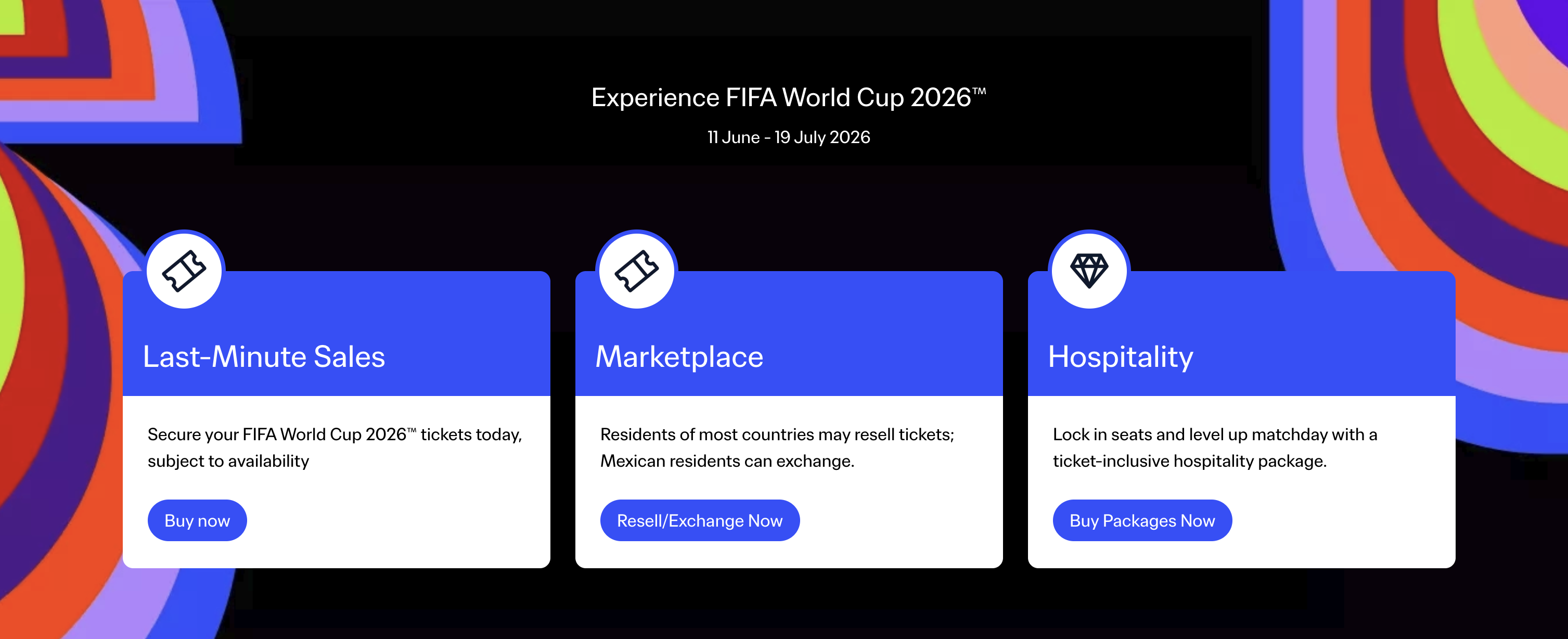
The late ticket releases are particularly revealing. FIFA’s own ticketing world separates official sales from the resale marketplace. If tickets appear through Last-Minute Sales rather than as resale listings from previous buyers, then they are not simply evidence of ordinary fans changing their plans. They appear to be FIFA-controlled inventory, released when FIFA chooses. Perhaps the timing was always planned. Perhaps demand proved softer than the triumphal language suggested. Perhaps FIFA held back tickets to protect pricing and then discovered that football supporters are not infinitely elastic wallets with scarves. The public cannot know. That is the point.
And this is where the official story becomes so insulting. FIFA cannot design a ticketing environment built around opacity and then ask everyone to pretend that visible gaps are merely a misunderstanding. It cannot spend months turning the World Cup into a yield-management exercise and then act surprised when some of the people who give the tournament its soul decide not to participate. It cannot create the conditions for speculation, inflated resale hopes and late pricing adjustments, then blame the optics on fans who allegedly preferred corridors to football.
The travelling supporter does not operate on FIFA’s panic schedule. An international fan cannot wait until a few days before a match, notice that prices have become slightly less ridiculous, and then casually assemble a World Cup trip. Flights need planning. Hotels need booking. Routes need sense. Cars may be necessary. Visas, entry rules and border anxiety are not solved by a cheerful “tickets still available” button on a website. In North America especially, a tournament spread across vast distances is not a spontaneous city break. It is a project.
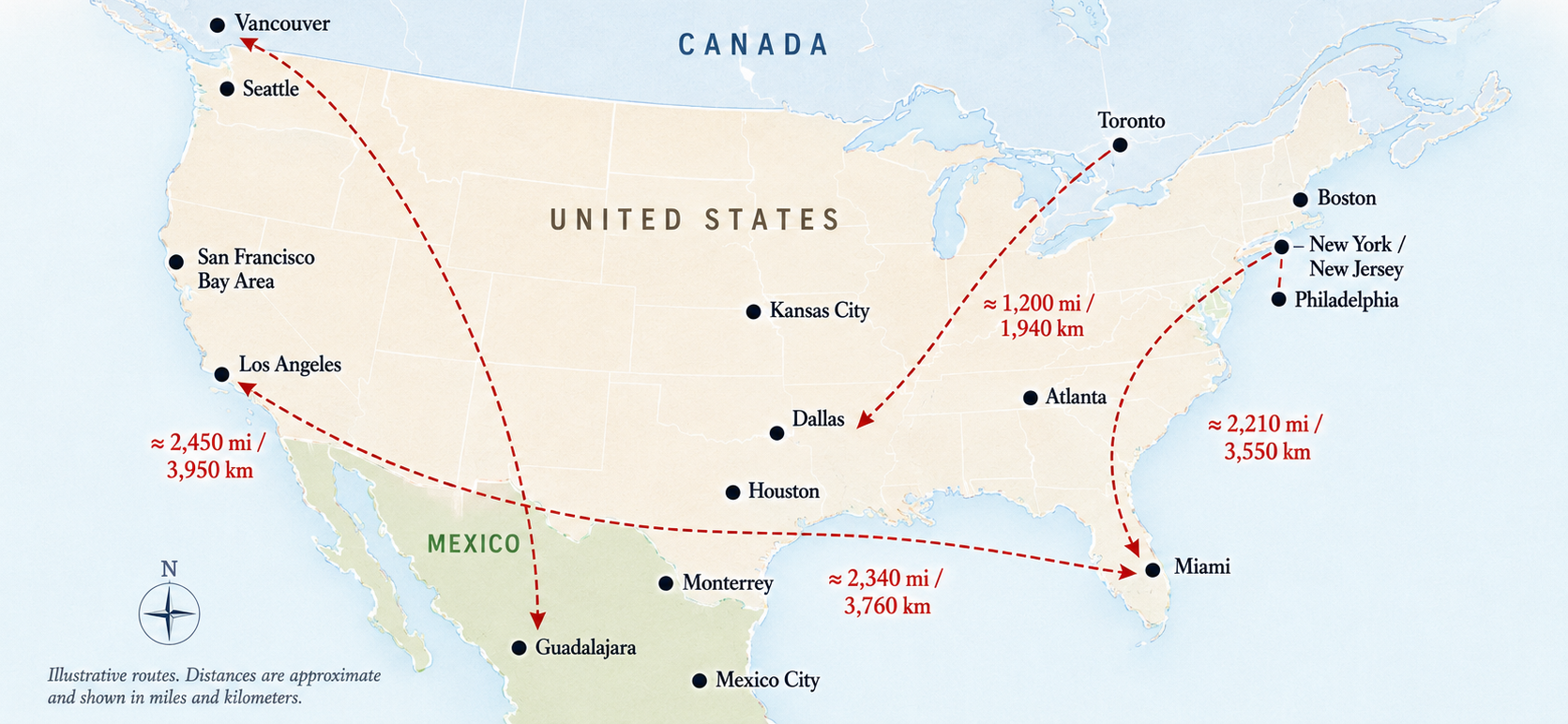
Many real fans understood that early. They looked at the price, the travel burden, the entry climate and the arrogance of the offer, and made the only sane decision left. They stayed away.
That does not mean football has failed in the United States, Mexico or Canada. It does not mean every match will look flat. Mexico playing in Mexico will draw energy. The United States playing at home will attract attention. The glamorous games will still sell. The knockout rounds will still gather momentum. Nostalgia, nationalism and spectacle can cover many sins, at least for a while.
The truth reveals itself in the less glamorous fixtures, when the tournament depends on travelling supporters, smaller nations and ordinary people asked to plan months ahead while being treated as revenue targets. FIFA wanted more inventory. Empty seats are one of the risks of confusing inventory with demand.
Still, for FIFA, this may not be failure at all. That is the most cynical part of the story, and therefore probably the most accurate.
FIFA’s skill, if one wants to dignify it, is that it has learned how to privatise the upside and distribute the inconvenience. Host cities deal with security, transport, disruption, public pressure, political promises and the usual civic theatre of welcoming the world. FIFA controls the commercial core: broadcast rights, sponsors, hospitality, licensing, ticketing and the premium monetisation of belonging. Everyone else worries about the practical mess. FIFA collects.
So what has FIFA really lost when some seats remain empty? Atmosphere, perhaps. Dignity, certainly. A little of the old illusion that the World Cup still belongs to football people. But those losses do not weigh heavily against record revenue.
For Gianni Infantino, money is not just money. It is political oxygen. FIFA revenue funds development programmes, member association support, travel assistance, projects, grants and the enormous global network through which power is maintained. Some of that money may genuinely support football in places that need it. That is precisely what makes the system so durable. Patronage rarely presents itself as patronage. It arrives as development, solidarity and global inclusion.
The structure does the rest. FIFA has 211 member associations. In Congress, each has one vote. The largest football nations do not have more formal power than the smallest associations. Brazil, Germany, Argentina, England, Spain and Italy stand in the same electoral line as federations with a fraction of their footballing weight. In theory, that sounds democratic. In practice, it creates a wonderfully convenient political economy: a president presiding over record income can distribute benefits across a global electorate in which many voters depend on the institution he controls.

This is why empty seats may embarrass FIFA without truly threatening it. The stadium can look thinner than advertised. The atmosphere can fail to match the press release. Supporters can complain. Journalists can ask nervous questions for a day or two. But if the revenue flows and the associations remain grateful, the machine continues.
That is the brutal equation. FIFA wins when the money arrives. Infantino wins when the money reinforces the network. The host cities manage the burden. The fans absorb the insult or stay home. Football supplies the emotional cover. And then FIFA stands in front of the world and talks about unity.
The old romance of the World Cup is useful to FIFA, but it is no longer essential to its power. Full stadiums help. Loud crowds look better. A beautiful supporter shot remains excellent propaganda. But the foundation is elsewhere: money moving through a global structure in which the president can present himself as the generous custodian of football’s wealth.
That is the final insult of 2026. FIFA may have miscalculated the optics, but not the incentives. It may have underestimated how ugly empty sections would look in a tournament sold as the biggest World Cup ever staged. It may have overestimated how much ordinary supporters would tolerate before walking away. But where FIFA’s internal logic is concerned, the tournament can still be declared a success.
The money is there. The machine is fed. The president remains exactly where he wants to be.
FIFA has won.
Football can find somewhere else to sit.
Five cents.
//Alex


1 comment