Germany’s defeat to Paraguay was not a tragedy of penalties. It was not one of those cruel tournament evenings when a superior team spends two hours assaulting the goal, runs into a heroic goalkeeper, strikes the post three times and then loses because football enjoys occasional vandalism. That version would be convenient. It would also be false. The truth is uglier. Germany had the ball, the territory, the corners and the better players. Paraguay had almost no football to offer. And still Germany could not beat them.
That is what makes this exit so damning. Paraguay were not brilliant. They were not a disciplined masterpiece of defensive intelligence. They were poor, at times painfully so. They defended deep, cleared balls, stumbled through possession and treated ambition as something best avoided. Their plan was not to win the match in any meaningful footballing sense. Their plan was to avoid losing it for long enough that something might happen.
Something did happen. Germany allowed it to.
The statistics will tempt some people into a softer reading. Germany had 75 percent possession, completed 753 passes, won 16 corners and finished with 21 attempts. On paper, that sounds like dominance. In reality, it looked much thinner. The match did not feel like Paraguay surviving a storm. It felt like Germany spending enormous amounts of time on the ball without creating the pressure such numbers are supposed to imply.
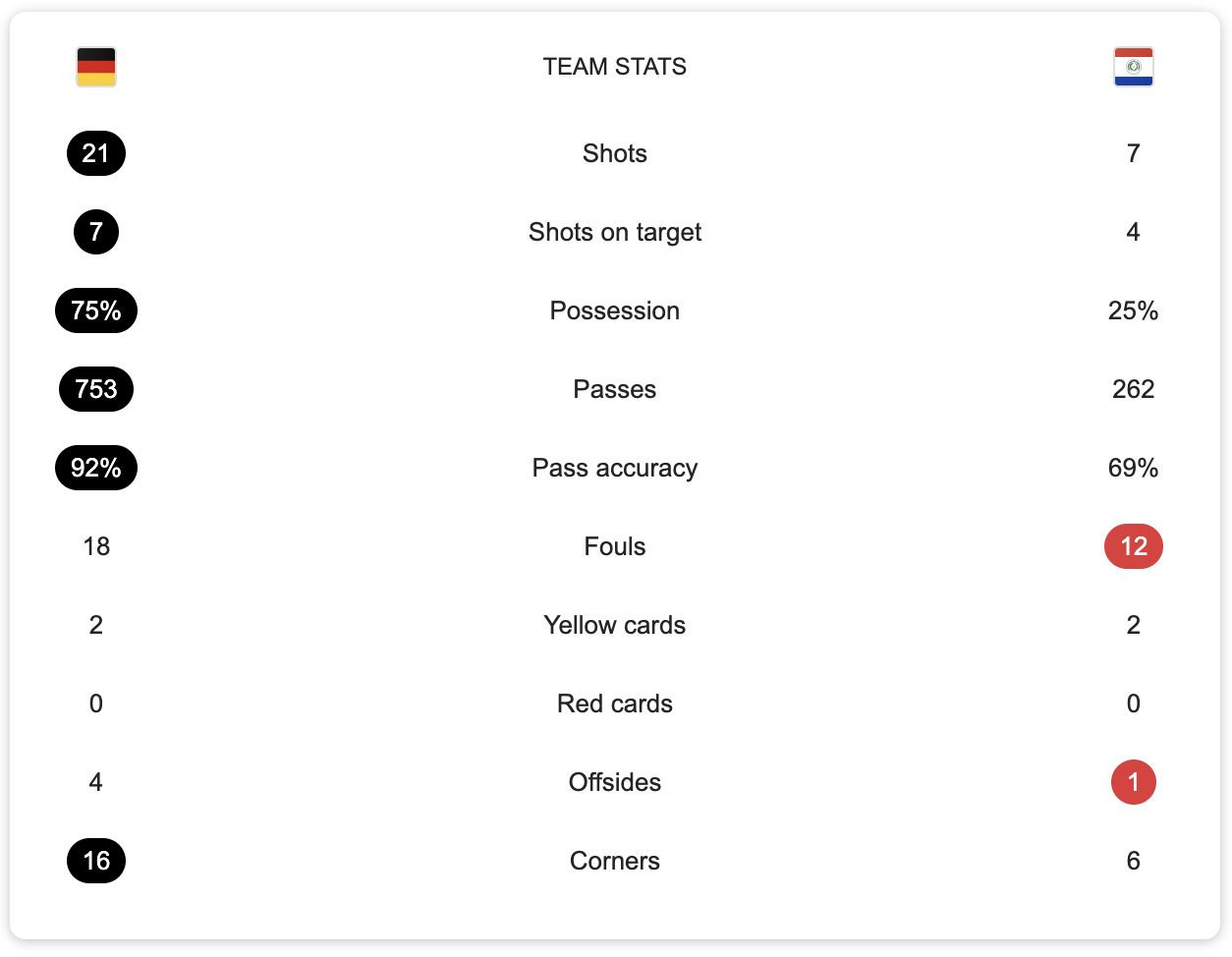
That was already obvious at half-time. Germany had 79 percent possession and 342 passes before the break, yet produced only five attempts and one shot on target. Paraguay, with barely any of the ball, had the better chances and the lead. Germany’s expected goals at that point were almost invisible. It was not a warning sign hidden inside the game. It was the game.
This is the difference between possession and authority. Possession is having the ball. Authority is making the opponent fear what comes next. Germany had the first in abundance and the second only in theory. The ball moved from side to side, into midfield, back out again, across the line, into another harmless delivery, another blocked attempt, another corner, another reset. It was control without consequence. Against a strong opponent, that would be a problem. Against this Paraguay, it was an indictment.
A serious tournament side does not need perfection to beat a team that poor. It does not need a miracle, a referee decision or a penalty shootout delivered with mathematical neatness. It needs enough tempo to stretch the block, enough sharpness around the box to create panic, and enough individual class to punish an opponent that spends most of the match waiting for relief. Germany had the names for that. It did not have the performance.
The 21 shots are almost misleading. Across normal time, extra time and the generous modern habit of adding more minutes to everything, the number loses much of its force. The eye did not see 21 moments of danger. It saw a few genuine situations, one good equaliser, one disallowed late goal and a great deal of harmless occupation. Six or seven shots on target over that span is not the profile of a team that was unlucky. It is the profile of a team whose superiority existed in possession, but not in the ability to decide the game.
The corners say the same thing. Sixteen corners should eventually become more than activity. They should become stress, disorder, second balls, panic, pressure that accumulates until the defending side starts to crack. Germany turned them mostly into another statistical exhibit. Paraguay did not need to be good to survive them. They only needed to stand in the right places often enough and trust that Germany would keep delivering without enough cruelty.
The penalty shootout, of course, was a farce. Three misses from six attempts is not misfortune. It is self-inflicted elimination with formal procedure attached. Havertz missed. Woltemade missed. Tah then sent the sudden-death penalty over the bar before José Canale put Paraguay through. Germany even received the courtesy of Paraguayan misses before finally completing the collapse.
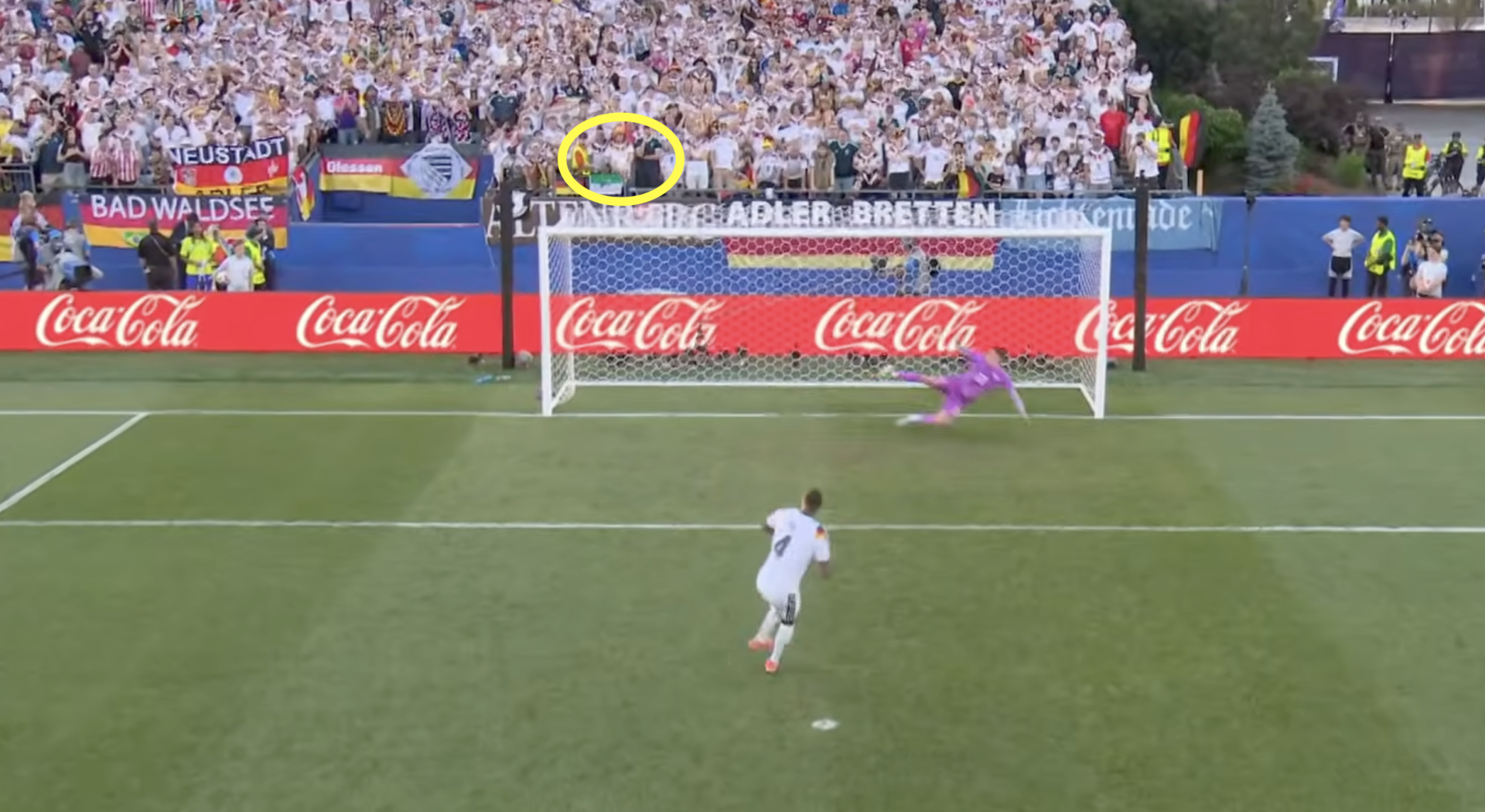
But the shootout should not become the explanation. It was only the final expression of the same weakness: poor execution in decisive moments. Germany had already failed long before the penalties. The shootout did not create the problem. It merely gave it a scoreboard.
The more uncomfortable question is why so many of Germany’s important players were below the level this stage demands. Kimmich had volume, but not command. Havertz scored, which will protect him from the simplest criticism, but outside that moment he remained too peripheral. Wirtz supplied the cross for the equaliser and at least offered flashes of quality, yet he never truly took possession of the match. Pavlović was neat without becoming decisive. Tah might have had a late winner before VAR intervened, but his night will be remembered differently. And the list could be extended. Germany carried too many players through this tournament who remained well below their own possibilities.
This is not about finding one scapegoat and feeding him to the public. That is usually the laziest form of analysis. The problem was broader. Too many key players sounded better on paper than they looked on the pitch. Too many carried reputation rather than form. At a World Cup, that is fatal. You can survive one important player below his level. You may even survive two. When half the spine of the team is underperforming, the whole structure starts to look expensive rather than strong.
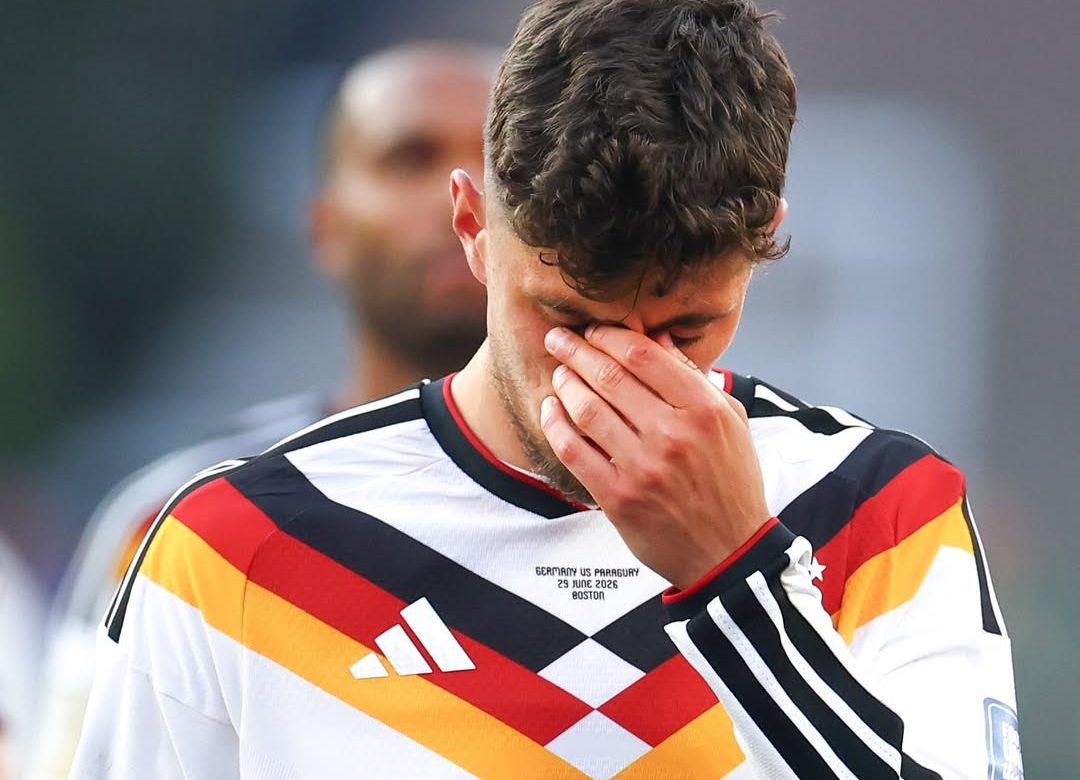
Julian Nagelsmann cannot escape that. His team once again produced long spells of sterile control, slow decisions and too little acceleration in the areas where matches are won. There was effort, certainly. There was territory. There were passes, corners and enough data to build a small museum of almost-dominance. But the pattern was familiar. Germany looked busy without looking inevitable.
That is the part that should worry them most. The warning had already been there against Ecuador. That match could be dismissed as meaningless only by people determined not to understand it. It showed a team without enough rhythm, without enough authority and without enough form in decisive positions. Paraguay did not reveal a new weakness. Paraguay simply made sure there was no next match in which to pretend it had been temporary.
Perhaps Germany were spared a worse humiliation. A meeting with France would not have been a romantic heavyweight occasion. Against pace, precision and actual attacking quality, this version of Germany might not have lost narrowly. It might have been corrected in public.
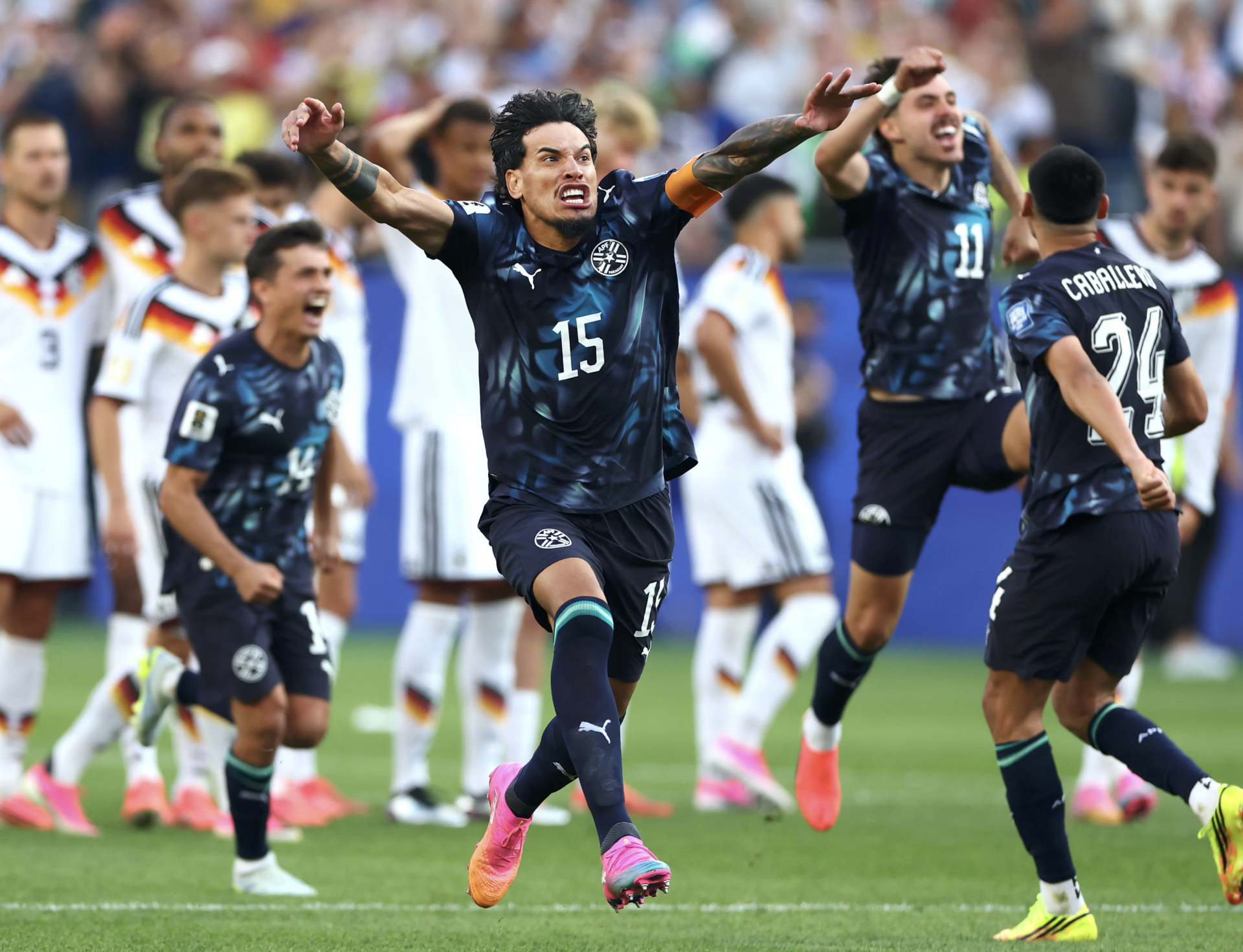
Paraguay go through not because they showed greatness, but because Germany failed to expose their poverty. That is the real disgrace. Germany did not lose to a superior idea, a better team or a performance of rare defensive excellence. They lost to a side with almost no footballing ambition at all.
At this level, having the ball is not enough. It never was. Against Paraguay, Germany had possession, passes, corners and time. What they did not have was the one thing that separates serious teams from decorative ones: the capacity to make superiority hurt.
As always, just my five cents.
//Alex

