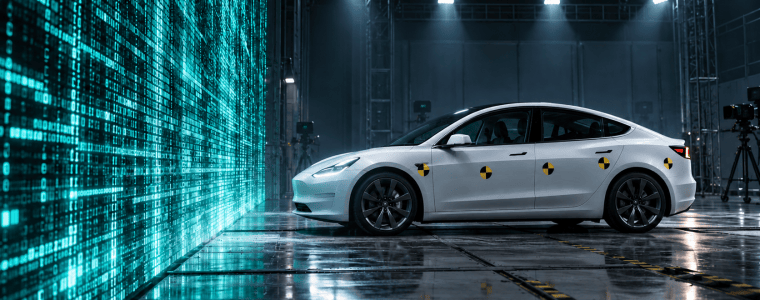
The safest car in the world? Crash tests answer only part of that question. While reviewers admire Tesla’s latest dashboard tricks, I keep noticing the security fixes in its release notes. As AI gives attackers better tools, the less entertaining question becomes harder to ignore: how well is your connected car being maintained after you buy it?
Category: Technology
Zürich Needs a Traffic Plan, Not Another Coat of Paint

A new study finds Swiss cyclists crash at roughly twice the Dutch rate, with tram tracks, junctions and public transport stops among the trouble spots. Zürich can build a cycle tunnel beneath its main station, then leave everyone competing for the same contested metres above. The city needs better behaviour, better junctions and rather more ambition.
All That Intelligence, and Still the Wrong Rectangle

Smartphone cameras can reconstruct faces, combine exposures and insert the photographer into the picture. Yet my Pixel cannot let me choose the familiar 3:2 format when shooting. While reviewers inspect brickwork for evidence of photographic genius, I spend my evenings cropping every single image. Apparently, artificial intelligence still requires considerable manual labour.
Tesla Can Plan a Charge. It Should Learn to Plan a Journey.
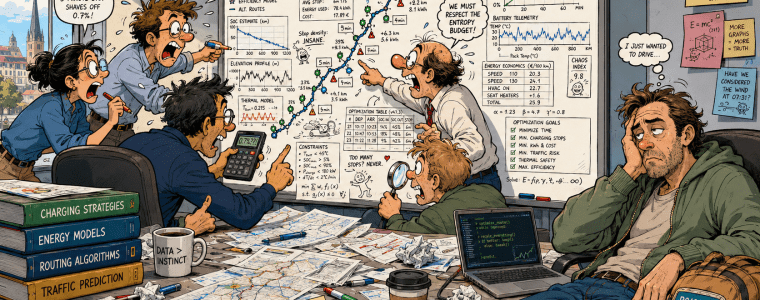
Tesla’s Supercharger network makes long-distance electric travel remarkably easy. Its Trip Planner is less convincing. By optimising relentlessly for charging speed, it can turn a journey into a sequence of brief, inconvenient stops while burying better options in a confusing interface. Tesla understands batteries brilliantly. It should spend a little more time understanding travellers.
Hi-Fi Has Put the Screen in the Wrong Place

Touchscreens have become the fashionable face of modern hi-fi, yet most sit metres away where nobody can comfortably read or use them. Smartphones solve part of the problem but remain personal devices. A better answer is a shared, dedicated remote: tactile controls for everyday functions, a screen for browsing, and access anyone in the room can use.
Phishing Has Discovered Swiss German, and It Is Glorious

Phishing has discovered Swiss German, with predictably glorious results. Armed with AI, scammers are now localising their emails into synthetic dialect, apparently unaware that Swiss German is spoken everywhere but written very selectively. The result is less sophisticated social engineering than a cultural misunderstanding with a malicious link attached.
Dear Google, Make It Turn Before You Make It Glow
Google’s next Pixel may arrive with more artificial intelligence, more clever tricks and perhaps even Pixel Glow. Wonderful. Meanwhile, the phone still struggles with the primitive task of rotating its screen when turned. After years of Pixels, stuck apps, failed auto-rotation and dubious water resistance, the basics remain embarrassingly unfinished.
How Premium Manufacturers can Survive the Age of Disposable Software
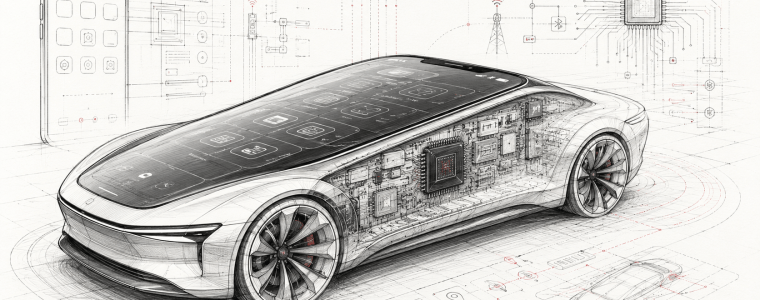
Modern cars are no longer merely machines. They are software platforms with wheels, batteries, cameras, processors and update cycles. That changes the economics of premium ownership. If a car’s digital core becomes obsolete long before its body, engine or chassis, permanence becomes theatre. The premium car of the future must therefore be designed not only to endure, but to be upgraded.
Booking.com has a Security Problem. Its Support Process is Part of it.

A phishing message used real Booking.com reservation context to push a fake credit card verification page. Reporting it should have been simple. Instead, the official support path led through booking bureaucracy, hidden contact options and finally an email asking for the reservation PIN. After a breach involving customer data, Booking.com appears less like a platform prepared for cyber abuse and more like one still searching for the right department.
The FIA has found the cure for F1. The disease continues until 2030.
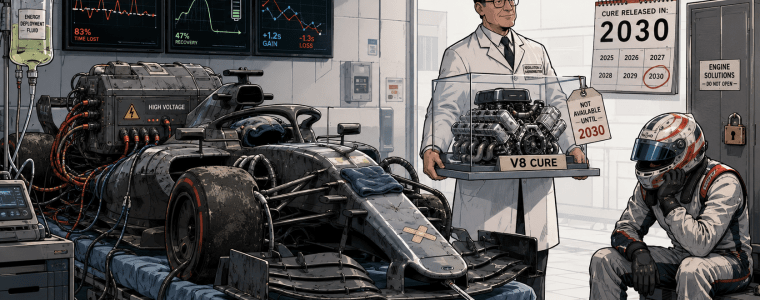
Formula 1 appears to have found the cure for its over-electrified mistake, but the treatment is scheduled for 2030 or 2031. Until then, fans are asked to endure several more seasons of clipping, energy management and artificial yo-yo racing. The planned V8 return is good news, but also an indictment: the sport already knows the current formula is wrong. It just refuses to stop running it.

