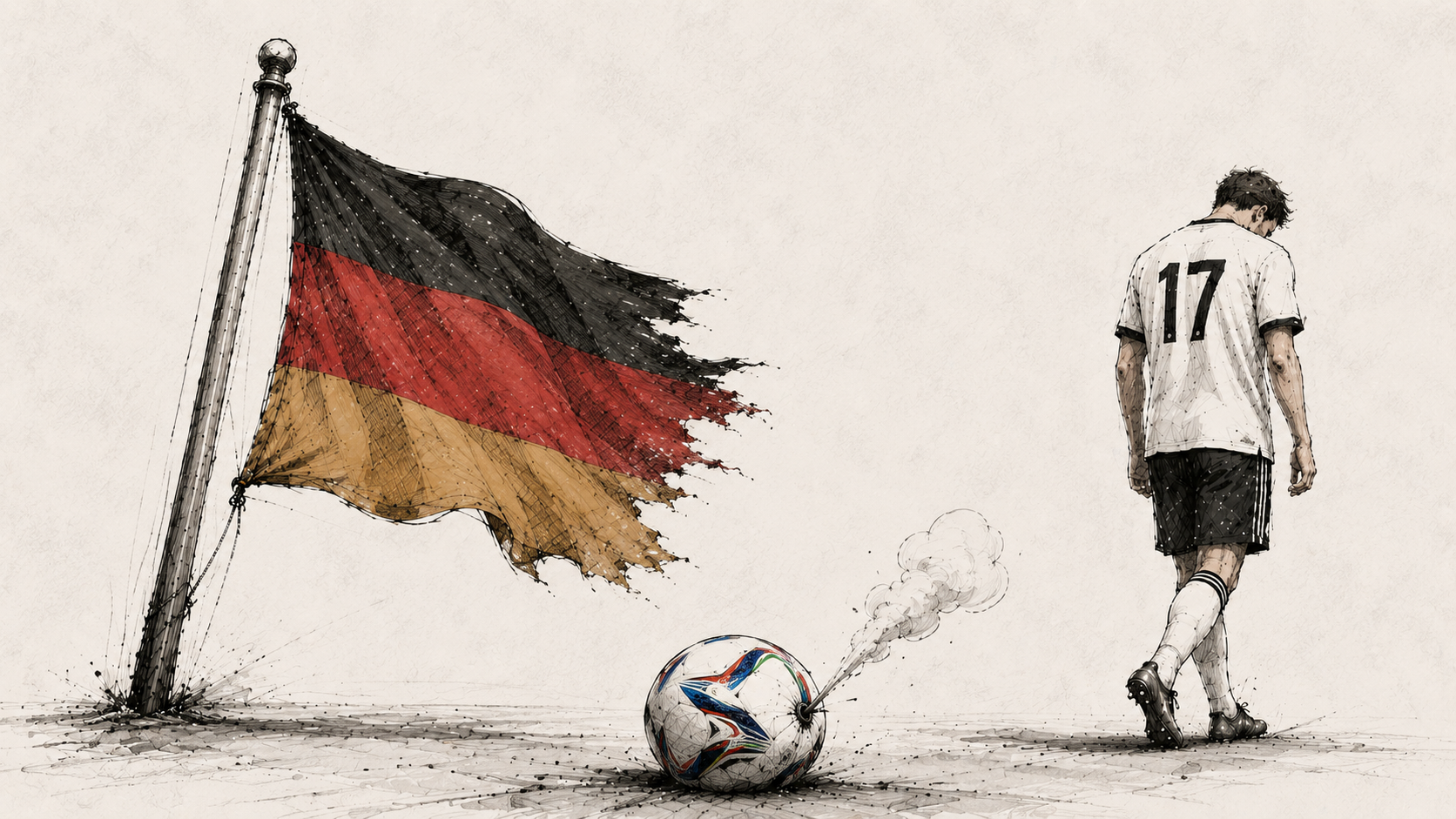
Germany can tell itself that the defeat against Ecuador did not matter. It was the final group match, qualification was already secured, the knockout round was waiting and nobody had to risk everything. That is the comfortable version, and it will be repeated because it allows everyone to move on quickly. The problem is that a supposedly meaningless match can sometimes be the most honest one. It removes the drama of the table, strips away the panic of qualification and leaves only the football. Against Ecuador, that football was deeply unconvincing.
Germany were not trapped by circumstance. They were not forced into some desperate tournament scenario. They had the chance to play with control, confidence and a certain freedom, instead, they produced a performance that revealed exactly what this team currently lacks: midfield authority, tempo, physical resistance, clean first touches and enough players who can win a duel when the match becomes uncomfortable.
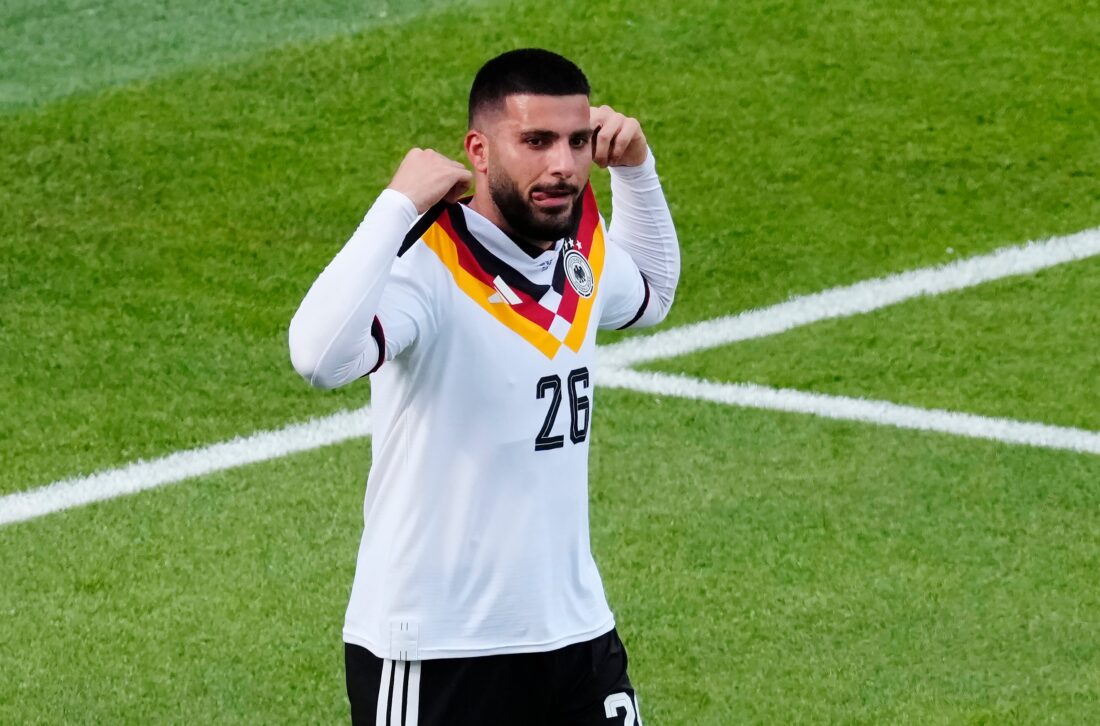
The warning had already been there. Against Ivory Coast, Germany got away with a performance that could easily have gone in a different direction because Deniz Undav gave the game a result it did not necessarily deserve. He did what a serious forward is supposed to do. He imposed himself, protected the ball, held off defenders and turned pressure into danger without needing five ornamental touches before something useful happened. His efficiency allowed Germany to treat the match as a successful evening rather than as a first clear symptom. Against Ecuador, that camouflage disappeared.
The most disturbing part is not that Germany lost a group match of no consequence. It is that several of the supposed premium players looked physically weak, technically careless and strangely helpless once the opponent played with contact, intensity and conviction. These are not anonymous squad players trying to survive at international level. These are players with major reputations, Premier League status, Bundesliga glamour, expensive market values and the full machinery of modern football admiration behind them. Yet too many of them looked like decorative assets in a match that required weapons.
Florian Wirtz and Kai Havertz are central to that problem. They have talent, of course, but talent that disappears the moment a defender gets tight is not enough at a World Cup. They lose the ball too easily, lose the duel too often and then lose the next duel as well. As soon as the opponent becomes a little more physical, a little more aggressive or simply more determined, possession is gone. That is not a marginal flaw. That is the game itself. If every dribble becomes an invitation for the defender to take the ball, if every physical confrontation ends with the German player brushed aside, then reputation becomes irrelevant. Wirtz and Havertz are not being criticised because they cannot play football. They are being criticised because, in this form, they do not impose themselves. They wait for the match to become elegant, and tournament football rarely provides that courtesy.
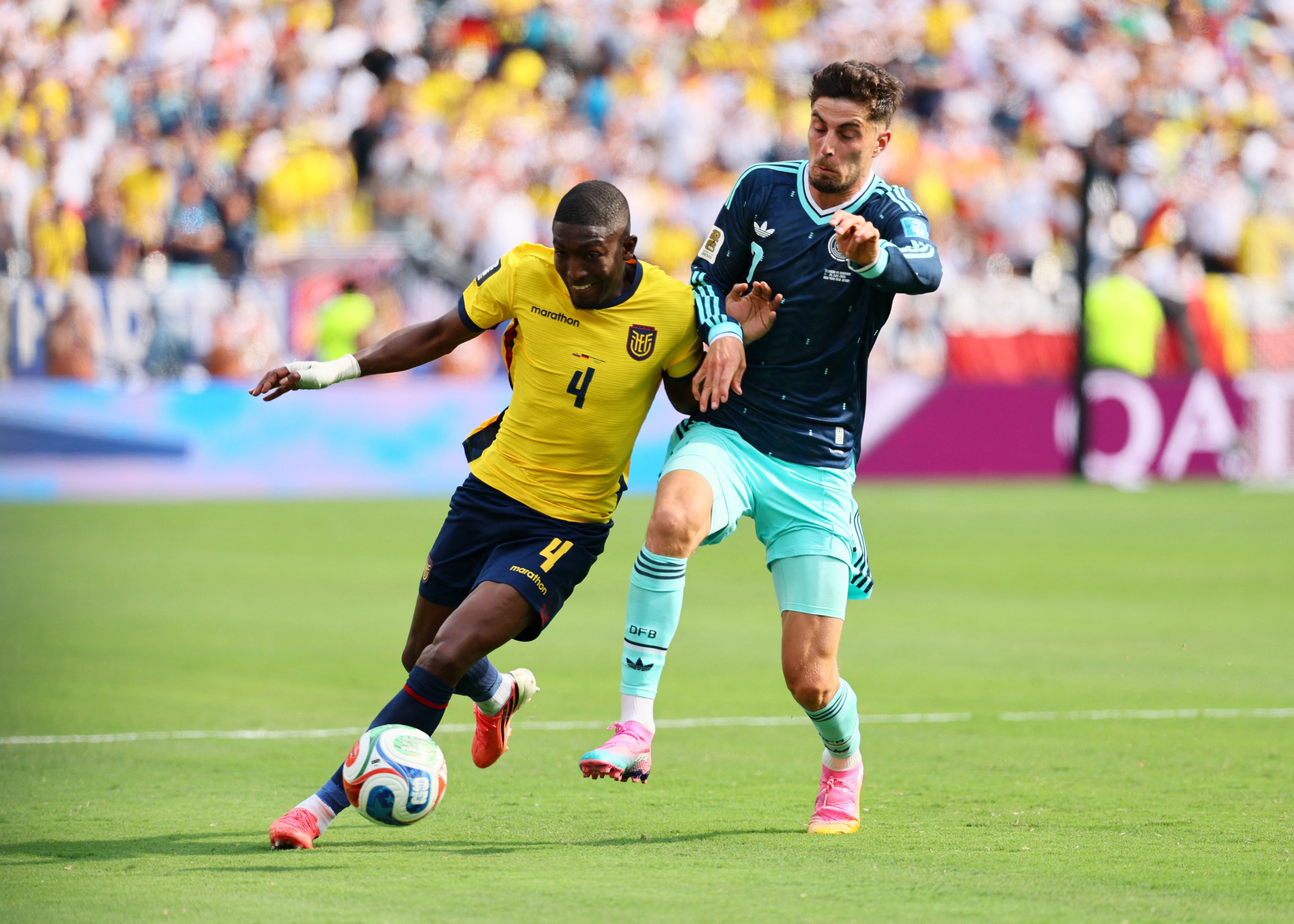
Musiala is the clearest and most frustrating example because the gap between talent and usefulness has become almost absurd. In this form, he is completely overrated and a complete miscast. The familiar protection is always the same: he is enormously gifted, he can decide a game, he has magic in his feet. All of that may be true in theory, but it does not excuse what is happening on the pitch. His first touch has almost vanished. Every ball into his feet seems to require another contact, another correction, another little detour into trouble. He receives it, delays the obvious pass, carries it into traffic, starts a dribble that makes no sense in that zone, loses the ball and leaves the rest of the team to deal with the counterattack.
That is not creative risk. It is bad judgement dressed up as flair. Musiala keeps choosing duels in midfield that should never be chosen. He dribbles where a quick pass would be the intelligent solution. He treats central areas as if they were a playground rather than the most dangerous part of the pitch to lose possession. The result is not unpredictability, but instability.

The comparison is cruel, but it fits too well to ignore: at the moment, Musiala looks like Melman from Madagascar, a helpless giraffe stumbling around the pitch, all legs and confusion, without a clear idea of what to do with the ball. He does not glide through the game. He trips through it, slows Germany down, loses possession and hands the opponent the next transition.
Kimmich adds the same disease from deeper areas. He should be the player who gives Germany rhythm, speed and clarity, yet too often he makes simple situations complicated. In the build-up, there were moments when he carried the ball into unnecessary pressure, looking for a dribble where a quick pass would have done the job. Germany already move the ball too slowly. They already lack sharp switches of rhythm. Too much of Germany’s possession becomes slow fiddling, slow carrying and slow circulating. The ball moves, but the game does not.
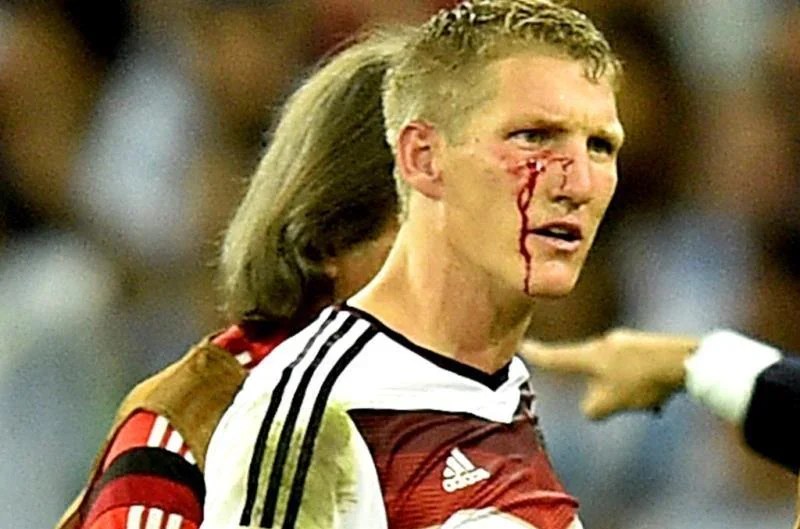
The midfield is the heart of the problem. Once, Germany had a midfield that could own a match. Khedira, Schweinsteiger, Kroos and Özil were different players with different qualities, but together they represented control, rhythm and authority. Germany could build from the back, play through pressure, change the tempo and make the opponent run. That has gone, and against Ecuador the absence was impossible to miss. Germany looked for long stretches like a team trying to hide the fact that it no longer had a midfield capable of carrying the game.
The ball was not built forward with structure. It was kicked forward in hope. Not as a deliberate tactical weapon, not as a clean direct game, but as old kick and rush football of the ugliest kind, the sort associated with England in the 1970s and 1980s, when the answer to technical limitation was simply to launch the ball and chase whatever fell from the sky. For Germany, that is embarrassing. It looked like a team admitting, without saying it, that it could not play properly through the centre. So the centre was bypassed. The ball went long, someone chased, maybe it would drop, maybe it would bounce kindly, maybe a German player would somehow arrive at the right moment. Hope became the creative principle.
This becomes even more absurd when the players in front are losing exactly the duels this style requires them to win. If you play long, you need forwards and attacking players who can hold the ball, take contact, win second balls and turn ugly situations into possession. Germany currently have too many players who do the opposite. That is not worthy of a multiple world champion, not because Germany have some divine right to dominate every match, but because a country with this football history, this talent pool and these reputations should not be reduced to blind balls forward and hope as a strategy.
Sané stands out precisely because he at least tries to play with speed. This is not about turning him into the saviour or pretending that everything works with him. It often does not. But the often criticised Sané, so regularly accused of questionable attitude, loose body language and inconsistent effort, has been one of Germany’s positive exceptions at this World Cup. He looks for tempo, tries to sharpen the game, works backwards, goes into duels and actually wins them. That should not be remarkable in a German national team, yet in this team it almost is. Sané at least plays as if football is still a physical contest rather than a technical exhibition waiting for perfect conditions.
Undav offers a similar contrast in a different role. When he has the ball, he protects it. He does not immediately fall apart under contact. He gives defenders something to worry about because he can hold them off, keep the ball alive and turn pressure into danger. That is exactly what Germany are missing in too many other positions: not another ornamental technician, but a player who does not lose the ball the moment the opponent breathes on him. Some of the newer players show that quality in patches as well, bringing more presence, more stability and more willingness to fight for possession than several of the established names. That says a lot. Germany’s most useful tournament qualities are not reliably coming from the players with the biggest reputations.
Felix Nmecha belongs in the same category of exceptions, even if he is playing in the very part of the team where Germany’s weakness is most visible. He is a midfielder, but too often the players around him leave him exposed. What makes him stand out is precisely that he does not look infected by the general softness. He is stable, strong in duels, concentrated and remarkably composed in a team that too often looks as if it is waiting for someone else to provide structure. For me, he has been one of the discoveries of this national team. Nathaniel Brown, another new player, also belongs among the few positive aspects. He brings freshness, presence and defensive seriousness. In a side full of bigger names producing smaller performances, that matters.
Then there is Neuer. This cannot be reduced to nostalgia or disrespect, because the issue is much simpler. He is too slow now, and not only in the obvious physical sense. He looks too slow in his thinking. He seems to lag behind the game by a fraction: a fraction late to read the situation, a fraction late to move, a fraction too far away when the decisive moment arrives. At this level, fractions have consequences, and this tournament has already shown that more than once. The problem is not that Neuer has suddenly become useless. The problem is that Germany still behave as if the old Neuer is standing in goal. The aura remains, but the timing does not always follow. Goalkeeping at this level is not about reputation. It is about arriving at the moment before everyone else does. Neuer used to live there. Now, too often, the thought seems to arrive before he does.
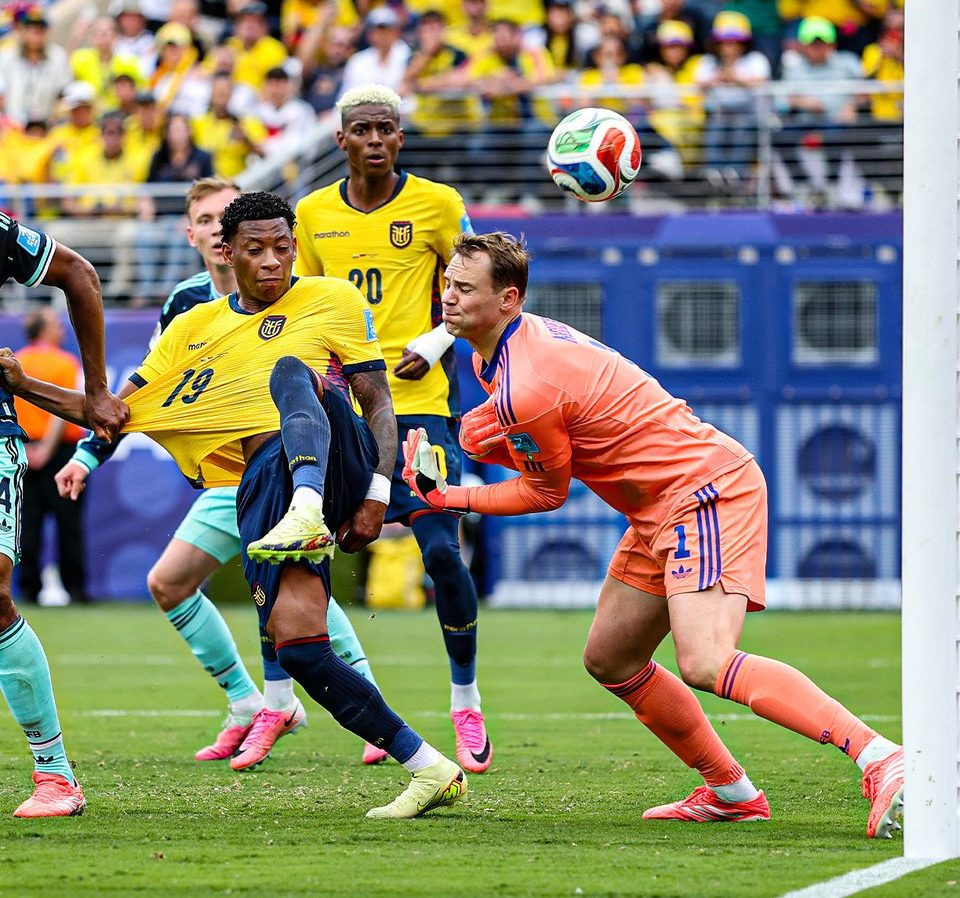
The controversy around his return as number one was therefore not some irrelevant pre-tournament theatre. It mattered because it revealed a reluctance to make a clean break. Baumann was damaged by the decision, even if he would not necessarily have been the perfect solution either. A younger goalkeeper might have represented a more honest step into the future. Instead, Germany chose the aura of the past and now have to live with the moments when that aura no longer reaches the ball quickly enough.
Still, making this only about Neuer would be too easy. The bigger problem is in front of him. Germany no longer dominate the centre of the pitch, no longer control the tempo and no longer look like a team with midfield authority. They have possession without bite, technique without pace, dribbling without purpose and too many players who lose the first serious physical argument. That is why the Ecuador match matters. Not because of the table, and not because Germany desperately needed the result. It matters because it removed the excuse. Germany had the freedom to play with clarity and confidence. Instead, they looked slow, vulnerable and strangely easy to disturb.
That is the real problem. Germany are not short of famous footballers. They are short of players who, in this form, actually impose themselves. Too many of them look soft in duels, slow in decisions and careless with the ball. Too many look like expensive names waiting for the match to become comfortable, but World Cup football does not become comfortable. It becomes harder.
And yes, Germany can also talk about the defence, even if this is not the place to single out one defender for public execution. The collective number is already harsh enough. Germany have conceded already four goals in the group stage. Four. Look back at recent world champions and the warning becomes obvious. Germany conceded four in the entire tournament in 2014. Spain conceded two in 2010, Italy two in 2006, Brazil four in 2002, and France two in 1998. Even France in 2018, hardly a fragile champion, finished the whole tournament with six against. Germany have already spent too much of that allowance before the serious part has properly begun. There is not much air left.
If Germany continue like this, they will not go deep because they have a clever plan. They will only survive if Undav saves them again, or one of the overrated names finally starts playing like the player everyone keeps claiming he is. That is not a plan. It is delusion in a German shirt.
Just my five cents.
//Alex


1 comment