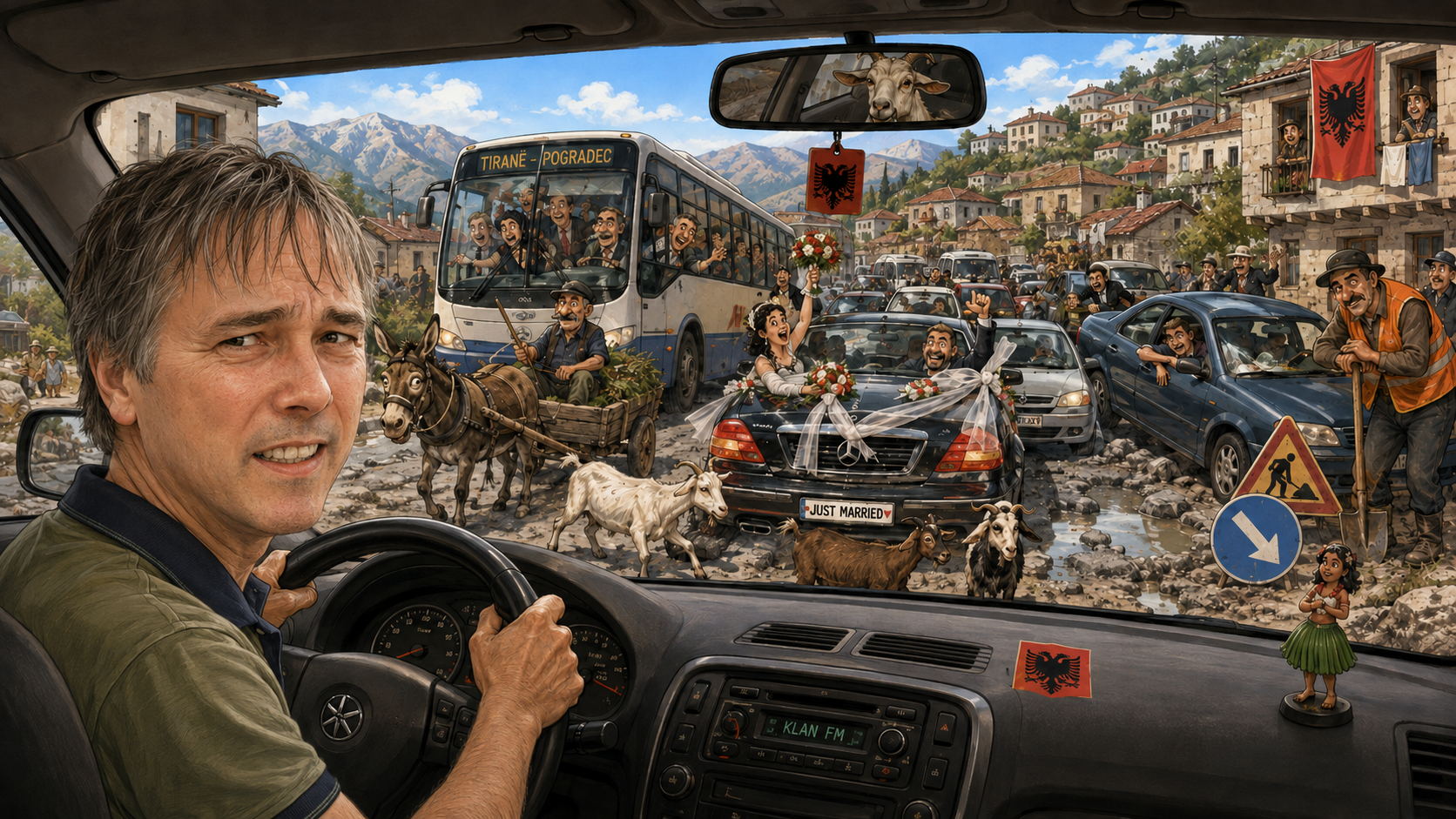
Travel is said to broaden the mind. Occasionally it prefers to establish whether leaving the house was a defensible decision in the first place. I had gone to Albania for the wedding of a good friend, and the wedding itself was magnificent: warm, loud, generous, slightly excessive, exactly the kind of celebration that justifies the journey. The journey home then devoted the entire following day to arguing the opposite case.
We left the coast shortly after six in the morning for Tirana Airport. On the map the distance looked entirely reasonable, but Albania maintains a famously flexible relationship with the concept of travel time. A few kilometres dissolve into four hours of villages, roadworks, standing traffic and overtaking manoeuvres apparently negotiated directly between the driver and God, with no obligation on either party to inform the oncoming lane.
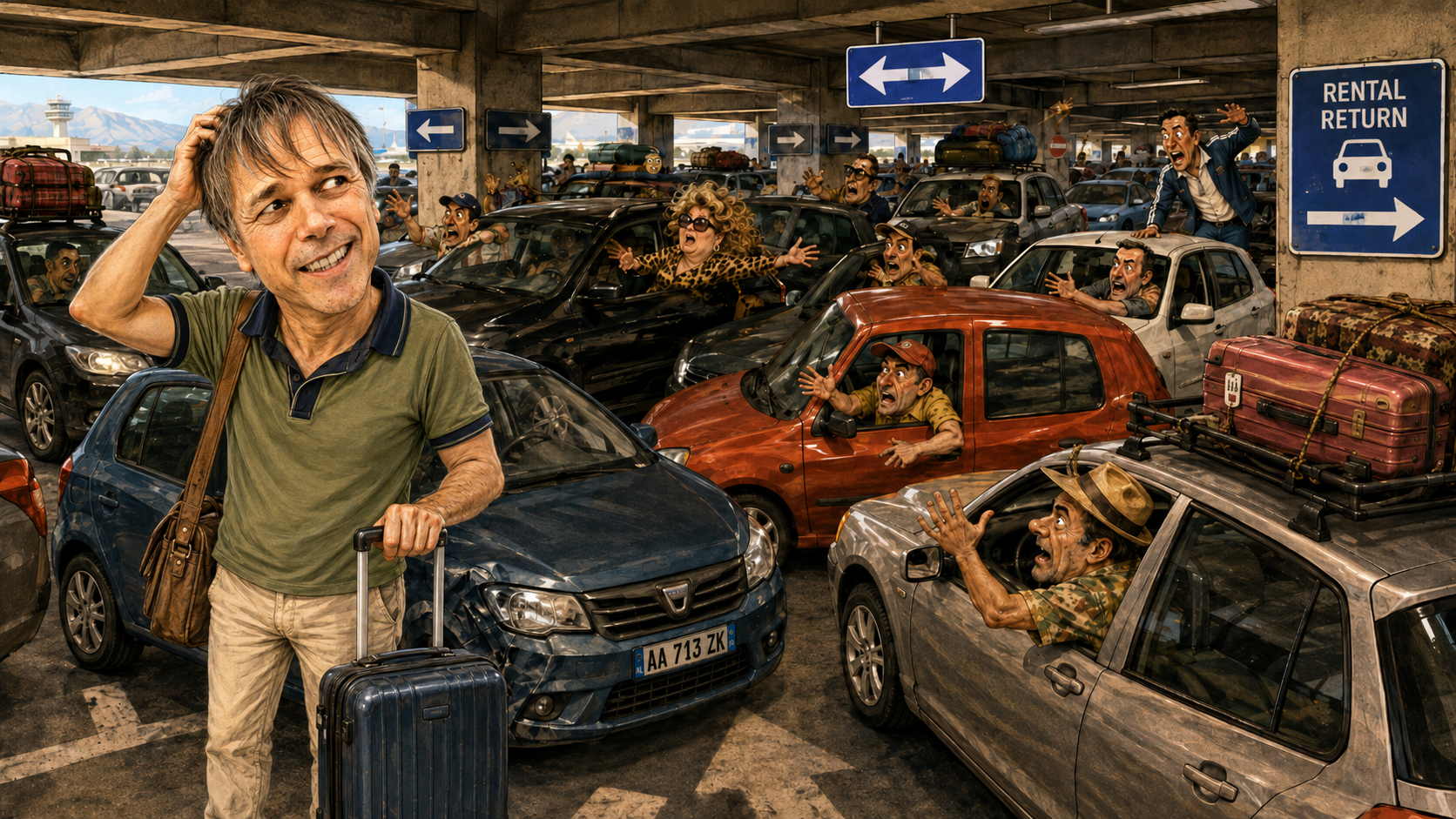
Returning the rental car continued in the same spirit. The parking structure had no generally accepted direction of travel, so cars entered, exited, met head-on and settled the resulting disputes privately. One of my friends, who has travelled through Sierra Leone and various other places rarely celebrated for their infrastructure, remarked that he had seen more orderly arrangements there. I suspect the Albanian tourism board will not be requesting the quote.
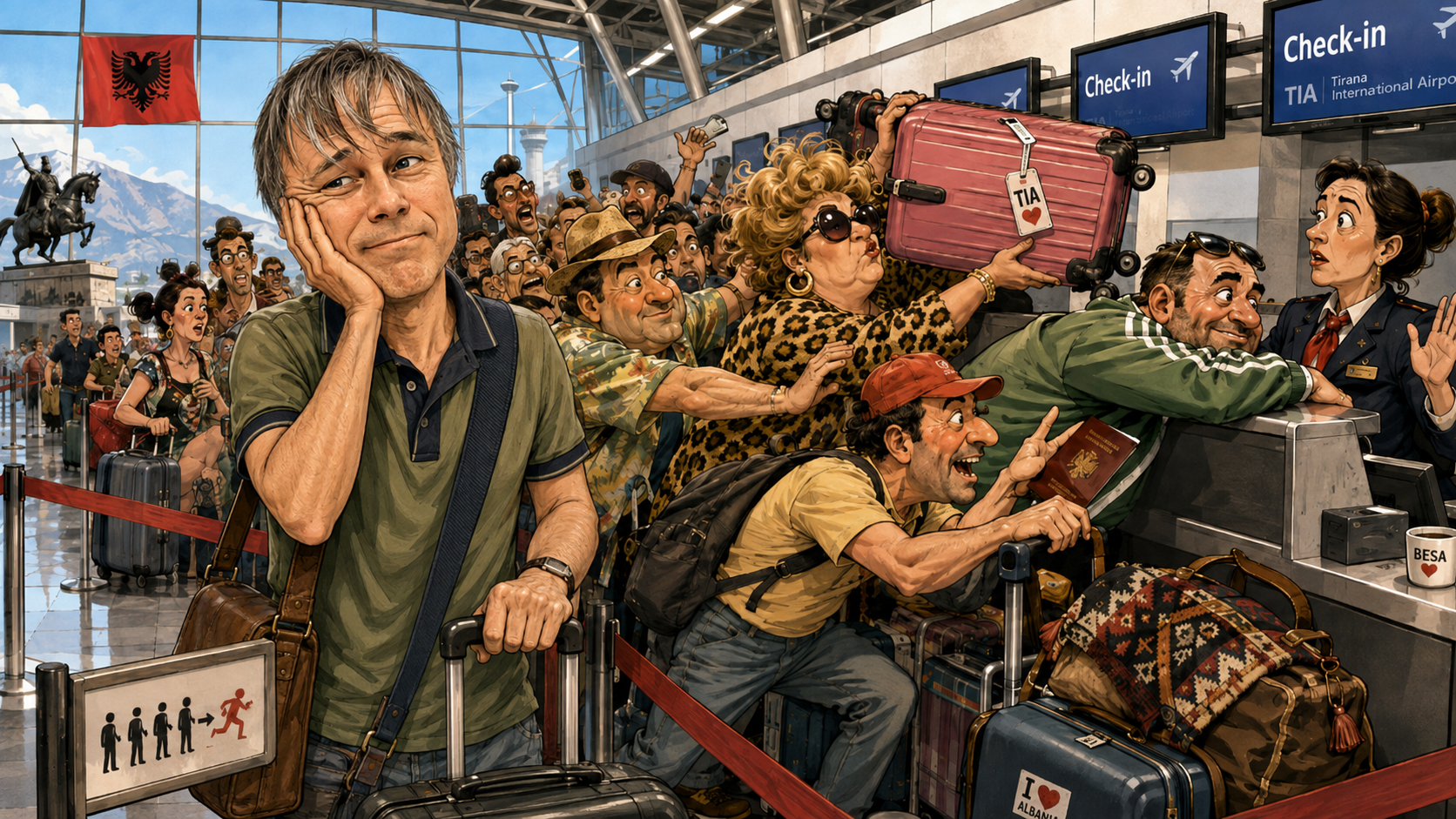
Inside the terminal we encountered another local interpretation of civilisation: the queue as an optional concept. I had always assumed queuing was more or less intuitive. You find the end, you stand there, you advance. Tirana Airport regards this as unnecessarily rigid. Everyone instead occupies a loosely defined area around the counter and continuously reassesses whether a superior position might be available somewhere diagonally in front. You can be next in line when a suitcase slides in from the side, followed by its owner, who appears sincerely puzzled that thirty minutes of waiting should give you any particular claim to priority. Politeness achieved nothing at all. Volume achieved everything. The system works perfectly, it turns out, the moment everyone understands that you have stopped asking.
The same philosophy carried us through security, passport control and the gate, until we stood outside in the heat waiting for a bus to cover the ninety metres to the aircraft. By that point I had stopped thinking of myself as a passenger and had begun to regard the day as a prolonged exercise in defending territory.
Eventually the bus arrived, the aircraft departed and we landed in Zürich, where I made the tactical error of assuming that the difficult part was behind us. My girlfriend does not hold an EU passport, so while I passed through the automated gates in eleven seconds, she joined the queue for “All Passports”, which contained roughly the population of Appenzell Innerrhoden and was being served by two officers.
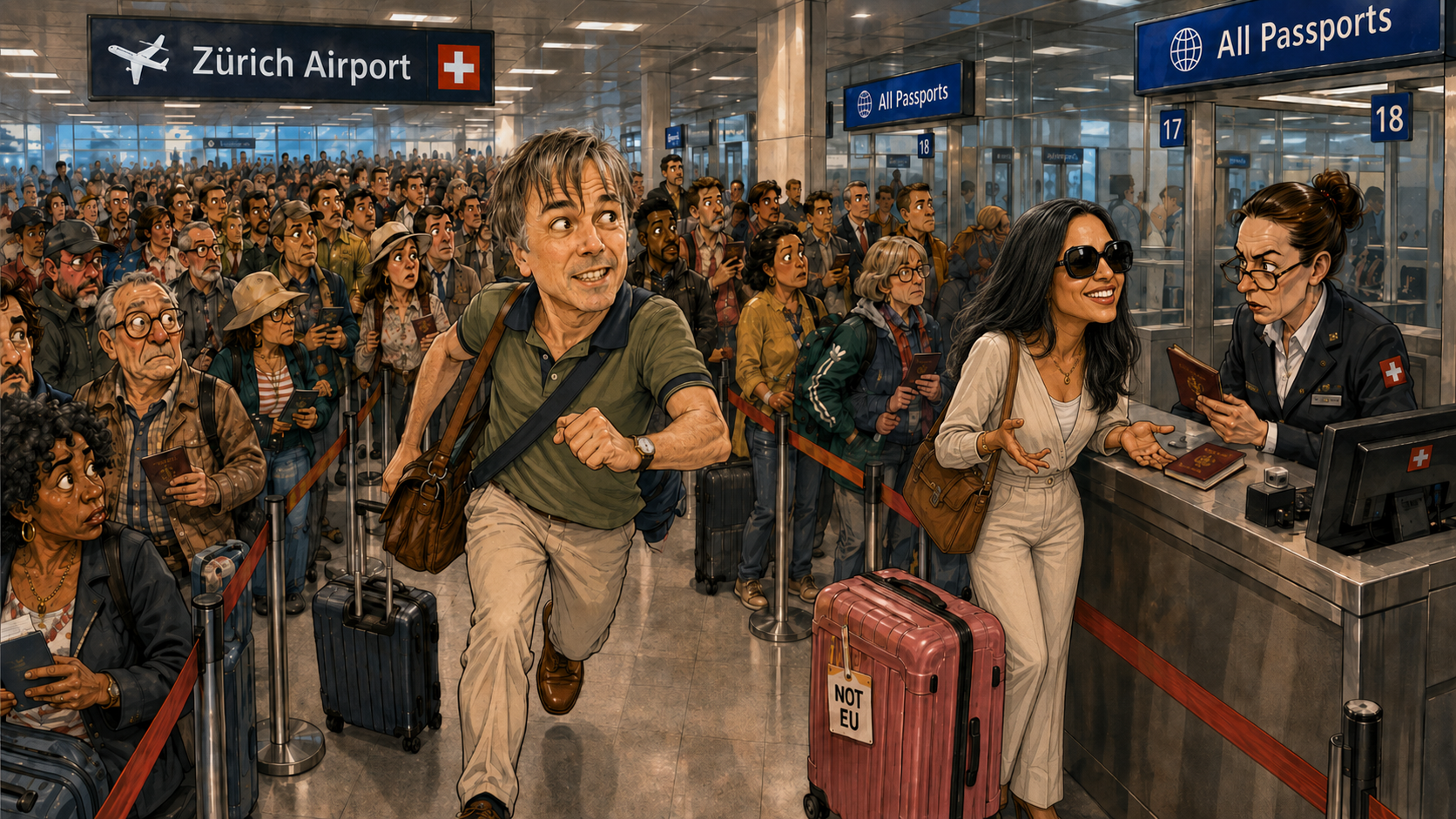
I collected the luggage, said goodbye to my friends and waited. An hour later my phone rang, because she had been selected for additional screening and I was invited back to passport control. There was nothing remotely mysterious about her visit or her documents, but a perfectly normal situation will occasionally develop an appetite for administration. A few questions became several questions, several questions became more waiting, and we were eventually released into Switzerland with all mysteries resolved and nothing whatsoever discovered. By then a pattern was becoming difficult to overlook: nothing that day would be permitted to happen directly if an unnecessary intermediate step could be inserted first.
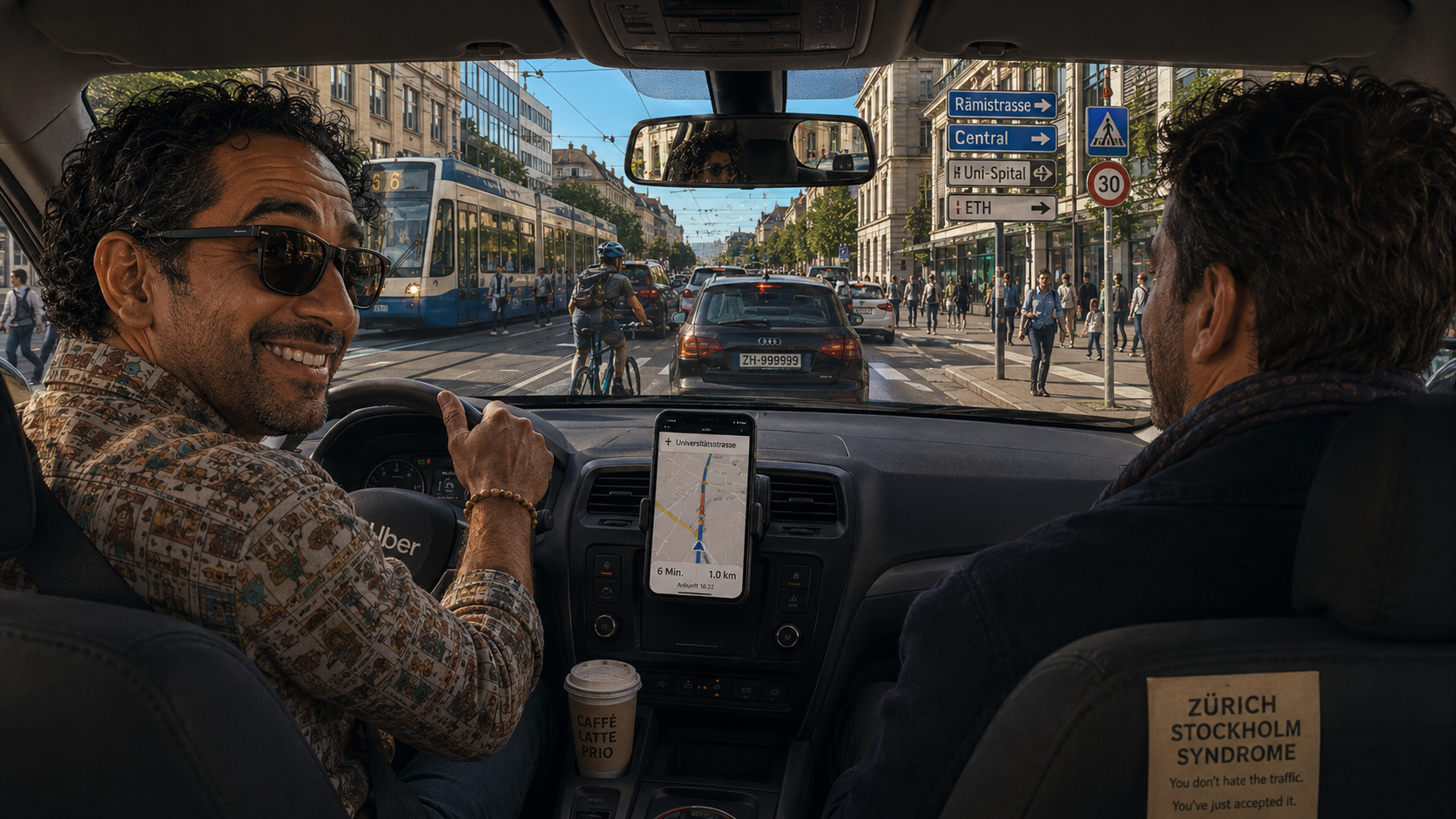
Getting home should at least have been simple. The first Uber accepted the ride, kept us waiting for ten minutes and then cancelled for reasons that presumably made excellent sense somewhere inside an algorithm. The second arrived and, with the entire Zürich road network at its disposal, selected Universitätsstrasse and Rämistrasse, the precise stretch of road I have already devoted an article to, because the city has turned it into a practical demonstration of how traffic can be discouraged without ever being formally prohibited. There was an almost beautiful symmetry to it. Albania had shown me what happens when nobody follows the rules; Zürich demonstrated what happens when there are so many rules that movement becomes largely theoretical. Two entirely different administrative traditions, one identical average speed.
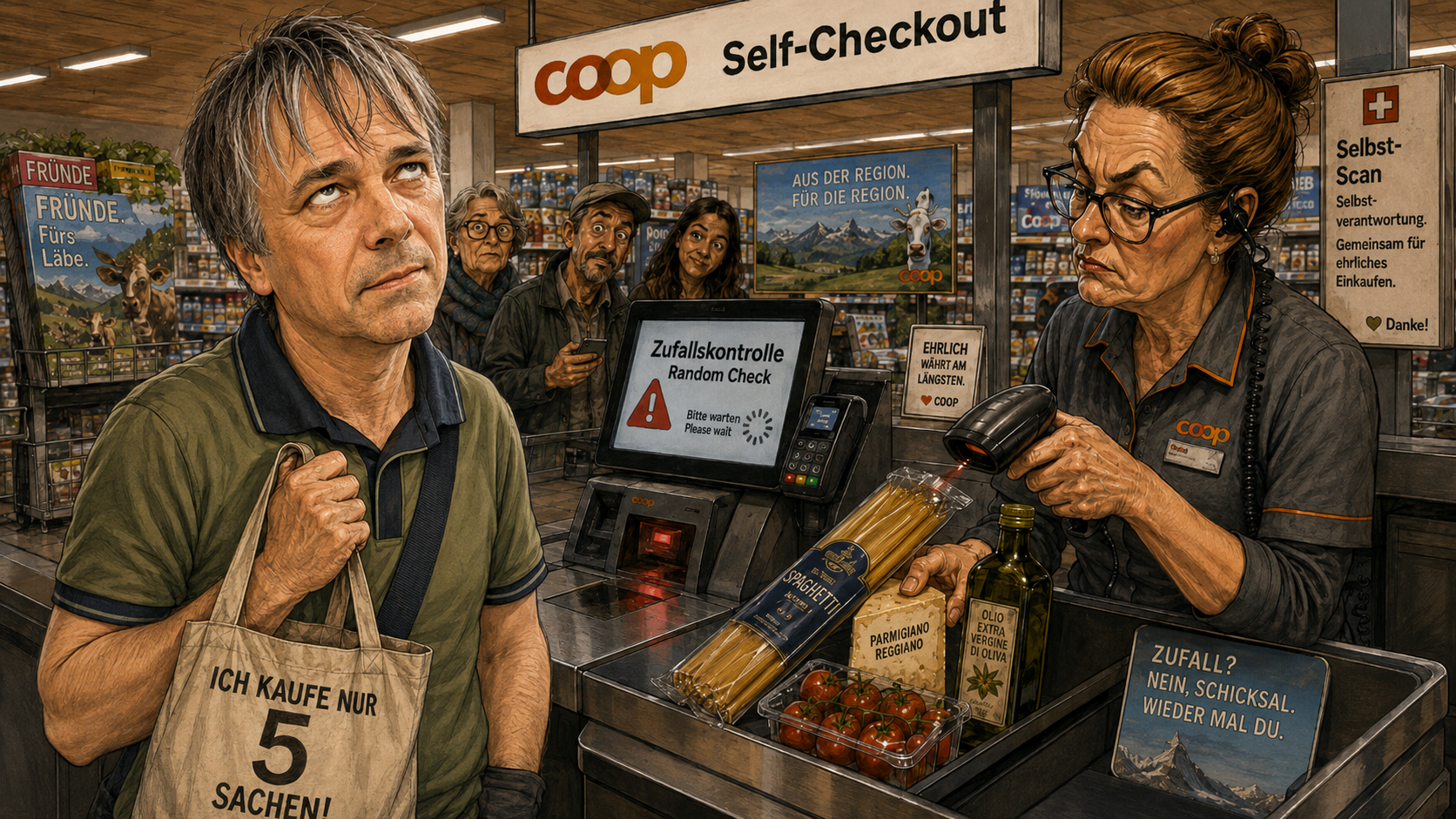
At home I wanted nothing more adventurous than pasta. I drove to the supermarket, bought a few ingredients and went through the self-checkout, where the machine immediately selected me for a random inspection. An employee duly examined my bag to establish that I had not used my exhausted condition to found an organised crime operation involving spaghetti, tomatoes and Parmesan. And there, at last, the day acquired coherence. The traffic, the airport, the passport questions, the cancelled Uber and the supermarket inspection had never been separate annoyances at all. The universe had simply selected me for additional screening and had neglected to specify where the procedure was supposed to end.
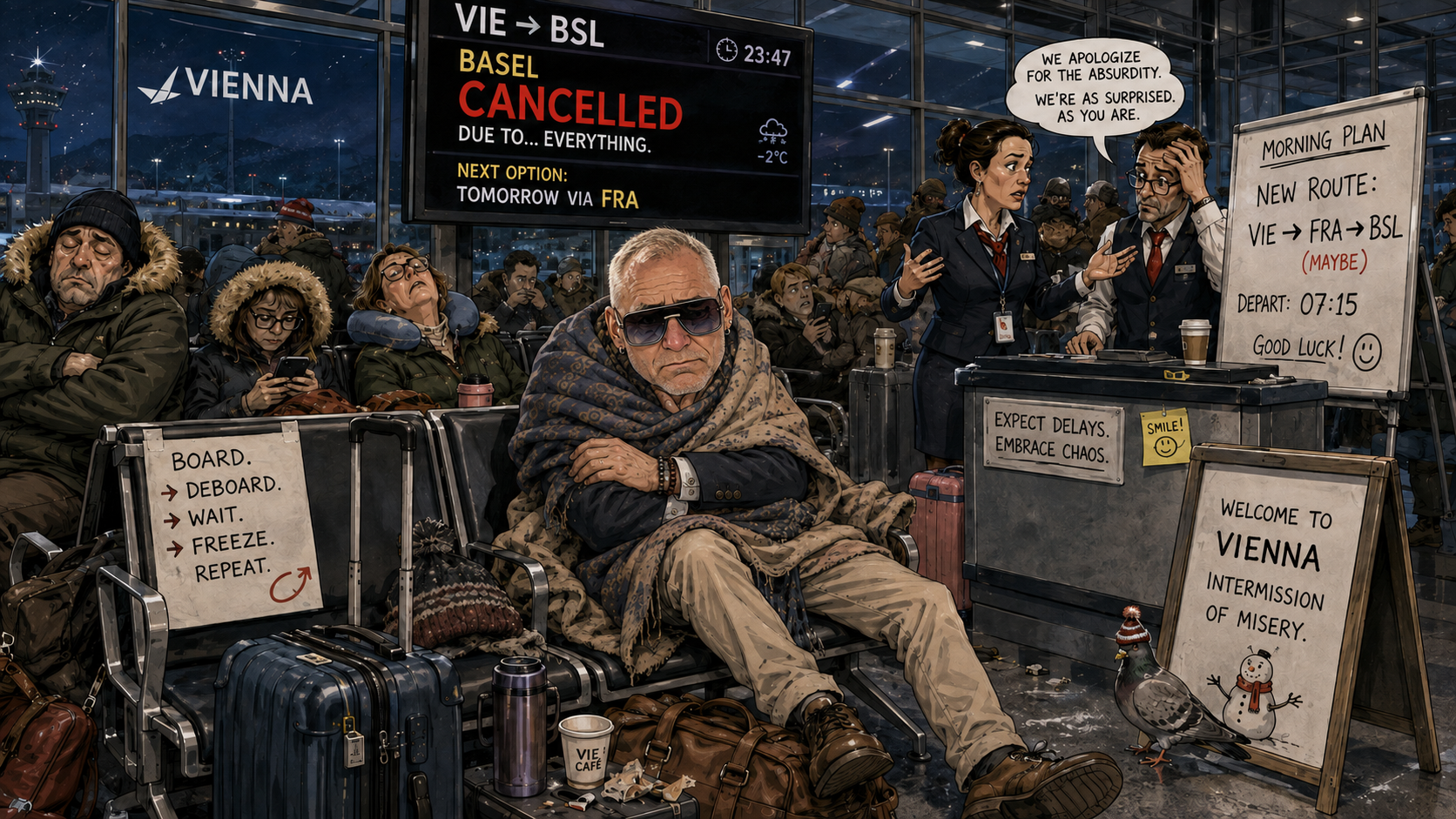
I was thoroughly satisfied with this interpretation until I heard from my friend who had left Tirana on the same day for Basel via Vienna. Thunderstorms took his connection, after which he participated in several increasingly theoretical attempts to reach Switzerland: boarding, waiting for buses, boarding the aircraft, sitting on the aircraft, leaving the aircraft, returning to the terminal. The flight was then cancelled outright, the hotels were full, the staff were overwhelmed, and Vienna Airport became his accommodation for the night, cooled to around eighteen degrees, which is admirable for white wine and considerably less persuasive as hospitality. He emerged from it with a cold. At half past four in the morning the process resumed, this time via Frankfurt, where a further five hours were waiting for him before Basel finally consented to be reached.
Hearing this was deeply inconvenient for my carefully cultivated sense of victimhood. I had, after all, taken the flight printed on my ticket, arrived in the correct city, slept in my own bed and even managed to eat the pasta. Perhaps that is the final lesson of travel: however comprehensively your own journey is failing, somebody nearby is having an itinerary collapse so completely that your misery begins to resemble premium service. I shall therefore try to complain a little less about the whole affair, although Tirana Airport could still make a lasting contribution to international understanding by discovering how a queue works.
Stay positive.
//Alex


1 comment