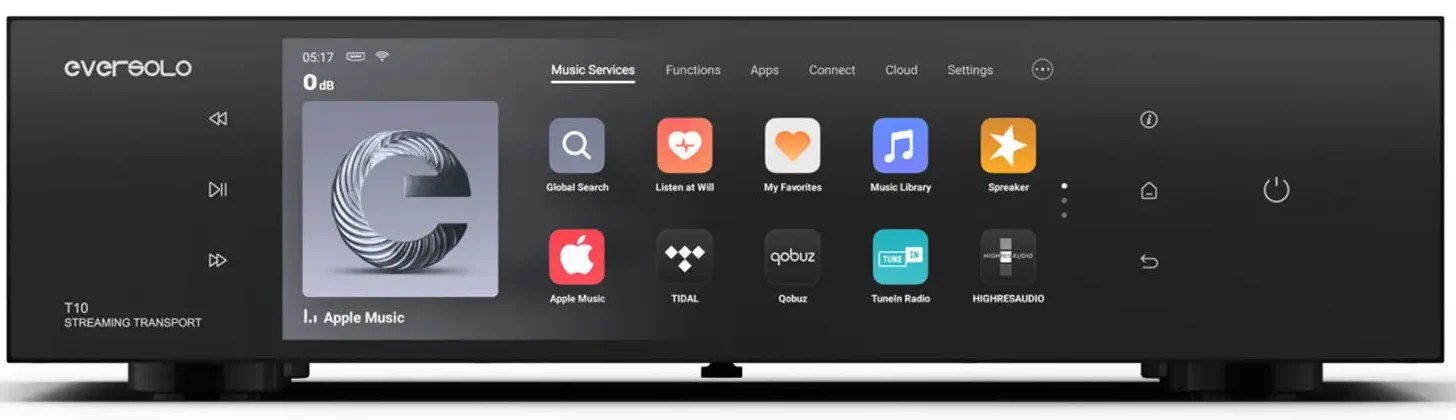
Hi-Fi has discovered the touchscreen. This is apparently progress. Streamers that once contented themselves with playing music now arrive with increasingly elaborate front displays, album artwork, animated meters, menus and enough touch functionality to suggest that the obvious place from which to operate a stereo system is directly in front of it. It photographs beautifully. It also makes remarkably little sense.
WiiM, Eversolo, HiFi Rose and plenty of others have made prominent displays part of the modern streamer aesthetic. Some go considerably further than others, turning much of the front panel into a touchscreen. Naim, Cambridge Audio and various competitors pursue somewhat different implementations, but the general direction is unmistakable: more screen, more artwork, more visible interface.
There is nothing inherently wrong with any of this. Album artwork looks pleasant. A good display makes an expensive component feel contemporary rather than like laboratory equipment with RCA sockets. And standing in front of an Eversolo at a dealer, swiping through albums on its screen, is undoubtedly more impressive than staring at two green LEDs.
The problem begins when you take the product home.
My Hi-Fi equipment sits in a rack several metres away from the listening position, which is where Hi-Fi equipment traditionally tends to sit unless one has developed the unusual habit of listening to music while kneeling directly in front of the streamer/DAC. From the sofa, even a relatively generous front display is not much of an interface. It is illuminated furniture.
Album artwork remains vaguely identifiable if the cover is distinctive enough. Reading an album title or track name requires considerably more optimism about my eyesight. Actually using the touchscreen requires getting up, walking across the room, bending down towards the rack and operating the streamer as if I were changing a setting on a dishwasher. Nobody listens to music like this.
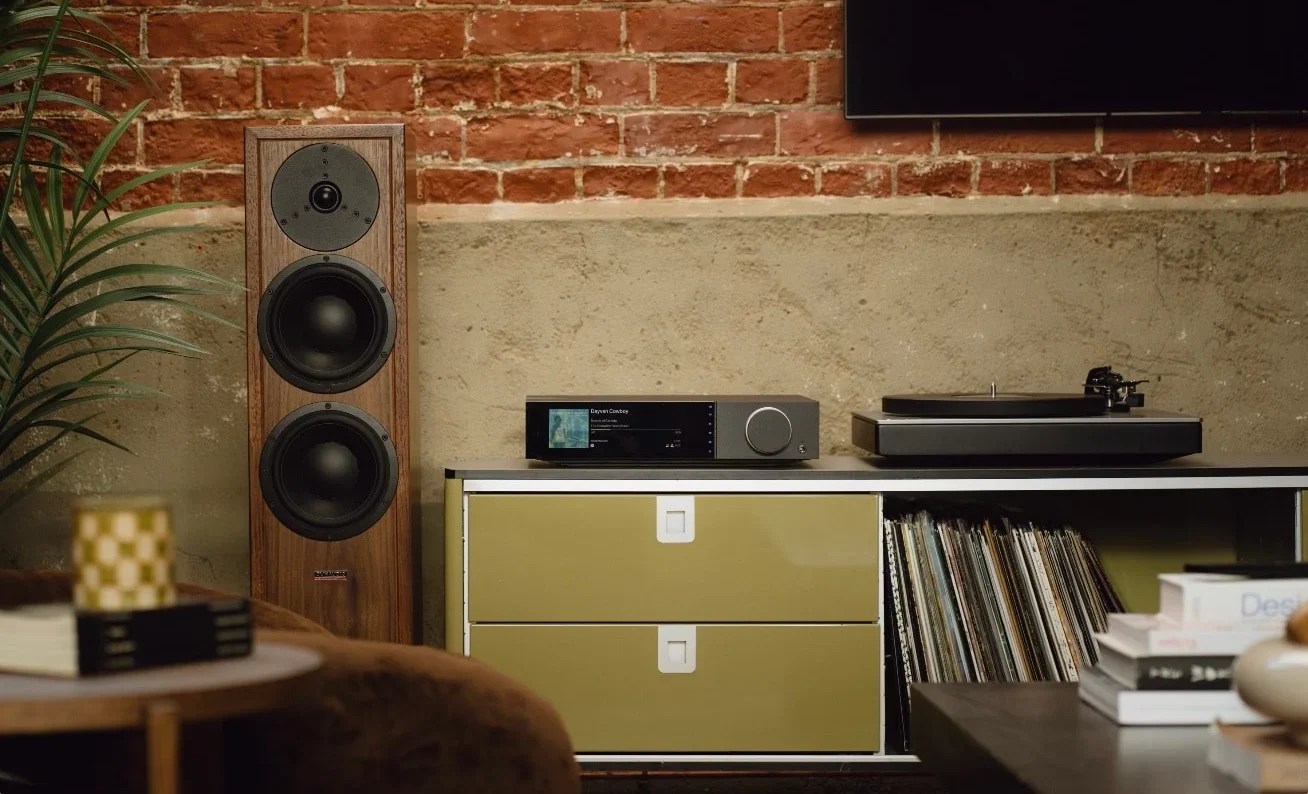
The front touchscreen therefore belongs to an increasingly familiar category of technology: features that demonstrate exceptionally well and operate considerably less convincingly in the environment for which the product was supposedly designed. Hi-Fi reviewers can photograph it. Dealers can swipe it. Marketing departments can describe it as an intuitive user experience. The owner then sits down three metres away and reaches for his phone.
The Phone Solves One Problem and Creates Another
And, to be fair, the phone works.
WiiM has its app. Eversolo has its app. Cambridge Audio, Naim and many others have their own control environment. Then there are increasingly useful native streaming service integrations such as Spotify Connect, TIDAL Connect and Qobuz Connect. The underlying idea is correct: the streamer stays where the streamer belongs and the interface comes to the listener.
For one person, this is close to ideal. For a room full of people, it is not. A smartphone is not really a remote control. It is a personal computer containing messages, photographs, email, banking apps, work applications and enough fragments of one’s private life that handing it around a room because somebody wants to play a song feels faintly absurd.
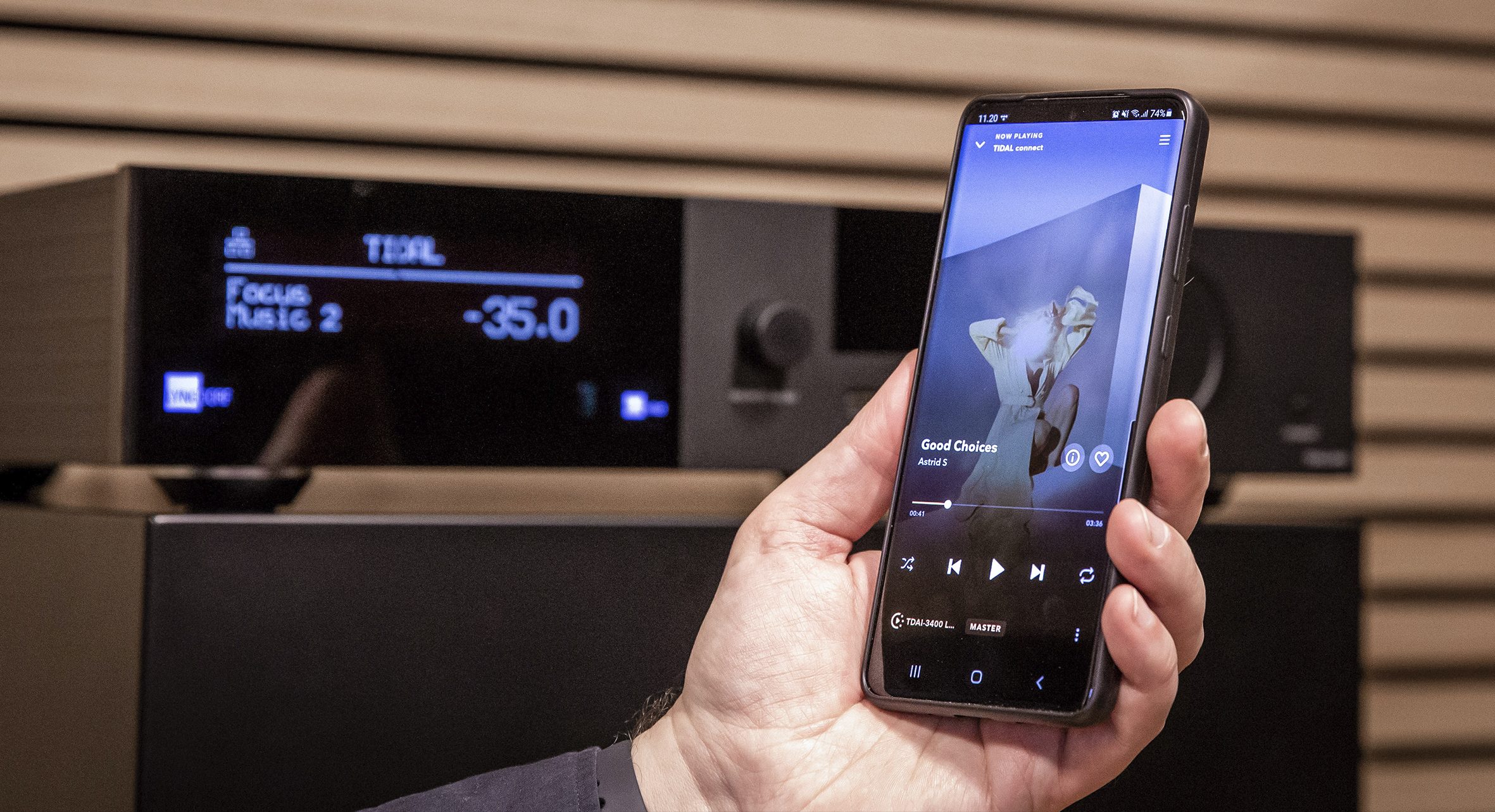
There is another problem. The guest may not use Qobuz. They may use Spotify or Apple Music. They may not have the device manufacturer’s control app installed. They may not be connected to the right network. And in my particular case, they almost certainly do not have Roon.
Roon is the centre of my music system. It manages my library, integrates Qobuz and gives me one coherent way of navigating music rather than treating local files and streaming catalogues as separate worlds. For me, it is an excellent solution. For someone visiting my house, it is completely irrelevant. They do not have my Roon environment, they are not necessarily part of my home network and they should not need a short course in domestic IT infrastructure merely because they would like to choose the next album.
The Dedicated Tablet Is Not the Answer Either
The obvious answer is a communal tablet.
I tried that idea in various forms and eventually gave up on it. A tablet dedicated to the Hi-Fi system sounds wonderfully organised until the moment you actually need it. Then it is somewhere else, discharged, waiting for an operating-system update, asking for a password or complaining that an application has not been opened for six weeks.
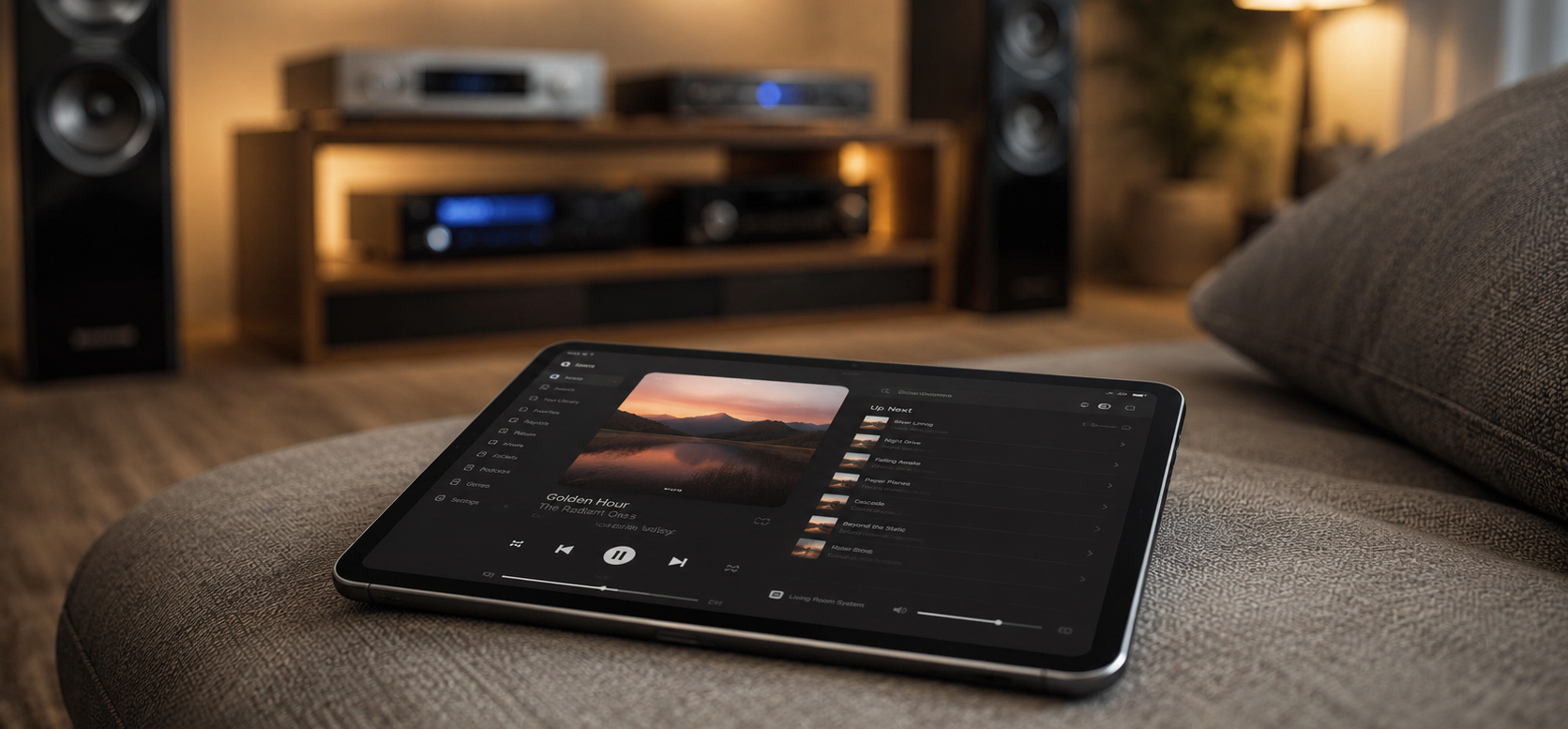
There is something faintly ridiculous about maintaining another general-purpose computer merely because the stereo needs a remote control. What I wanted instead was exactly that: a remote control. Not an app pretending to be one. Not a tablet temporarily employed as one. A device whose entire reason for existing is to control the room.
Roon Finally Meets a Proper Remote
I already use an RTI professional control system for the television, home cinema and Hi-Fi. RTI remotes are freely programmable and can communicate with equipment over Infrared or IP, which means the same device that controls the television, amplification and volume can also become the interface to the music system.
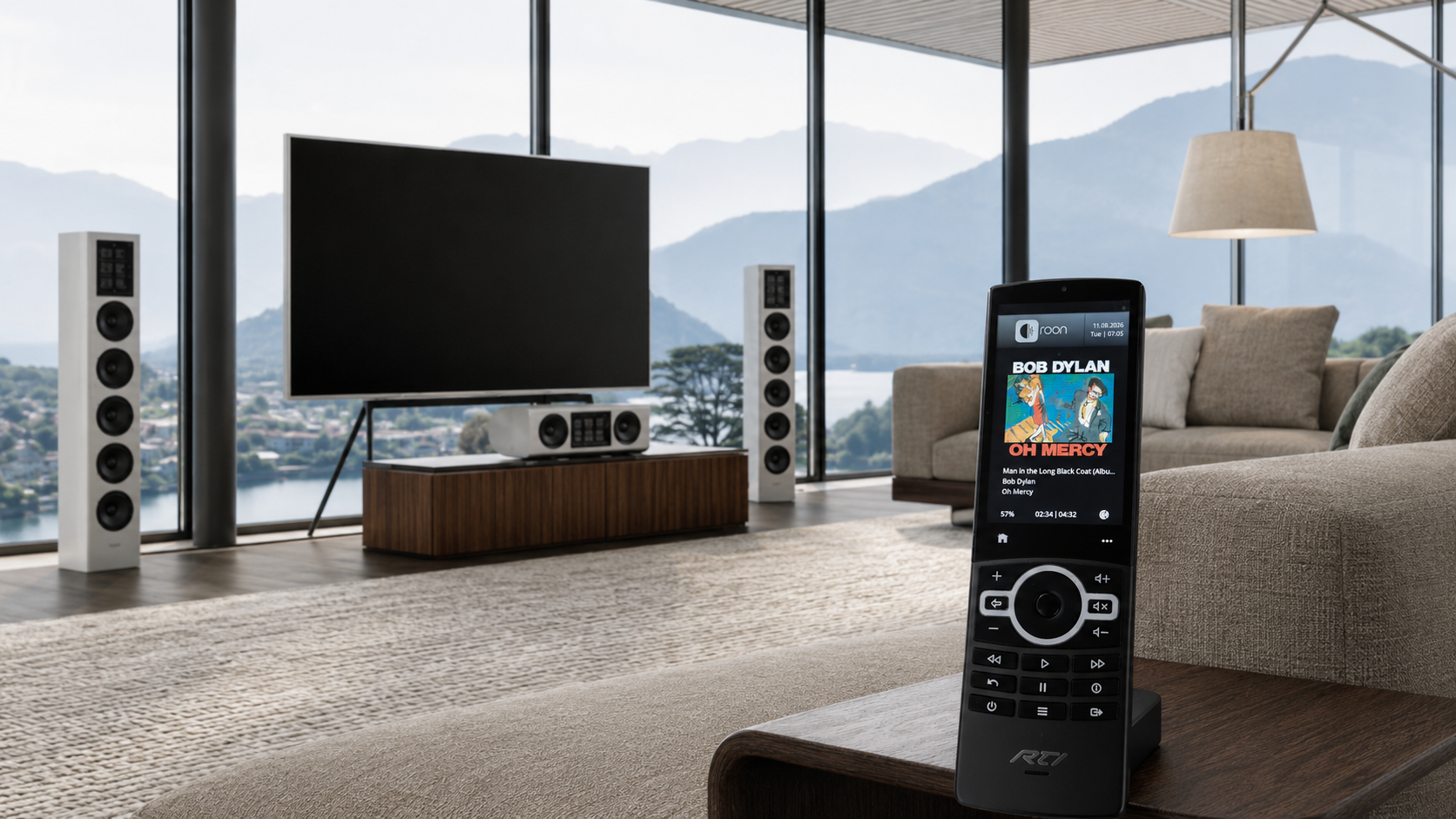
And because it is an actual remote control rather than a slab of glass pretending to be one, the everyday functions remain tactile. Volume, mute, track skipping and other commands can be operated without even looking at the screen. The display only becomes necessary when I actually want to browse or search for music. That distinction matters more than it may sound. Touchscreens are excellent when there is genuinely something visual to navigate. They are considerably less convincing when used to replace a button whose position your thumb already knows.
The missing piece in my setup was Roon. A new IP-based Roon integration for RTI has now made that possible. My remote can show what is playing, including album artwork and track information. It can browse Roon, open my library and playlists, access Qobuz and search for music. The screen is not enormous because it does not need to be. It is thirty centimetres from my eyes rather than four metres away.
More importantly, it is not my device in the personal sense. It belongs to the room. Anyone can pick it up. There is no Roon account to configure, no streaming app to install, no phone to unlock and certainly no requirement for me to hand over the device containing the rest of my digital existence because somebody would quite like to hear Steely Dan. This is what a user interface is supposed to do. It appears where the user is.
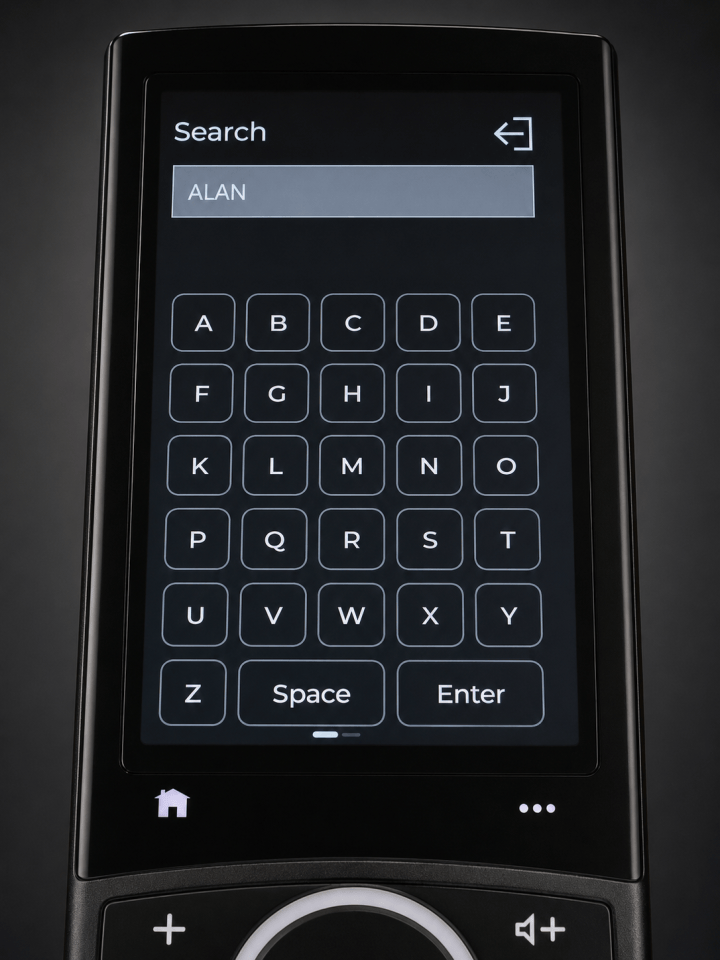
The same small remote now gives me playback information and album artwork when I actually want to see them, access to my playlists, library and Qobuz when I want to browse, and a touchscreen keyboard when I want to search. The rest of the time, it behaves like a remote control rather than demanding my visual attention for every mundane command. It is difficult to imagine a better division of labour between physical controls and a screen.
Expensive? Of Course It Is. This Is Hi-Fi.
There is an obvious objection. A professionally programmable RTI system is not the cheapest way of selecting an album.
True. Neither is most of Hi-Fi.
This is an industry in which perfectly rational adults debate the merits of DACs costing several thousand dollars, power supplies are granted their own chassis and an improvement of questionable audibility can produce a fourteen-page forum discussion before breakfast. Suddenly becoming financially austere when discussing the device one physically interacts with every time one listens to music would be an interesting place to draw the line.
More importantly, user experience is part of a good system. We spend enormous amounts of time discussing how audio equipment sounds and surprisingly little discussing how pleasant it is to live with. Yet a streamer that sounds magnificent but requires juggling phones, applications, accounts and interfaces every evening is not a completely successful product. Engineering does not stop at the analogue outputs.
And this is where I think much of the current touchscreen enthusiasm misses the point. The question is not whether the display is beautiful. Many of them are. The question is whether it is located where a display can actually be useful.
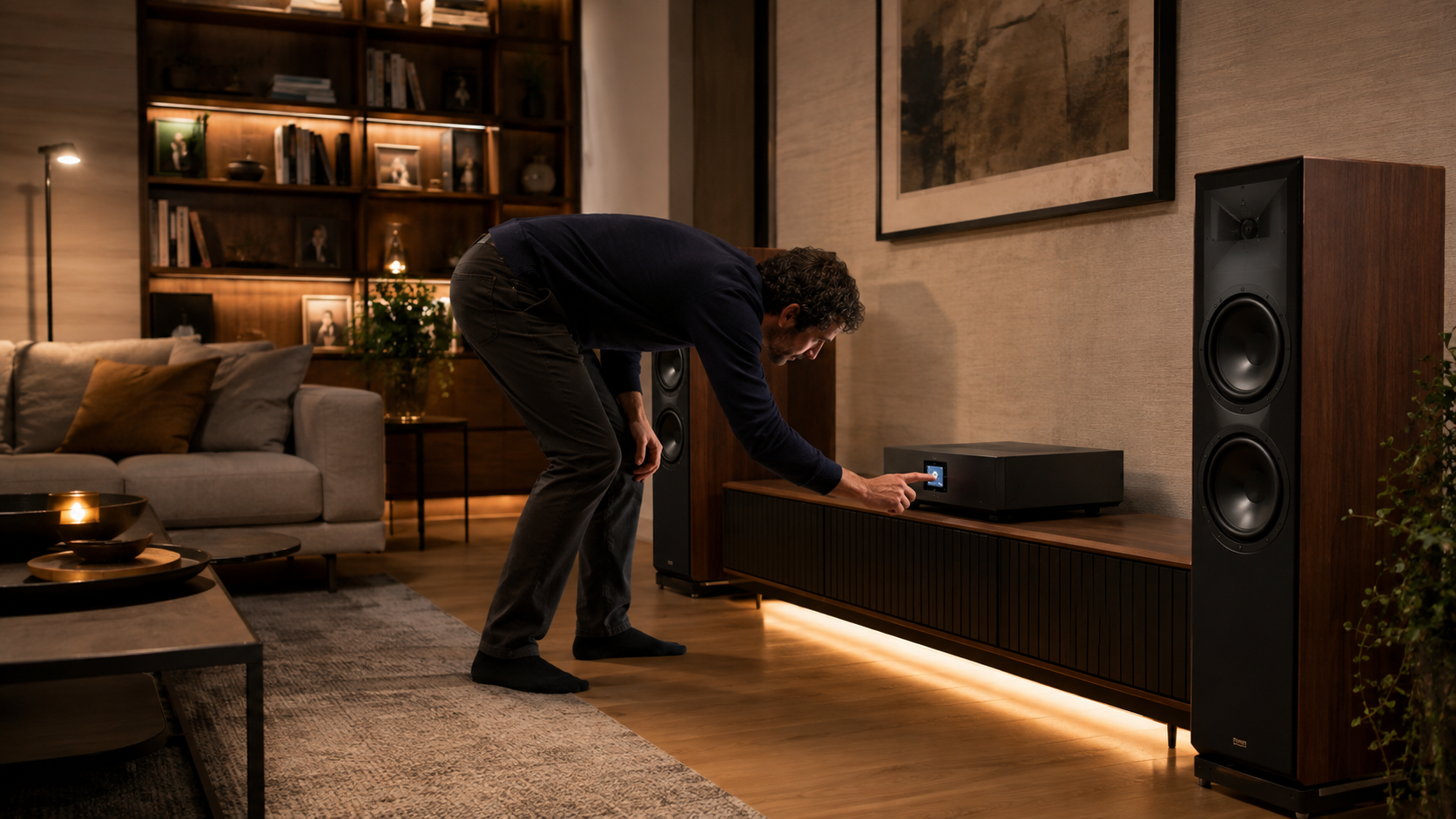
Putting an elaborate touchscreen on the front of a streamer is an excellent way to make a streamer look sophisticated in a photograph. Putting the interface where the listener actually sits is a better way to make the system sophisticated in use.
But that interface does not have to be a smartphone. In fact, I increasingly think it should not be. A Hi-Fi system belongs to the room, and so should its controls.
A proper remote can be picked up by anyone, requires no account, no app, no personal phone and no explanation of whose device is allowed to control what. Physical buttons handle the things that should remain physical; the screen appears when browsing and search actually require one.
The industry keeps putting better screens on the equipment. I would rather have a better remote in everyone’s hand.
Just my five cents.
//Alex

