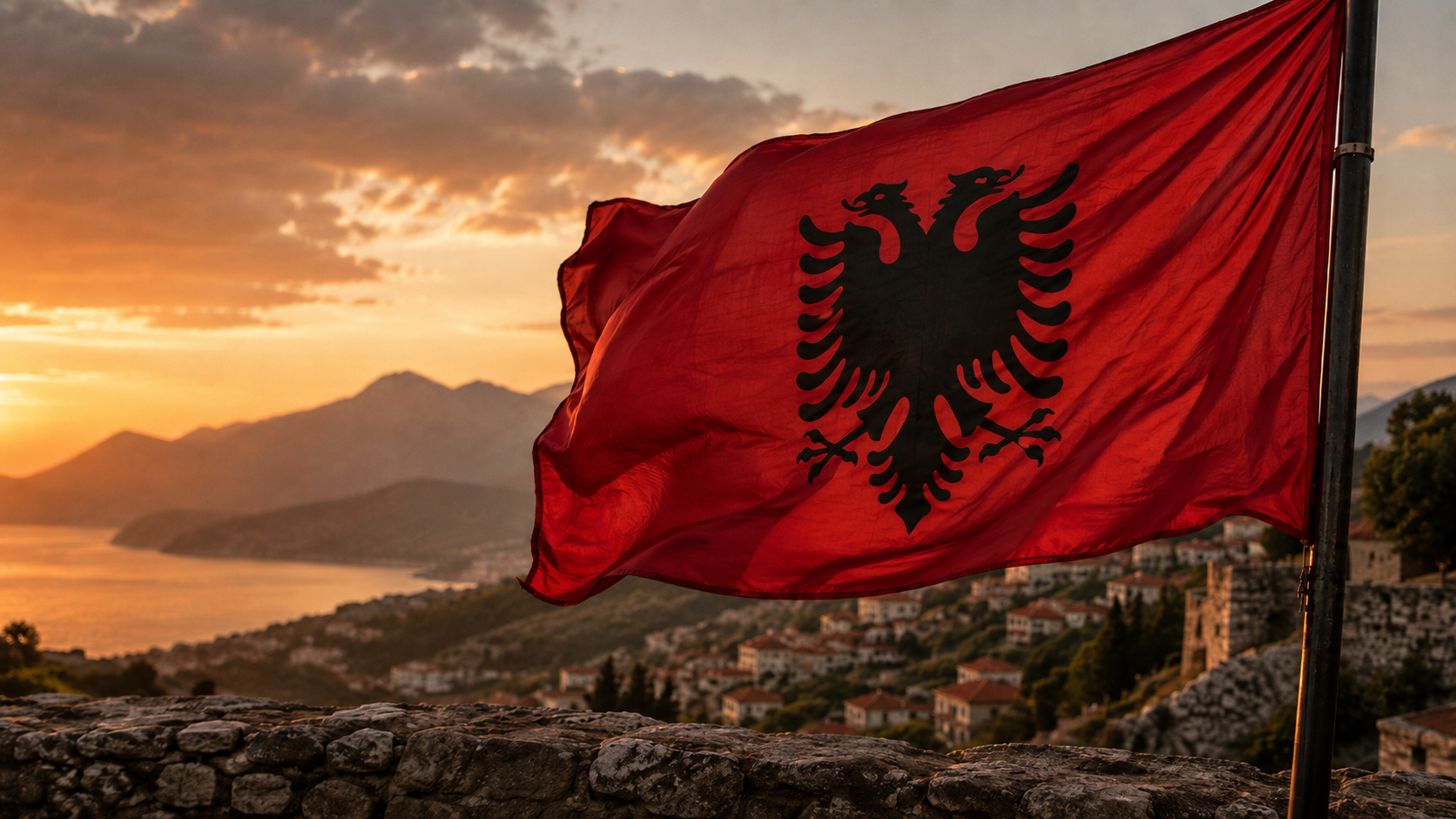
Having devoted an entire article to the remarkable sequence of events that turned our journey home from Albania into a practical demonstration of Murphy’s Law, fairness requires me to add something. Albania itself was not the problem. Or at least, not most of it.
Getting around the country can certainly require a certain philosophical flexibility. We landed in Tirana and collected a rental car, an exercise that already suggested that procedures in Albania are sometimes considered more as general guidance than as an unnecessarily rigid sequence of events. Then we set off for Korçë.
Driving in Albania is an experience best approached without strong expectations of cause and effect. Someone will sit in front of you at a speed suggesting that time has lost all commercial value, then suddenly discover an urgent need to overtake the next vehicle on a blind bend. Another driver will pass you with the sort of commitment that makes you wonder whether he has recently updated his will, only to pull back in front and proceed more slowly than you were going in the first place. You are left with the intriguing question of what, precisely, has been achieved.
The road to Korçë gave us our first taste of the country beyond Tirana. It was already winding, increasingly rural and surrounded by mountains, but more an introduction than the main event. We arrived in Korçë after a long drive pleasantly surprised by how quickly Albania had changed character once the capital disappeared behind us.

Korçë sits high in the southeast, surrounded by mountains, and in August the difference in climate was glorious. Days were pleasantly warm rather than oppressive, while the evenings became cool enough that sitting outside remained enjoyable instead of becoming an endurance test involving sweat and increasingly desperate quantities of cold wine.
We liked the city immediately. It is compact, lively without being frantic and still feels very much like a place where people actually live rather than somewhere reorganised entirely around visitors. We were there for a wedding, which naturally gave the stay a special context, but even beyond that there was plenty to like.
There was also the first of several culinary surprises. One evening we went to a steakhouse without particularly extravagant expectations and came away genuinely impressed. The meat was excellent, properly handled and accompanied by a wine selection considerably better than we had expected to encounter. This would become something of a theme.

In fact, one of the recurring surprises of Albania was that we simply did not have a bad meal. Not one. There is always a danger in making statements like this after a holiday because memory is an enthusiastic editor, but even allowing for that, the consistency was remarkable.
Korçë also delivered another surprise: wine. Restaurants carrying international bottles often priced them with a degree of restraint that has apparently become unfashionable elsewhere. It would be easy, particularly as someone arriving from Switzerland, to describe Albania simply as cheap. That is true in a relative sense, but it is also slightly lazy. Albania has a different economy and a different cost structure. The more interesting observation was that prices generally felt reasonable. Even imported wines that obviously cost Albanian restaurants real money appeared with mark-ups that bore some recognisable relationship to the price of the bottle. This should not be revolutionary, although a brief examination of a Zürich wine list may persuade you otherwise.
After the wedding we continued south towards Sarandë, and this was where Albania really started showing off. The drive from Korçë to the Ionian coast is spectacular. The road twists through increasingly dramatic mountain scenery, following valleys, climbing around great walls of rock and occasionally running beside rivers that appear almost impossibly clear from above. There are stretches where the road seems to have been drawn by someone who was paid by the corner.
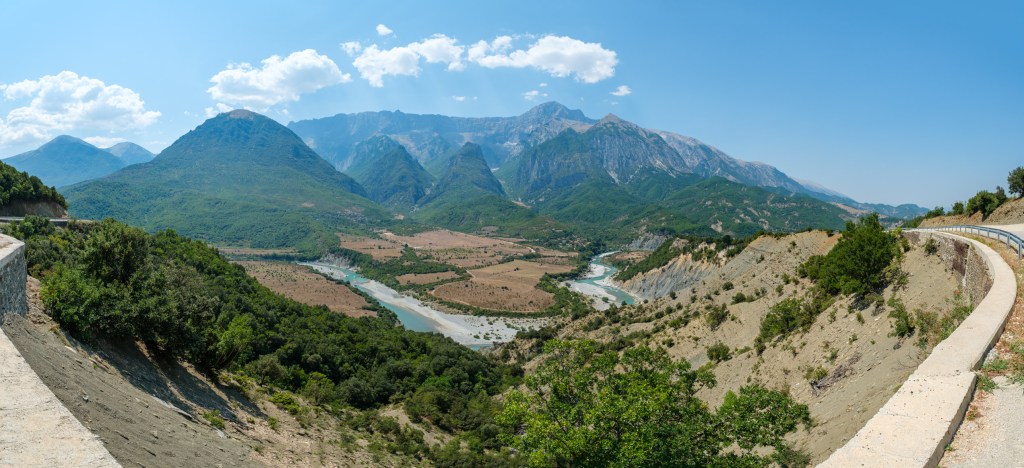
It is also the sort of journey where distance becomes a rather abstract concept. Progress is rarely direct, but it hardly matters because the landscape keeps producing another reason to slow down. Mountains open into valleys, rivers appear below the road, the vegetation changes, and eventually the whole country seems to tip downward towards the sea.
This was the Albania we had hoped to see. Not manicured, not particularly convenient and certainly not designed around the impatience of someone used to Swiss motorways, but beautiful in a way that makes efficiency seem temporarily overrated. Eventually we reached Sarandë and the Ionian Sea, whose colour occasionally looks as though somebody has adjusted it for Instagram before you have even taken the photograph.
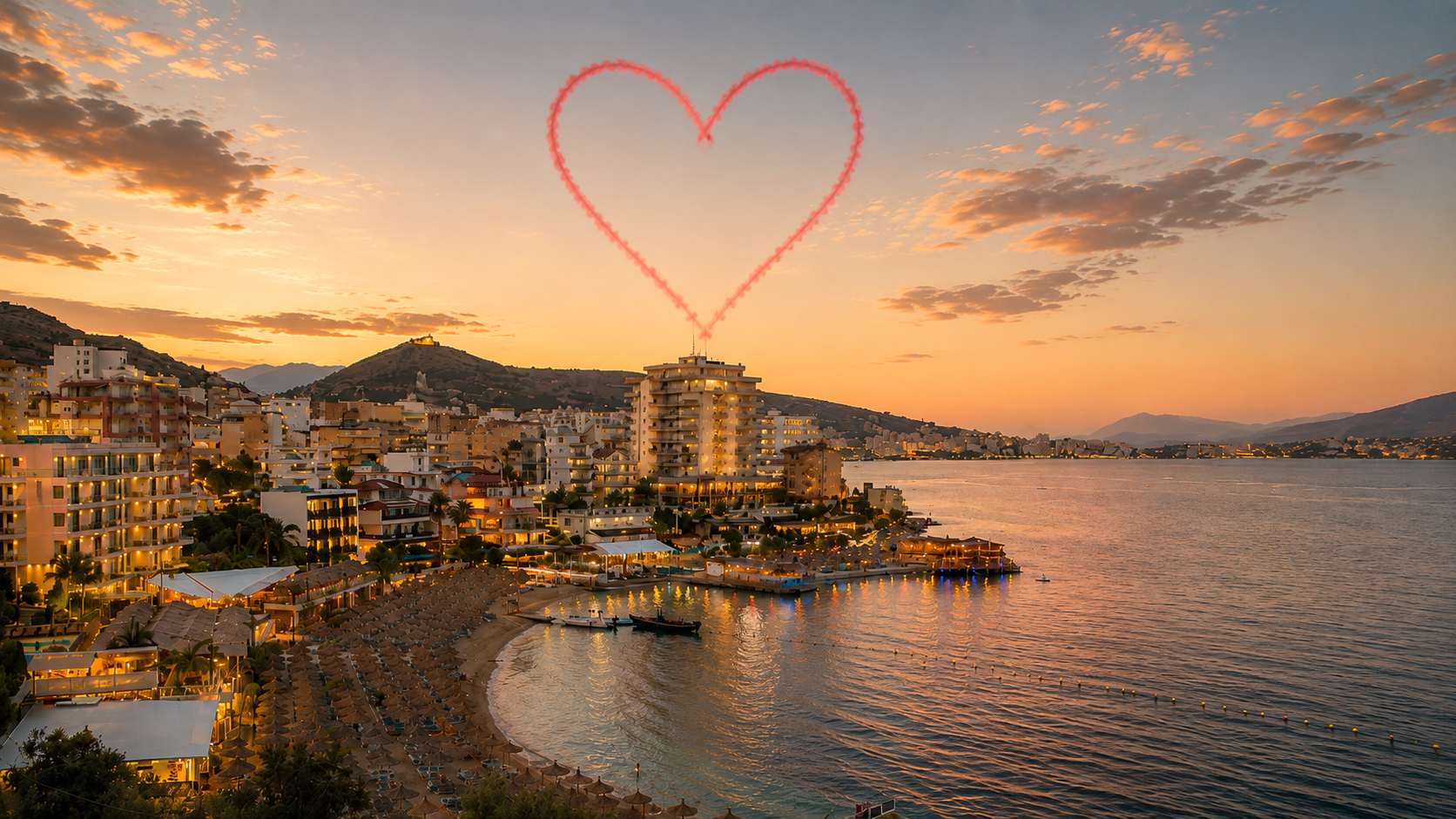
Sarandë itself is obviously a tourist town. There are hotels, beach clubs, busy streets and all the familiar machinery that appears wherever large numbers of people discover a pleasant piece of coastline. We stayed in a good hotel and were not pretending to be explorers arriving on an undiscovered shore. But the underlying attraction is difficult to argue with. The water was wonderfully clear, the sea warm and inviting, and the combination of rocky coastline, hills and that almost absurdly blue water is beautiful.
More importantly, Sarandë continued Albania’s rather inconvenient habit of feeding us extremely well. Here the food naturally turned towards the sea. We ate grouper and other catches of the day, shrimp in various forms, octopus, pasta and salads, and enough seafood to make a temporary move inland seem medically advisable. Much of it was prepared simply, which is what good seafood deserves. There is only so much culinary assistance a fresh fish actually requires before the chef starts competing with it.

What stayed with us just as much as the food, however, was the service. Again and again we met people who were genuinely friendly, funny, attentive and pleased to have us there. Not the polished friendliness of an international luxury hotel, where warmth has occasionally been through several rounds of brand training, but something far less formal and considerably more convincing.
At one point we decided that perhaps we had eaten enough seafood and went for Italian instead. This did not significantly lower the standard. The restaurant itself was simple, almost unremarkable in appearance, but the people running it were enormously welcoming, funny and charming, and the food was excellent. Proper bruschetta, very good pasta and the sort of straightforward Italian cooking that depends far more on ingredients and competence than on decoration. That evening probably summed up what we liked about Albania rather well. Nothing about the place was trying especially hard to impress us, yet we left delighted.
None of this means the frustrations are imaginary. The infrastructure is still catching up with the ambitions of the country. International connections are not always convenient, journeys that look short on a map can consume a surprising amount of the day, and driving occasionally introduces you to interpretations of road safety you may not wish to explore personally.
There is a temptation to romanticise all of this as authenticity. I would not. Bad infrastructure does not become charming merely because there are mountains behind it, and a suicidal overtaking manoeuvre is not an expression of local culture that needs to be preserved for future generations.
But neither should those rough edges obscure what is already there. Albania gave us magnificent landscapes, wonderfully clear water, excellent food, surprisingly good wine and, above all, a great many encounters with people whose warmth had nothing performative about it. The wedding may have been the reason we went, but the country supplied plenty of reasons to be glad that we did.
Perhaps that is the more useful conclusion after all the travel chaos. Albania is not yet effortless. In some respects, quite spectacularly so. But effortless destinations have a habit of becoming interchangeable once airports, hotel groups, restaurant concepts and tourism boards have finished smoothing them into the same internationally approved shape.
Albania still has edges. Most of them are rather beautiful.
//Alex

