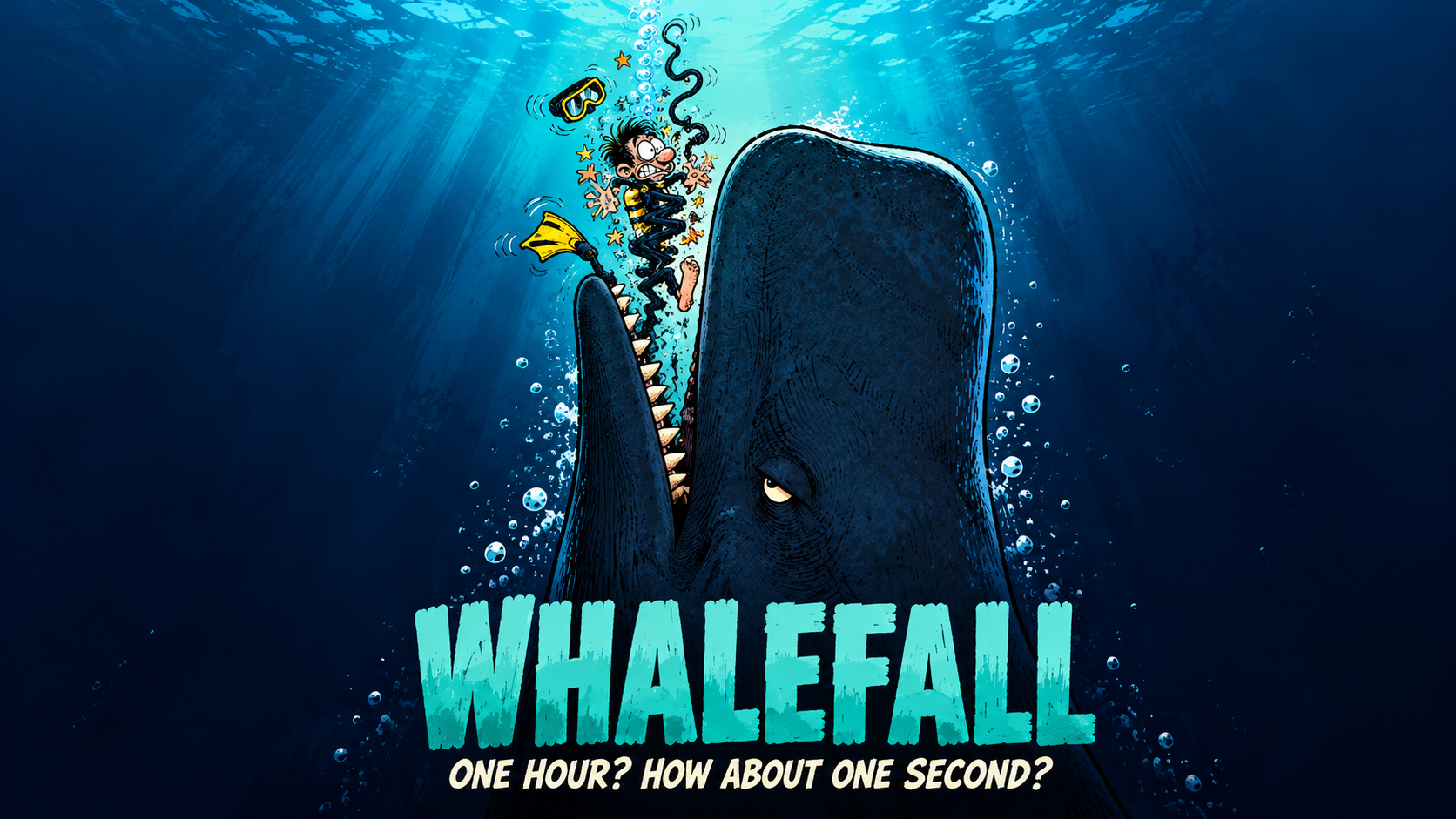
I have not seen Whalefall, and I intend to keep it that way. This is a review of the sales pitch, which has already told me more than I wanted to know. A diver is swallowed by a sperm whale and has one hour to escape, during which he also works through his relationship with his dead father. Multitasking, apparently. We are meant to find this moving. I find it remarkable that nobody in the meeting reached for the fire alarm.
Let me be clear: I have nothing against fantasy, ridiculous action or enthusiastic cinematic stupidity. I am a committed supporter of Sharknado. Its title is a full disclosure statement. Nobody expects you to mistake flying sharks for a contribution to the human condition, and nobody hands out tissues at the door. It is nonsense with the good manners to introduce itself.
Whalefall wants its nonsense taken seriously. The publicity calls it an “epic and emotional survival thriller”, presumably because “man gets eaten, thinks about Dad” did not survive the focus group. One suspects the focus group did not survive either.
The biological objections begin before anyone has been swallowed. Sperm whales hunt by echolocation. They know precisely what they are putting in their mouths, which is more than can be said for the studio. Whale biologist Shane Gero reckons a person would most likely drown on the way in, which would at least make for a brisk film. Survive that, and the first stomach chamber is built to crush food, with digestive acid waiting further down the line. The oxygen gauge is the least of your worries. This is not an escape room. It is a digestive system, and it has had considerably more practice than you.
But add a dead father and suddenly the premise has emotional depth. I understand the metaphor. Being swallowed by grief is not a difficult code to crack when someone has thoughtfully supplied an actual whale. Subtlety, in this production, arrives the size of a bus. Understanding the metaphor does not oblige me to admire it, any more than understanding a parking fine obliges me to frame it.
Nor is any of this new. A man swallowed by a large sea creature, reflecting on his choices in the dark and hoping to be spat out somewhere drier: that is the Book of Jonah. It remains a firm favourite among people who treat an ancient fish story as a peer-reviewed paper on marine biology, and who would presumably explain the digestive acid as a test of faith. Jonah got three days and three nights and a direct line to God. This diver gets an hour and a dead father. Budget cuts, presumably. Somebody in development has clearly taken Sunday school a little too literally, a habit that has never once improved a film, a science curriculum or a natural history museum. Biblical literalism and the creature feature share a single founding principle: it is true because the story says so. Only one of them admits it is fiction, and it is the one with the flying sharks.
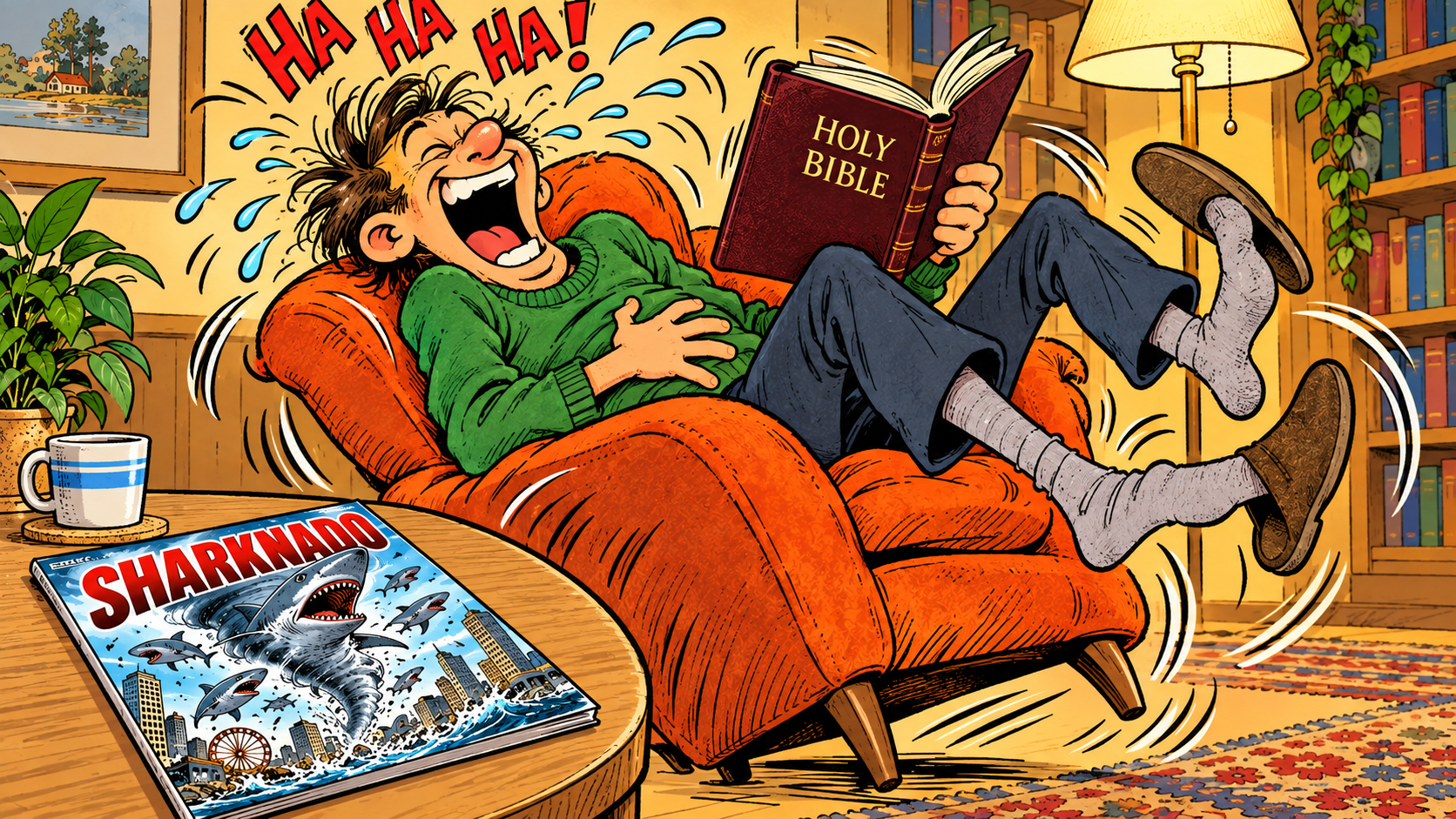
How does this reach cinemas? Somewhere, a room full of grown professionals heard this pitch and concluded that what it really lacked was solemnity. Not more teeth. Not a second whale. Not a giant squid with a personal grudge. Solemnity. Make it shameless creature-feature trash and I might well buy a ticket and a bucket of popcorn roughly the size of a stomach chamber. Sell it to me as a moving survival drama and my review becomes considerably shorter: what absolute bullshit.
So yes to Sharknado. Its sharks fall out of the sky, eat people and move on, which is frankly more closure than Whalefall seems prepared to offer. At least those sharks arrive without demanding that I grow as a person.
As always, just my five cents.
//Alex

