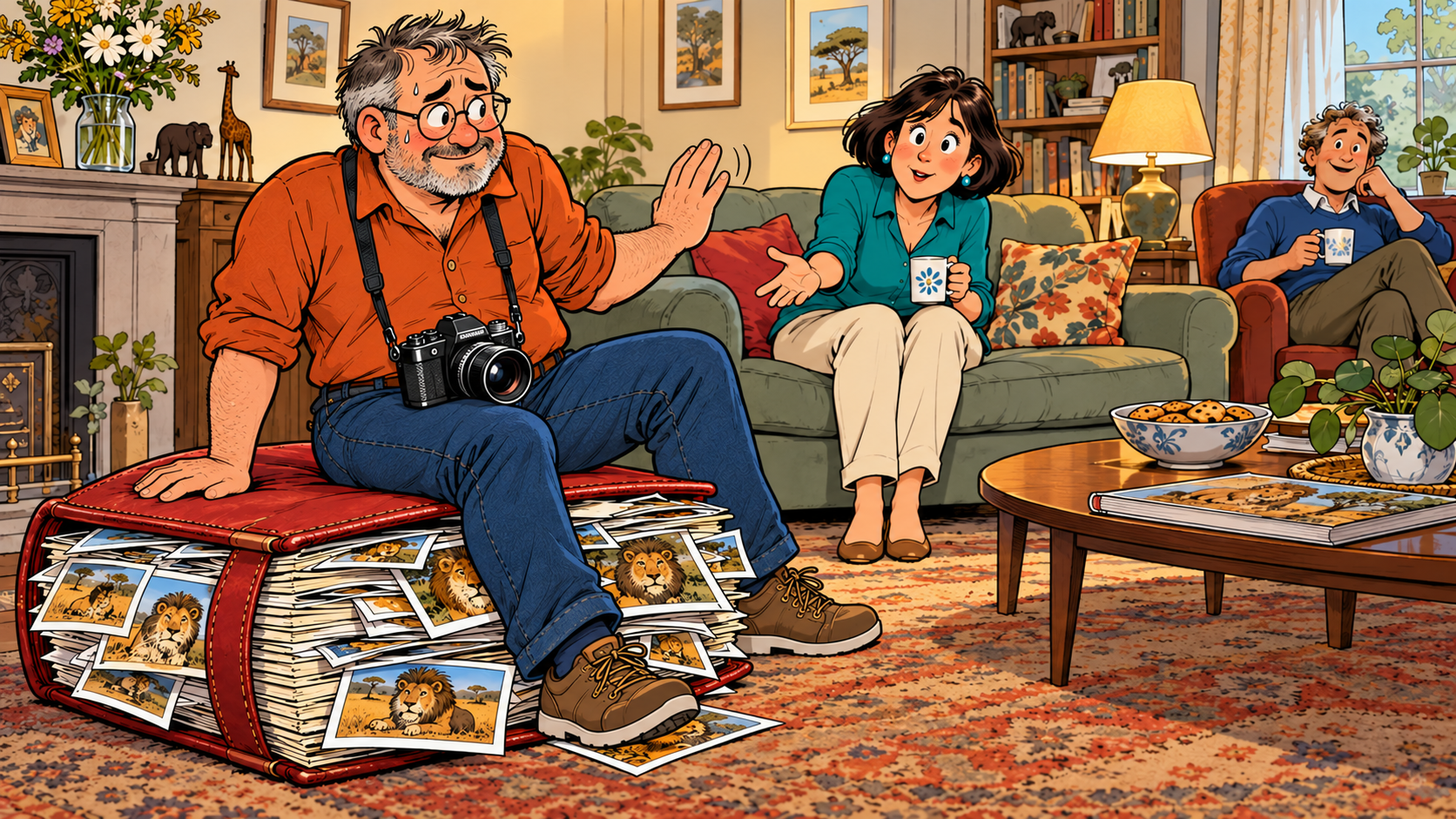
I came home from two weeks in South Africa with roughly 4,000 photographs on my camera’s memory cards, well over a thousand on my phone, and some deleting to do. These were already the survivors. I had spent evenings removing obvious failures from both devices: blurred shots, weak compositions, things that had seemed more interesting when I pressed the shutter. Including those casualties, I probably took something approaching 10,000 photographs. I am hardly in a position to lecture anyone about restraint.
Most of these were individual exposures. I generally prefer to find the composition and choose the moment myself, although moving wildlife can make a persuasive case for burst shooting. Even without holding down the shutter, an encounter with a lion or cheetah can produce hundreds of pictures. The animal makes a small movement. You take another. It might do something extraordinary next. Better take another.
What keeps me reasonably disciplined afterwards is the thought of the holiday slide evening. You know the scene, whether from experience or the accounts of survivors: guests on a sofa, a proud host, and a lion whose afternoon is being reconstructed with a thoroughness normally reserved for a criminal investigation. Here it looks left. Here it closes an eye. Here it lifts its backside. By photograph fifty, the guests have had ample opportunity to consider how much of their remaining lives they are prepared to give this lion.
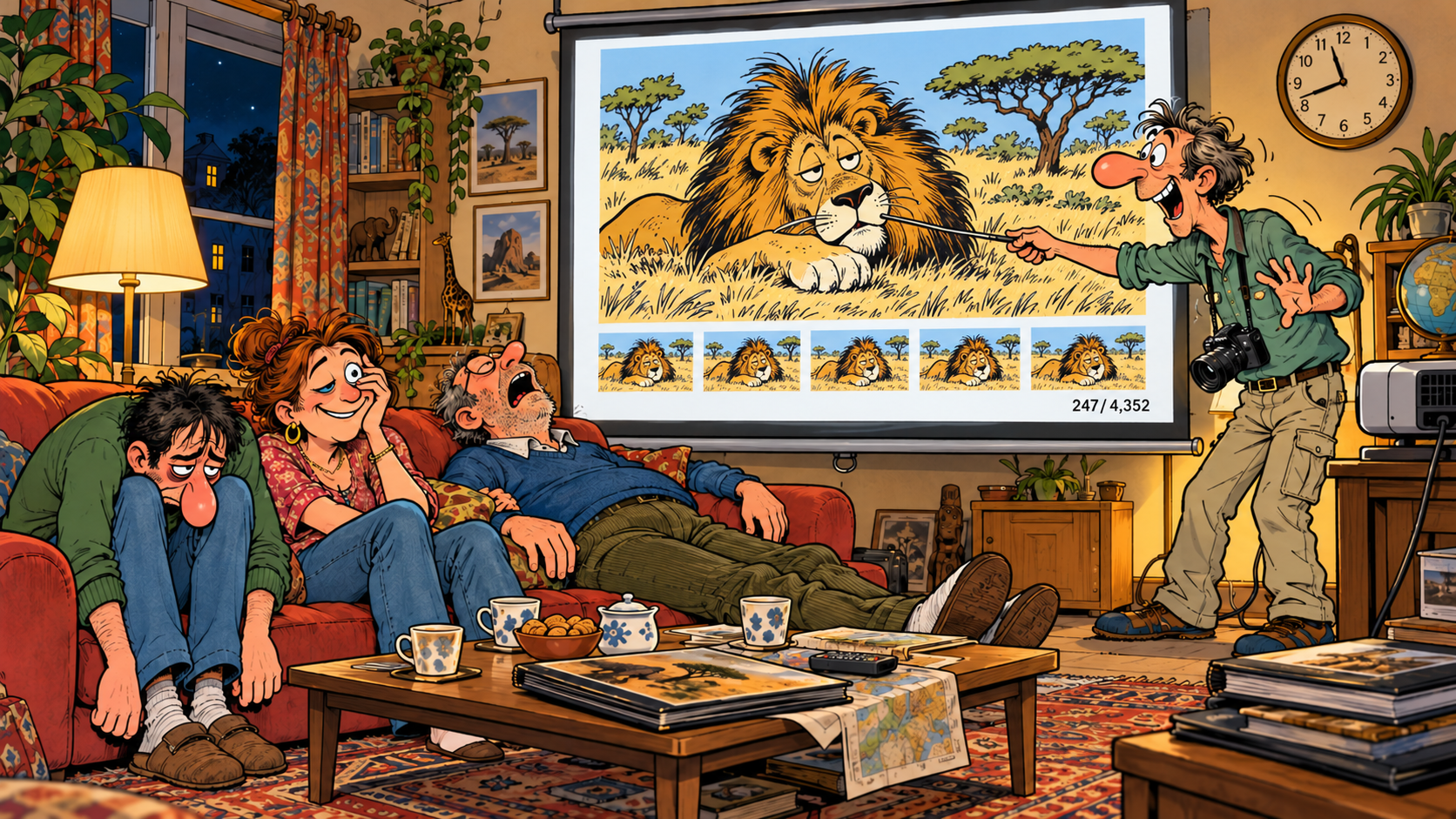
The host remembers being there. The guests have only the photographs. That difference is easy to forget when every frame brings back something you felt, heard or waited for. Your excitement at seeing an animal in the wild is real, but it does not automatically become visible in every picture you took of it. The people looking at your photographs were not there; they do not share the emotional attachment that can make even an ordinary image meaningful to you. An audience cannot supply the experience missing from the frame.
The smartphone has made this encounter portable. Now you can stand beside someone while they scroll, frown, scroll back and assure you that the good one is in here somewhere. You were offered a photograph and have somehow joined a search party. I have watched this often enough to know that I do not want to inflict it on friends or family. If I want to show someone a picture, I would like to have done the finding before involving them.
Deleting the obvious rubbish is straightforward. The difficult part begins when several photographs are perfectly decent. Nothing is wrong with them, which makes keeping all of them feel reasonable. But if they show essentially the same thing, what does each additional image contribute? A slightly different paw position may have occupied me at the time. It need not occupy anyone else.
This is where I need a process, because I cannot always make the decision immediately. In Lightroom, the software I use to organise and edit my photographs, I work through successive rounds of star ratings. On the first pass, anything worth considering gets one star. I then look only at those pictures and decide which deserve a second. The next round narrows the selection again. Three stars is normally the threshold for keeping a photograph; four and five distinguish the stronger work.
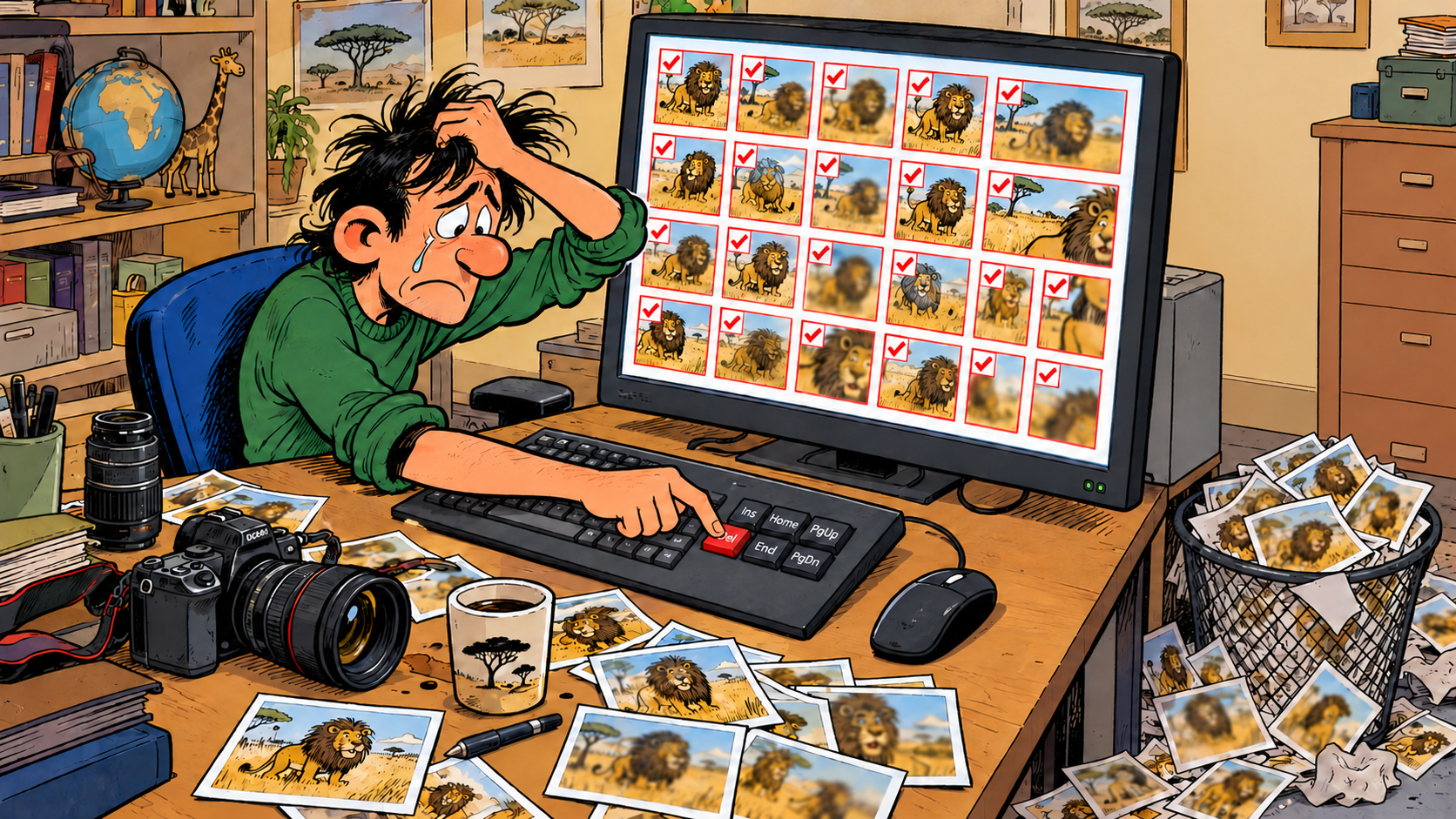
The useful part is that I do not have to settle every close contest on the first evening. Two similar pictures can survive another round while I gain some distance from the experience. Eventually, though, I have to choose. From a particular subject or encounter, I aim to keep one, perhaps two or three if they offer genuinely different images. A close portrait and an animal in its landscape can each earn their place. Three versions of the same portrait require a better argument than my reluctance to delete two of them.
Only then do I spend time on brightness, colour and cropping. I want the results to remain natural, although I may remove a distracting cable or something that has intruded into the frame. Selecting first also prevents me from carefully polishing a photograph that I should have discarded. There is plenty of work in a large collection without creating extra assignments for myself.
None of this requires an expensive camera or a solemn commitment to photographic art. My phone contributes plenty of pictures I want to keep, including everyday moments and amusing selfies. A photograph can matter because of the person in it or the memory it preserves. It does not have to impress a stranger. But a private reason to keep something is different from a reason to put it in an album for other people, and neither obliges me to preserve every unsuccessful attempt.
In a typical year, I keep around a thousand photographs from my camera, perhaps fifteen hundred in a particularly busy one. With smartphone pictures, the total may reach roughly two thousand. That is still a substantial collection, selected from many thousands more.
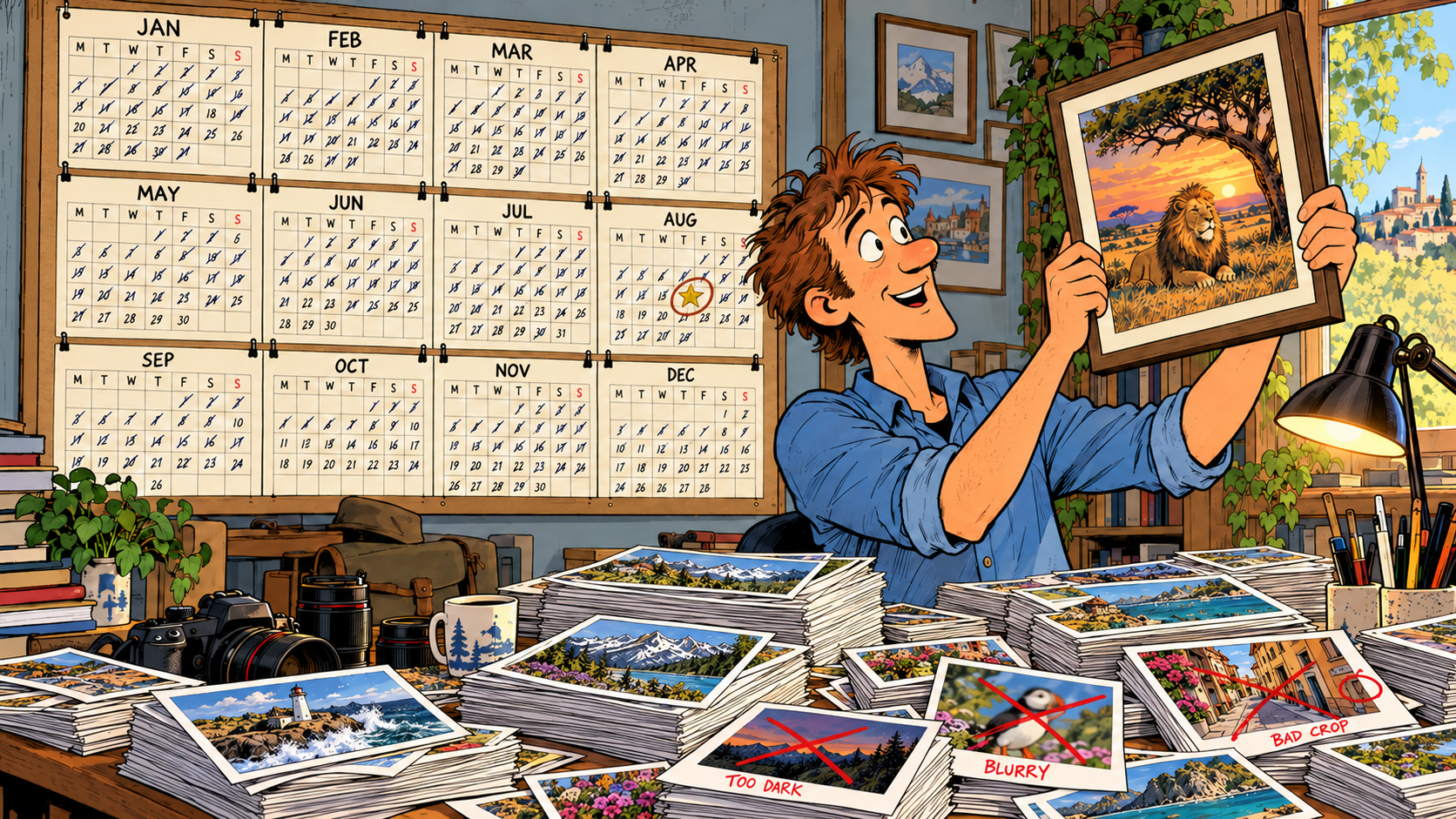
And out of everything I photograph in an entire year, perhaps one image makes me genuinely proud. In a particularly good year, two or three. That is the scale of it: a year of looking, composing, trying and selecting, for a handful of photographs that feel exceptional to me. Plenty of the others are beautiful, meaningful and worth showing. But I certainly do not make an outstanding photograph every day, or even on every trip. Taking pictures frequently has made me more aware of how rarely I achieve that, not less demanding about what qualifies. It is a useful thought to bring to a library full of pictures we cannot bear to delete.
There is relief in finally deciding: this is the one! The comparisons are finished, the alternatives can go, and I can enjoy the photograph without wondering whether a better version is hiding a few swipes away. In a carefully selected album, it also gets the attention it deserves.
So yes, delete the shit. Start with the failures, then be honest about the repetitions. And please, do not make your friends sit through an endless scroll of pictures you could not be bothered to sort. Their willingness to be polite is not evidence that they are enjoying themselves. Choose what you want to show them and give each photograph room to hold their attention. They might even ask to see another.
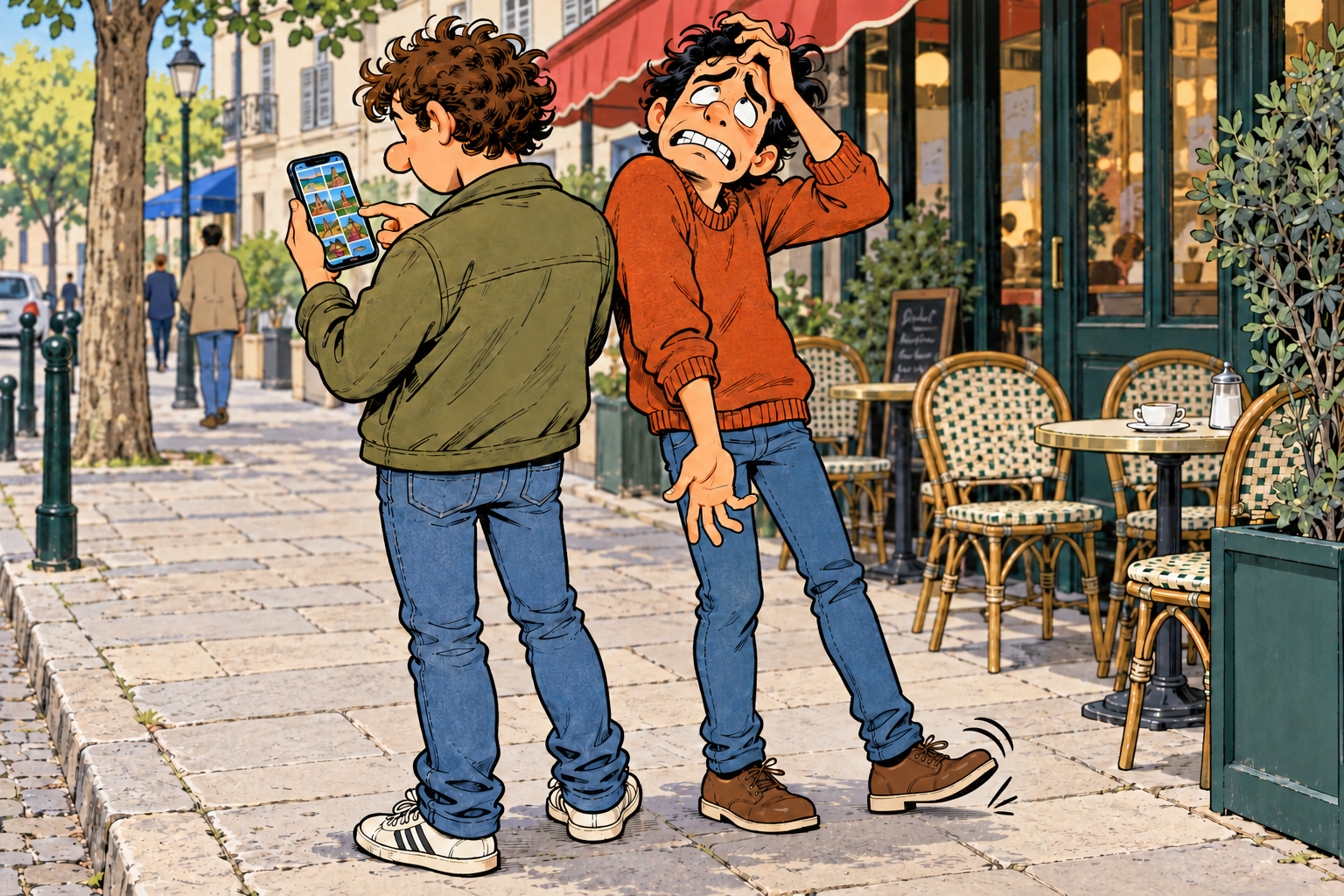
Or perhaps they simply are not interested in your photographs, or in your thoroughly unremarkable life as a self-appointed Instagram influencer. In that case, you may need to reconsider your friendships.
As always, just my five cents.
//Alex

