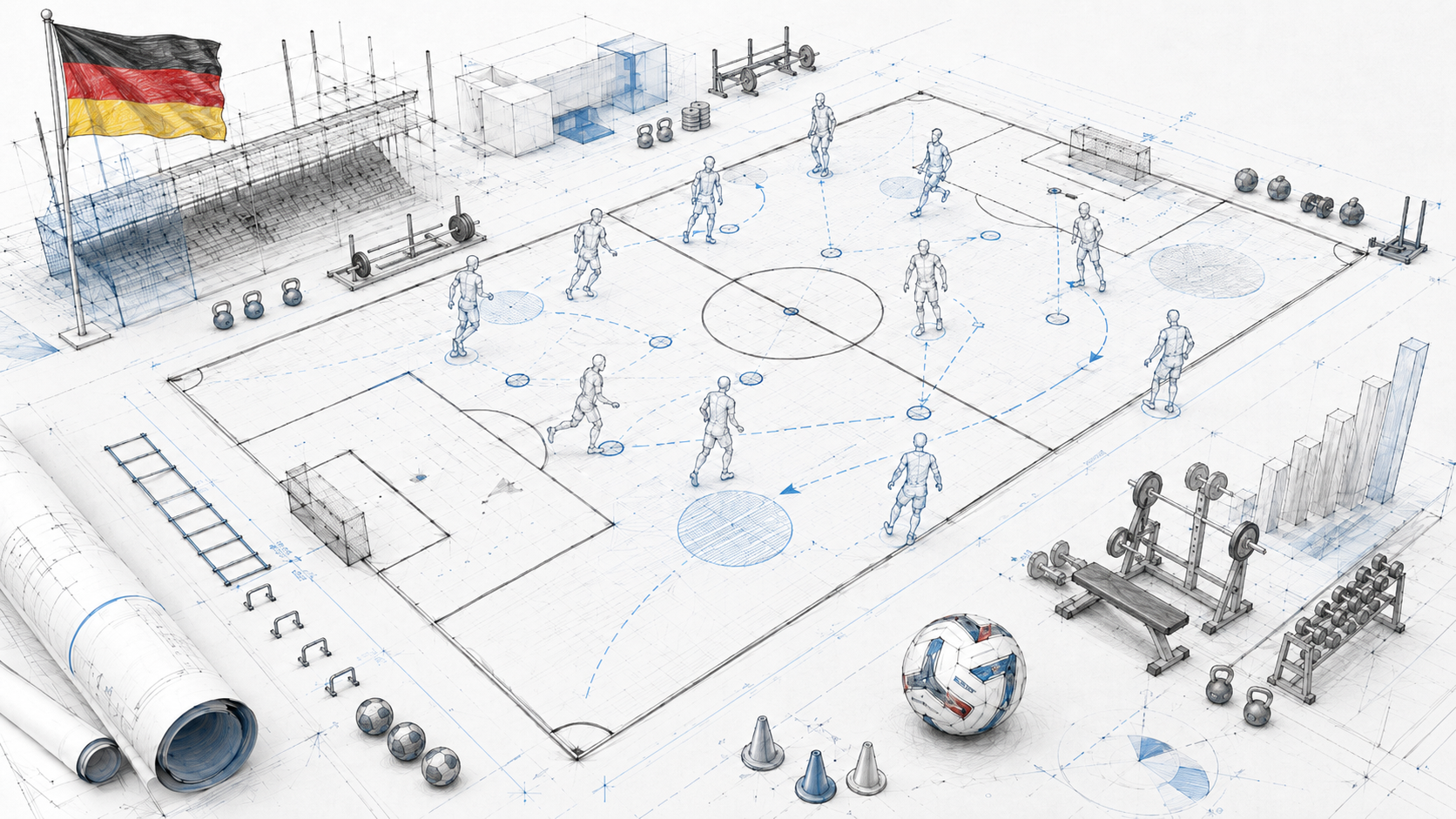
German football does not need another post-mortem. It has had enough of those, and most of them arrive with the same solemn expressions, the same phrases about lessons learned and the same convenient habit of treating structural failure as a sequence of unfortunate matches. The more useful question is not how Germany should explain another tournament failure, but what should now be built from it.
That may sound almost optimistic, which is dangerous territory after another early German tournament exit. But optimism is not the same as denial. Germany’s problem is not that it lacks football substance. It has the population, the clubs, the money, the history, the infrastructure and one of the largest organised football bases in the world. This is not a minor football nation waiting for a golden generation to appear like an administrative miracle. Germany has enough raw material. What it lacks is a football idea strong enough to turn that material into a recognisable team.
That is where the future has to begin, and it cannot begin with another tactical costume change. Germany should not attempt to imitate whichever nation currently looks most convincing. Spain’s passing game cannot simply be copied without Spain’s midfield culture. France’s vertical brutality cannot simply be borrowed without France’s athletic profile. Argentina’s devotion to Messi cannot be reproduced without Messi, which is an inconvenient but not entirely irrelevant detail. The task now is not to rebrand German football. It is to build it.
This is the difference between a football nation and a collection of footballers. A football nation has a recognisable logic. It does not need to play the same way in every generation, but it has continuity beneath the changes. Spain can alter details and still remain Spain, because technical control, positional clarity and ball security are embedded deep enough in the culture. France can move from caution to attacking violence because its player pool offers frightening pace, athleticism and individual quality, and because the structure knows how to turn that into vertical threat. Argentina can build a team around Messi because the rest of the side accepts discipline, running and tactical obedience as the price of genius.
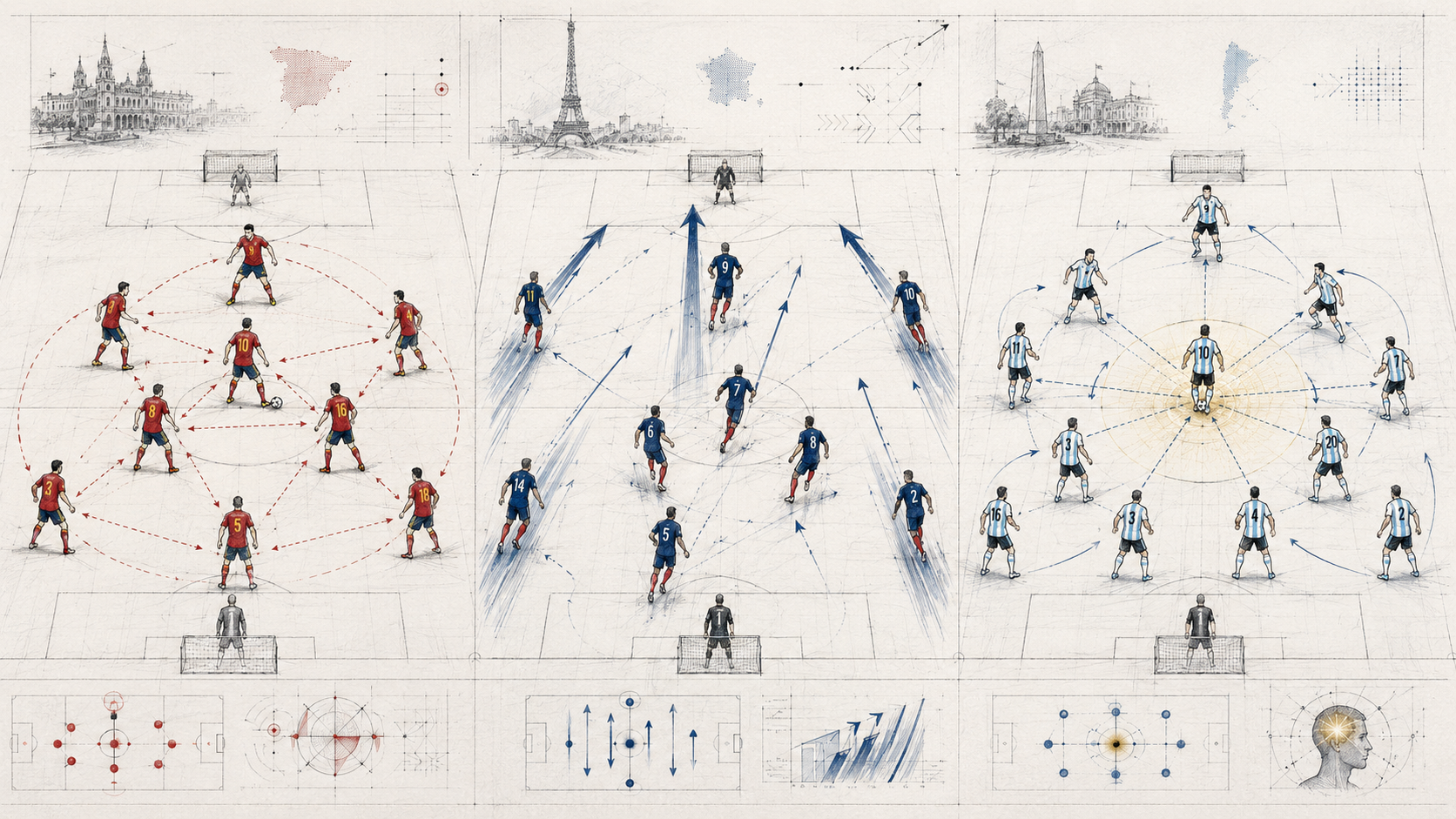
Germany, by contrast, has started to look like a country trying on the identity of the last convincing team it saw on television. This cannot be the future. Germany should not try to become Spain with fewer Spanish midfielders. It should not try to become France without French pace. It should not treat Argentina as proof that one genius solves everything, especially when no German Messi appears to be waiting politely outside the DFB campus. Copying successful nations is the laziest form of ambition. It takes the visible surface and ignores the invisible machinery.
The lesson from France is not that Germany needs to play like France. The lesson is that France knows what to do with its strengths. Against Sweden, France looked terrifying not because every defensive detail was immaculate, but because the attack had purpose. The ball went forward with intent. Runs were made behind defenders. Passes were played into depth. Shots came early enough to matter. The box was attacked, not merely admired from a respectful distance. Michael Olise did not decorate the game. He connected it. Mbappé and Dembélé did not wait for the perfect aesthetic moment. They attacked space before it closed.
That is the relevant contrast. France’s football has danger built into it, while Germany’s football too often has explanation built into it. Of course France have an exceptional generation. Not every country can produce Mbappé, Dembélé, Barcola and Olise in the same attacking ecosystem. But that is precisely why Germany must stop copying and start building. A national team cannot order attributes from a catalogue two weeks before a tournament. It can only use what the national game has spent years developing.
This is where Germany has no excuse. It is not a small football country condemned by geography or demographics. Germany has more than eighty million people, a vast football infrastructure, enormous resources, thousands of clubs and an immense player pool. That player pool is modern and diverse, shaped by regions, immigrant families, urban football, local clubs, academies and professional structures. That is not a complication. It is a strength. The question is not whether Germany has talent. The question is why so much talent passes through the system without becoming the raw material of a dominant tournament side.
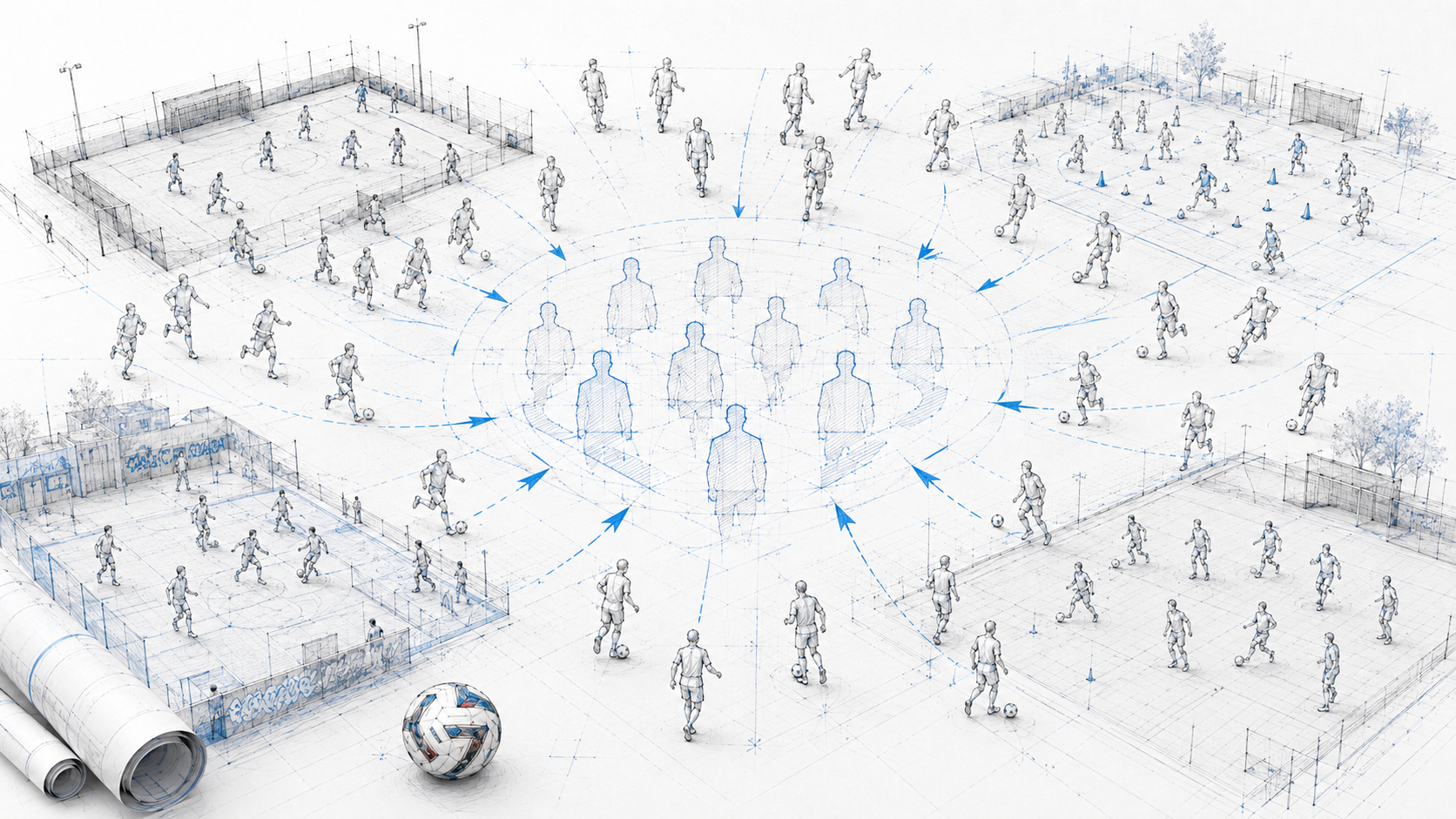
German football has produced technical players. It has produced clever players. It has produced players with elegant touches, good academy habits and the correct vocabulary of modern football. What it has produced less reliably is a national team with power, speed, defensive cruelty and vertical conviction. Too many German players look trained, polished and positionally aware, but not dangerous enough. Too many seem comfortable between the boxes and strangely uncertain inside them. Too many have learned how to participate in possession, but not how to decide a match.
That matters because tournament football is not a seminar in controlled circulation. It is a compression chamber. The opponent closes space, the referee allows contact, the pitch feels smaller, the legs become heavier and the game eventually asks a simple question: can you impose yourself? Against Ecuador, Germany did not. Against Paraguay, Germany did not. These matches should not be treated as isolated disappointments or emotional debris from another bad tournament week. They should become the starting point of the rebuild.
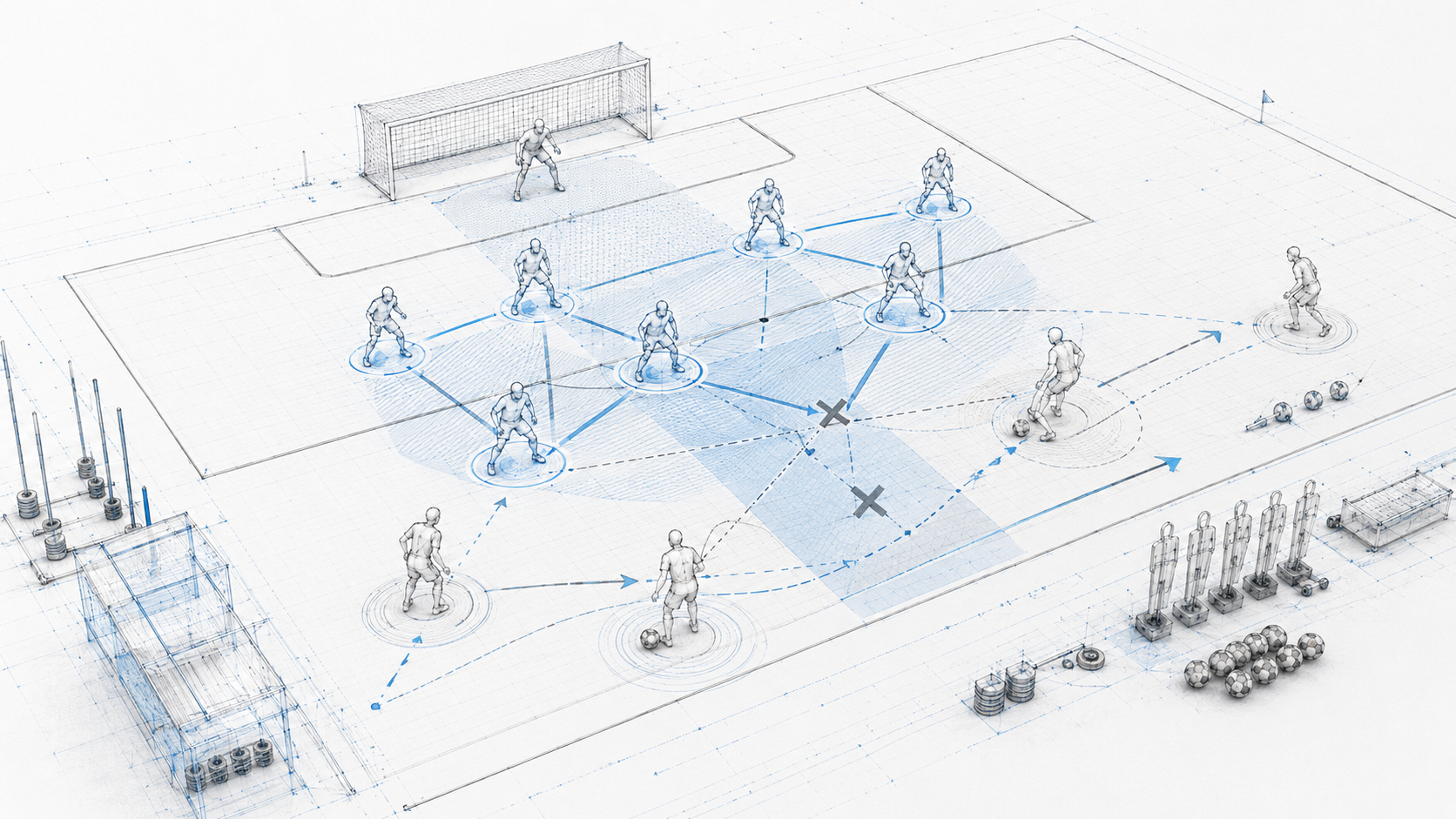
The first principle must be defensive authority, not nostalgia for muddy pitches and heroic sliding tackles, and not that old perfume of German football mythology, sprayed generously whenever the present looks bad. Defensive authority in modern football means something more demanding. It means protecting the box, controlling transitions, winning duels, defending the space behind the line, clearing second balls and reducing the opponent’s belief over ninety minutes. The best tournament teams usually give away very little.
There are exceptions, but they tend to be exceptions with extraordinary attacking power or a brutally clear structure. Germany currently had neither. It scored enough to avoid looking completely toothless in the raw numbers, but it conceded in every single game: against Curaçao, against Ivory Coast, against Ecuador and against Paraguay. That is not control. It is possession with a leak.
A future German team must treat the clean sheet as more than a goalkeeper statistic. It must become a collective ambition. Centre-backs must be selected for authority, not only distribution. Full-backs must have speed and defensive resistance, not merely the ability to appear in midfield on a tactical graphic. The midfield must protect the centre instead of leaving defenders to handle every transition with the emotional support of a misplaced pass. This does not mean Germany should become cautious. Quite the opposite. A serious defence is what allows a serious attack to exist. When a team trusts its rest defence, duel strength and recovery speed, it can attack with more conviction. It can commit runners, take shots and play forward passes without immediately fearing that one lost ball will turn into national panic.
The second principle must be athletic power. This is not a crude demand for taller players who treat the ball as an administrative burden. Germany does not need to choose between technique and physicality. That is a false debate, usually conducted by people who have watched too much football and understood too little of it. The modern elite player needs both. He must receive under pressure, but also survive pressure. He must pass quickly, but also win the collision before the pass becomes available. He must have quality, but also speed, reach, acceleration and the willingness to suffer in contact.
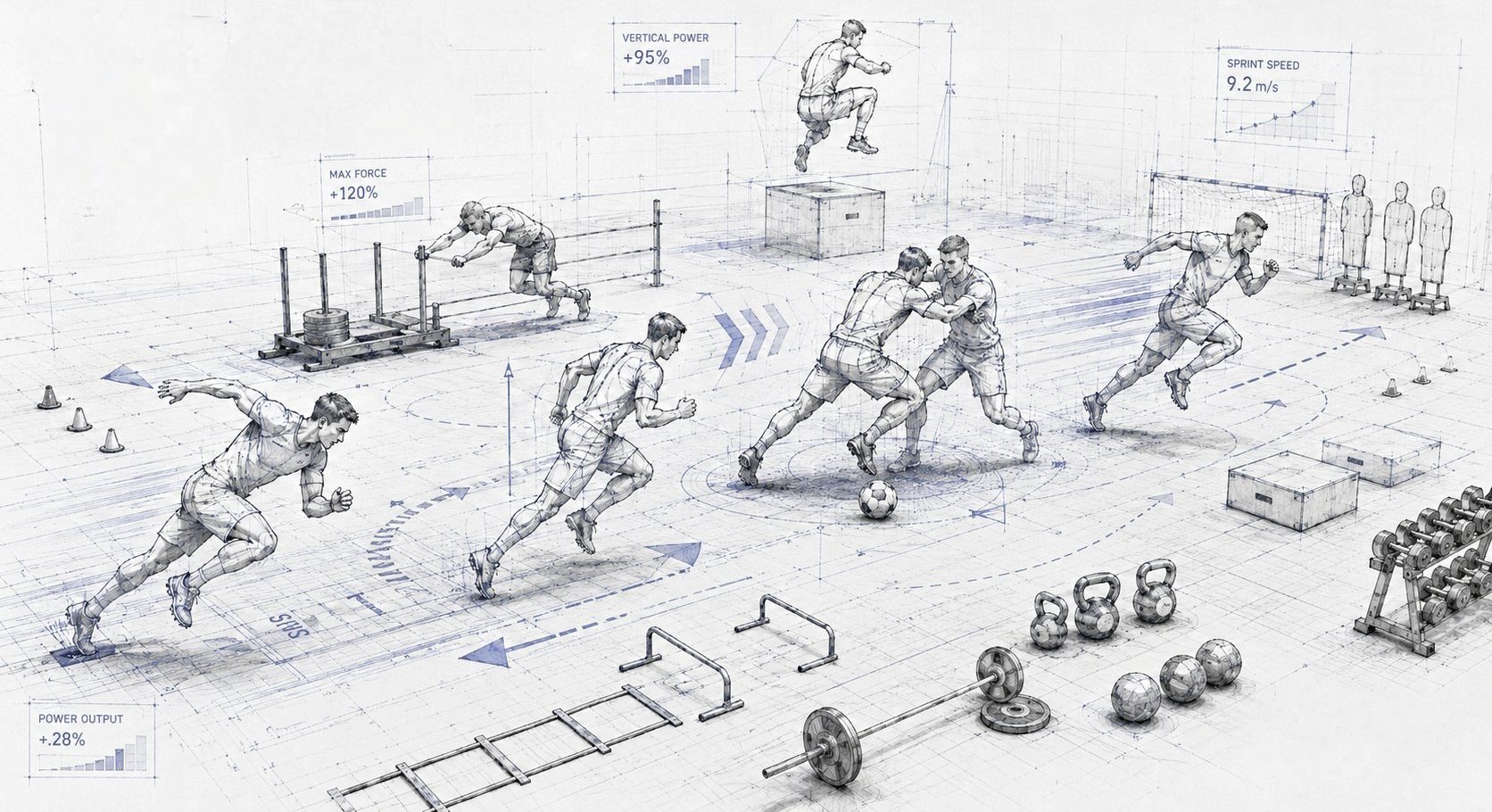
Germany have too many players who look technically interesting until the match becomes physically serious, at which point the interest expires rather quickly. That cannot be the standard. If the DFB wants a future tournament team, it needs to define the physical profile of that team from youth level upward. Not every player must be a sprinter. Not every midfielder must be built like a centre-back. But the collective must have enough size, pace, strength and explosiveness to compete with the best. Germany cannot continue producing players who are tidy in good conditions and fragile in bad ones. World Cups are made of bad conditions.
The third principle must be vertical speed. Germany do not need to abandon possession. Possession is useful, provided it is not used as a sedative. The problem is not having the ball. The problem is having the ball without changing the emotional temperature of the match. Too often Germany’s possession has become a polite exchange of responsibility. The ball moves, but the opponent does not move enough. The passing lane is chosen because it is available, not because it wounds the structure. The attack reaches the edge of the box and then begins to negotiate with itself. Another pass, another reset, another cross without conviction, another statistical entry for an analyst to defend later.
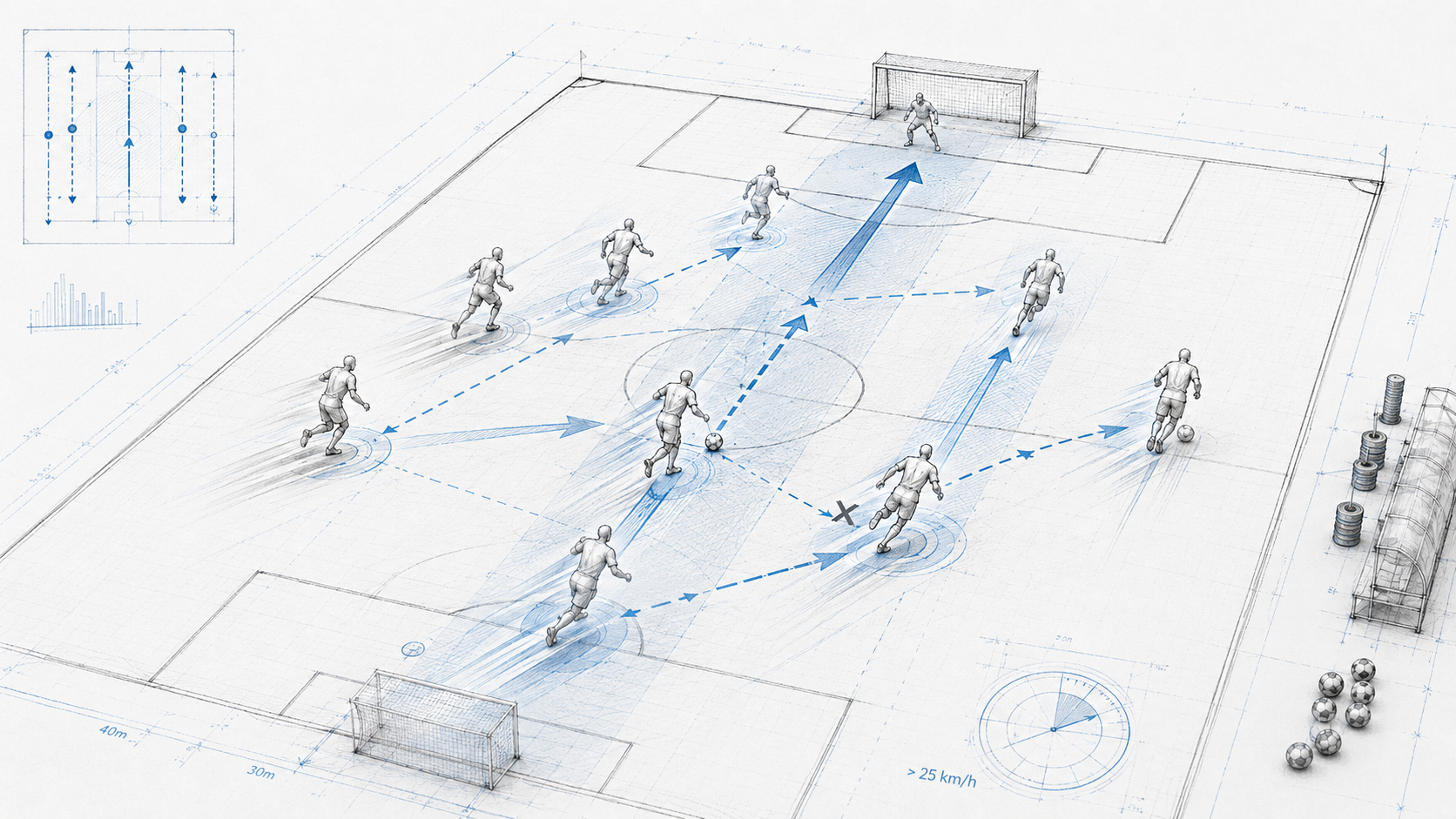
A serious German rebuild must put verticality back into the system. Midfielders must be able to play through lines, not only around them. Forwards must make runs that threaten the space behind defenders. Wide players must attack depth, not simply receive to feet and wait for the full-back to decide. Strikers must offer contact, depth and penalty-box presence. Germany needs players who can receive forward passes on the move, control difficult balls, combine with one touch and arrive in the box before the chance has gone through committee review. France offer a useful reminder here. Their best attacks are not speeches. They are events. The ball is recovered, moved, accelerated and delivered into areas where defenders must immediately make unpleasant choices. Germany must recover that ability, not as imitation, but as necessity.
The fourth principle must be a culture of finishing. Germany cannot continue to treat shooting as something that happens only when every positional detail has been morally approved. France shot from distance against Sweden, not aimlessly, but dangerously. A shot from outside the box can create more than a goal. It can create rebounds, corners, disorder, anxiety and second balls. It tells the opponent that the space in front of the penalty area cannot be offered for free.
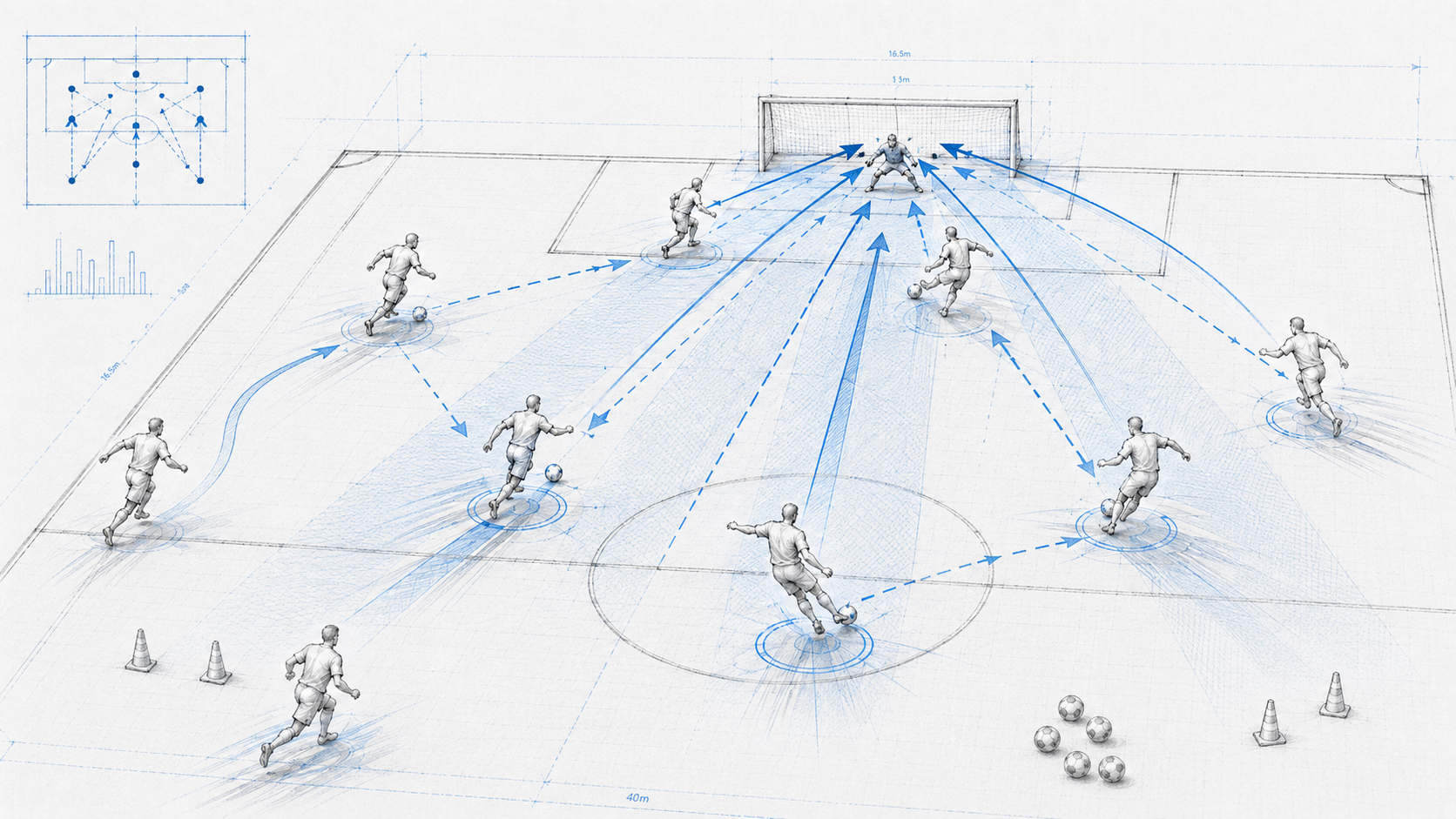
Germany against Paraguay had corners, shots and possession, but not enough genuine violence around the goal. Sixteen corners should become a form of punishment. They became a file attachment. A future German side must be better at attacking the first ball, the second ball and the chaos after both. It needs more players who arrive in scoring zones with conviction, more forwards who live for ugly goals as much as beautiful ones, and more midfielders who can shoot through a crowd instead of politely recycling the ball until the moment dies of old age. This is not anti-technical football. It is the point of technique. Technique that does not lead to danger is decoration.
The fifth principle is clarity in player types. Germany cannot build a national team out of eleven players who all want to interpret the game between the lines. A team needs creators, certainly. It needs one or two players with imagination, maybe three if the structure can carry them. But it also needs runners, defenders, duel winners, finishers, stabilisers, accelerators and players who understand that brilliance is not always the same as usefulness. Argentina did not build around Messi by surrounding him with ten poets. It built around him with discipline, legs, tactical humility and emotional ferocity. France can afford several attackers because the attacking talent is outrageous and the surrounding structure absorbs the risk. Spain can carry more midfield control because the whole system is designed around receiving, moving and escaping pressure. Germany must find its own balance.
That balance should be modern, but unmistakably German in the best sense: physically strong, tactically disciplined, technically competent, vertically dangerous and mentally hard to move. Not old Germany. Not fake nostalgia. Not the television version of “German virtues”, with every pundit suddenly longing for a centre-back who looks angry in the rain. A new Germany. One that understands that power and intelligence are not enemies.
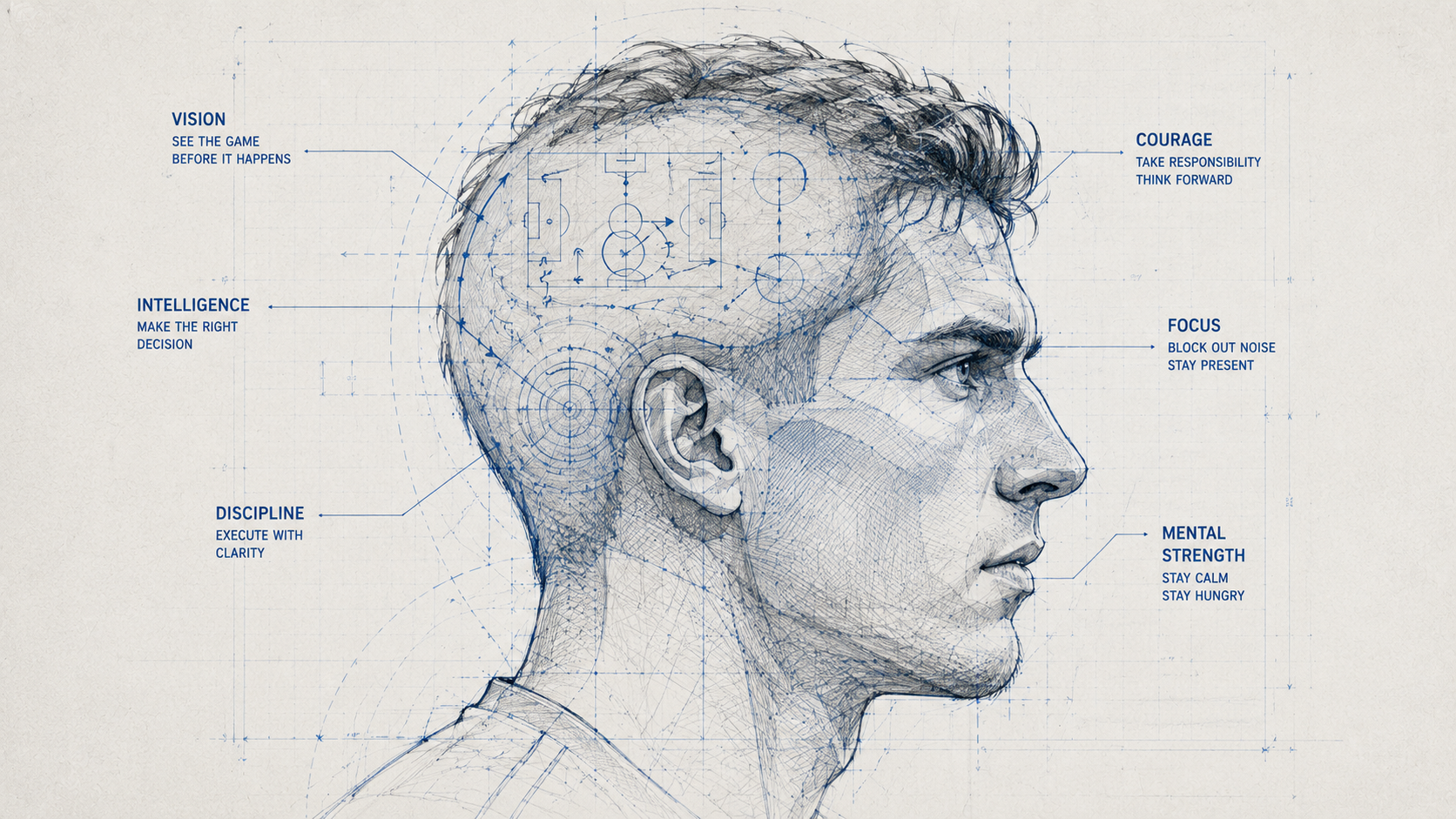
None of this can be solved by the national coach alone. That may be the most important point. A national coach does not manufacture player profiles. He selects from what the system provides. He can shape a squad, but he cannot redesign a football culture between two international breaks. If Germany wants a different national team, it must build different footballers.
That is where the DFB must finally become more than a crisis communications department with training pitches attached. It must define, together with clubs and academies, what German football should look like ten years from now. What kind of centre-backs should be developed? What kind of defensive midfielders? What kind of full-backs? What kind of strikers? What kind of wide players? How much emphasis is placed on speed, duel strength, first contact under pressure, vertical passing, finishing, box occupation, transition defending and tactical intelligence? This cannot be a glossy document. German football has enough documents. It needs a program.
The clubs will always have their own interests, and rightly so. They develop players for professional football, not only for the national team. But a serious football country aligns its ecosystem. It does not wait until the senior national team collapses and then ask why no one produced the missing player types. The DFB must set expectations, create incentives, measure development and be honest about what is missing. If Germany lacks explosive wingers, develop them. If it lacks dominant centre-backs, develop them. If it lacks vertical midfielders, stop pretending another safe passer will solve the problem. If it lacks strikers who attack the box with hunger, then perhaps youth football should stop rewarding the extra touch more than the goal.
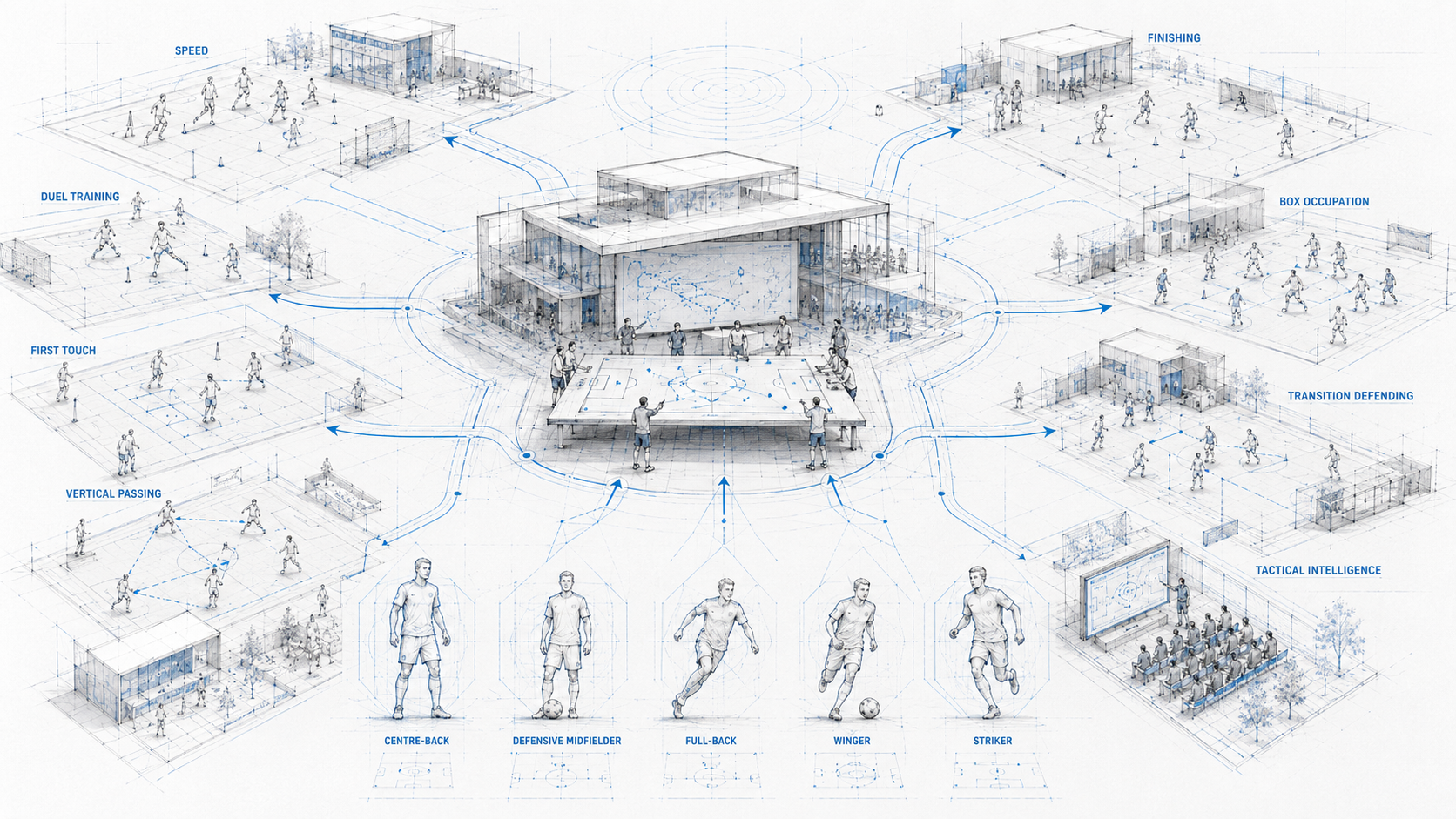
This also requires accountability. Not every failure demands a public execution, and football is not improved by ritual sacrifice alone. But if a football country repeatedly underperforms relative to its size, resources and history, someone must be responsible for more than the next press release. Structures that produce excuses more reliably than elite tournament teams should not be allowed to evaluate themselves indefinitely.
Germany’s future does not need to be bleak, and this should not be a funeral speech for German football. It should be the opposite. Germany has the population, the clubs, the money, the history, the diversity and the raw material. What it lacks is not possibility. It lacks direction. The danger after Paraguay is not despair. Despair would at least admit that something is wrong. The greater danger is rebranding: a new slogan, a new tactical phrase, a new tournament cycle filled with familiar optimism, until the first serious opponent asks Germany the same old questions and receives the same old confused answer.
The future of German football must be built, not rebranded. It must begin with the humility to accept that possession without authority is not dominance. It must continue with the courage to demand different player profiles from the development system. It must restore defensive seriousness without becoming fearful. It must recover speed without becoming brainless. It must value technique only when technique serves danger. Germany does not need to become France. It does not need to become Spain. It does not need to become Argentina. It needs to become itself again, but in a form that belongs to modern football.
That will take years, and it should have started years ago. Since it did not, now would be a useful time to stop pretending that the next minor adjustment will be enough. Paraguay did not destroy German football. It only removed the last excuse. The rebuild should start there.
Just my five cents.
//Alex


wow. I thoroughly enjoyed this article. You sir are spot on. As a Grandson of a German immigrant who came to Canada and built a life for us here, but never forgetting where we came from, this hits home. Sometimes we must reinvent ourselves, but that does not mean we have to forget the foundation of which we came.
Hummell Hummell.
Thank you William. I put a lot of thought and energy into my blog posts, and I’m happy when they resonate with readers.
//Alex