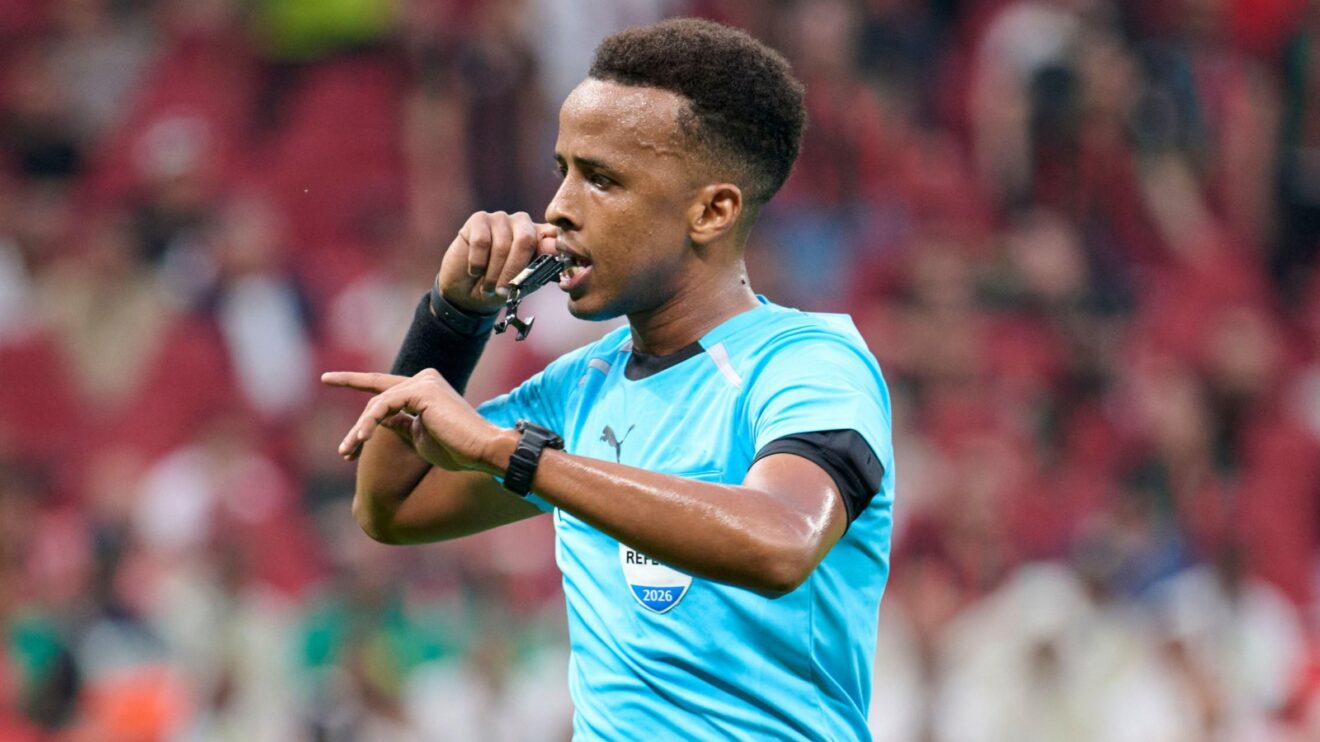
The 2026 World Cup has not even properly begun, and already the familiar smell is in the air: bureaucracy, humiliation, political cowardice and the quiet contempt of institutions that still expect supporters to clap politely because a ball will eventually be kicked. A nominated referee from Somalia, denied entry to the United States. Uzbekistan, led by Fabio Cannavaro, reportedly subjected to intrusive security checks before a friendly in New York, as if a World Cup-winning captain and his squad had arrived to traffic cocaine rather than play football. Iran forced to prepare for a supposedly global tournament from Mexico, with visas, staff restrictions and entry conditions turning its participation into a diplomatic obstacle course. This is not the World Cup as a celebration of football. This is the World Cup as an airport problem with sponsors.
The Somali referee case is particularly shameful because it is not just political. It is personal. A referee does not reach the World Cup by accident. He does not get there through glamour, marketing or celebrity. He gets there through years of discipline, difficult matches, scrutiny, fitness, judgement and the lonely authority of being resented by both teams whenever convenient. To be nominated for a World Cup is the summit of that profession. For a Somali official, recognised among Africa’s best and selected for the biggest tournament in the sport, it should have been a moment of national pride and personal vindication. Instead, he was reduced to a border problem.
That is the tragedy. A man who had earned his place at football’s highest stage was not protected by the institution that selected him. FIFA should have treated this as a violation of the tournament’s integrity. It should have made clear that accredited participants, officials, teams and staff cannot be handled as disposable inconveniences by a host country. It should have used the power it loves to display when selling rights, packages and presidential access. Instead, when principle was required, FIFA suddenly looked less like a governing body than an event contractor trying not to upset the venue.
This is what FIFA has become: powerful when selling, timid when defending, arrogant toward supporters and oddly deferential to political power.
The conclusion supporters should draw is the one FIFA dreads. Perhaps the World Cup is no longer sacred. Perhaps it is no longer the tournament around which football culture must arrange itself out of habit. Perhaps it is now a vast, compromised spectacle run by people who have confused scale with greatness and market access with meaning. If FIFA wants a tournament where real fans are priced out, teams are dragged across absurd distances and officials are processed like suspects, then the response can be brutally simple.
Let them have it.
Let FIFA stage its grand tournament for sponsors, luxury guests, political guests, corporate customers and whichever class of neutral tourist still finds pleasure in paying too much for too little dignity. Football supporters do not owe FIFA reverence merely because FIFA owns the trademark.
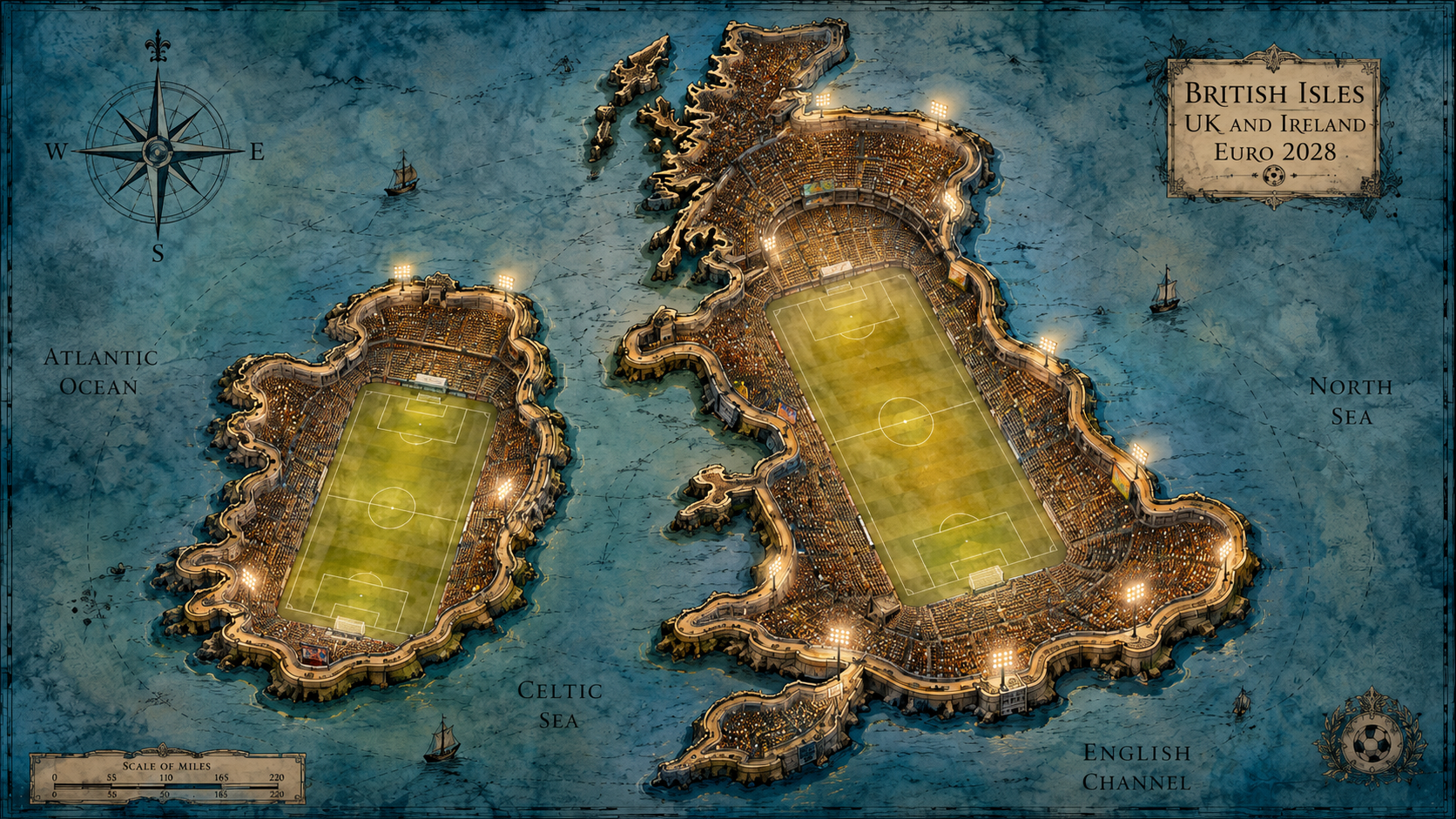
This is why Euro 2028 suddenly feels much larger than another European Championship. It feels like the counterargument. It feels like the tournament where football can still remember what it is supposed to be.
Perhaps this is naïve. Perhaps I am giving UEFA more benefit of the doubt than any modern football institution deserves. The sensible position, after years of football governance, would be to remain suspicious in advance. But sometimes even cynicism has to recognise the possibility of something better. And for Euro 2028, I want to believe it.
The last European Championship in Germany showed that football can still be a real public festival. Not a managed luxury product. Not a hospitality platform with a tournament attached. A festival for people. It worked because the tournament was not only played inside stadiums. It was carried by streets, squares, stations, pubs and cities that felt open rather than militarised.
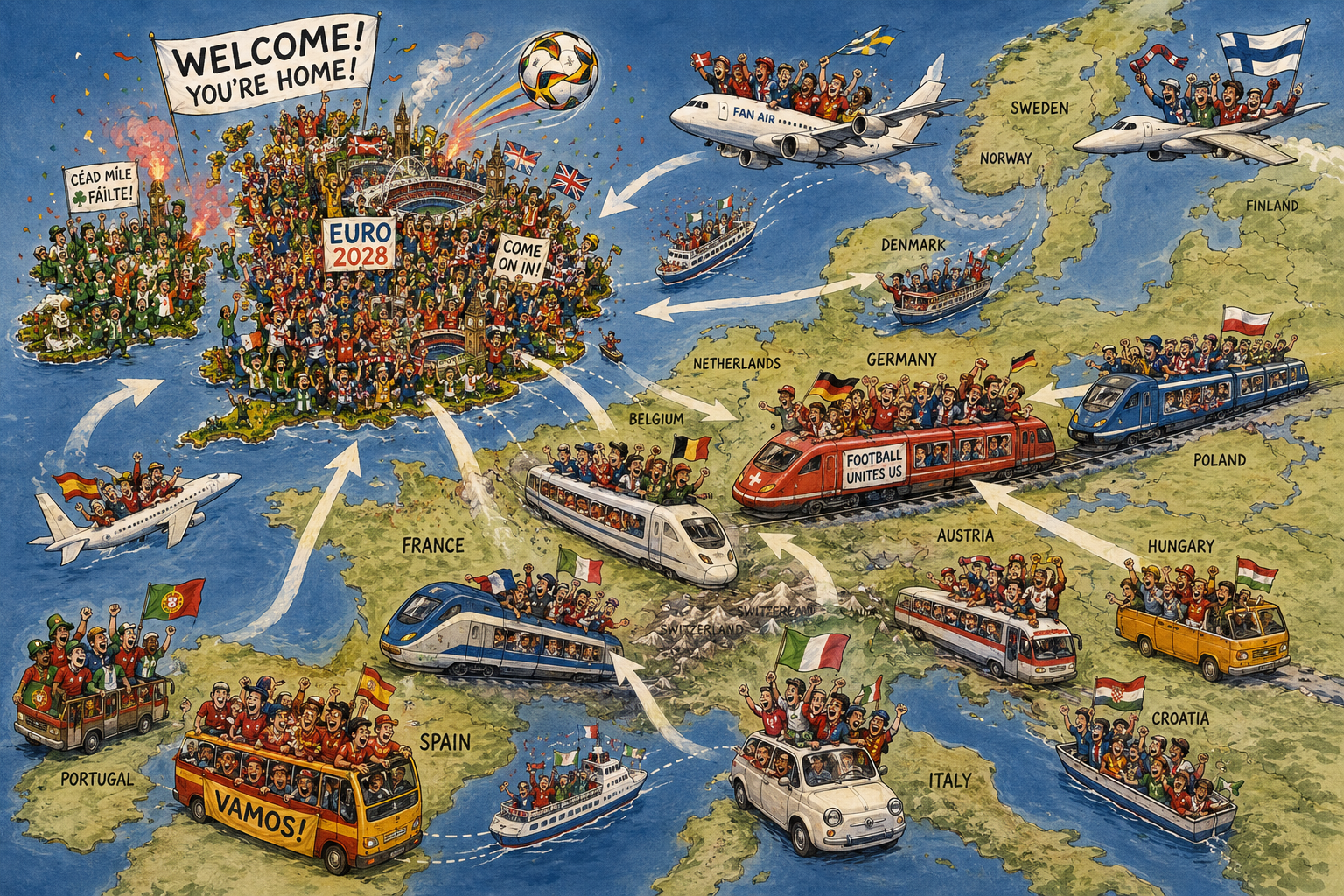
That is what proximity does. It turns attendance from a logistical campaign into a realistic act of support. Across much of Europe, the United Kingdom and Ireland are close enough for a short flight, a long weekend or, for some, a train through the Channel Tunnel. It does not require surrendering an annual holiday, taking out a small loan and preparing for a border experience designed to make enthusiasm look suspicious.
The United Kingdom and Ireland are not perfect hosts because no host is perfect. Brexit has added friction. There will be administration, prices, transport irritations and the usual bureaucratic theatre that follows every major event. But that is not the point. The point is that I expect to feel welcome there. And for a tournament, that is not a decorative detail. It is the basic duty of a host.
A host country is not merely a place with stadiums. It has to receive the people who come with the tournament and make them feel part of the event, not tolerated exceptions to a security policy. Football is not just played on the pitch. A great tournament understands that. A bad one makes everything around the match difficult and then asks the football to compensate.
Euro 2028 has the chance to get this right.
The United Kingdom and Ireland are football places in the deepest sense. The game there is not an imported entertainment product, a lifestyle accessory or a market-entry strategy. It is in the stadiums, in the pubs, in the trains, in the old arguments, in the songs and in the unreasonable seriousness with which ordinary people discuss a left-back. These islands do not need a promotional film to explain why football matters. They already know.
That is why the phrase “football is coming home” actually fits this time, not as English smugness, but as cultural relief. The tournament will be played in countries where football is lived, argued over, inherited and occasionally cursed at with admirable fluency. If UEFA keeps its promise on affordable ticket categories and no dynamic pricing, Euro 2028 could become the rare modern tournament that treats ordinary supporters as the centre rather than as atmosphere to be monetised. Perhaps the final ticket portal will still find a way to disappoint everyone. The direction still matters.
Personally, this is the tournament I now want. Not as an abstract observer, not as someone politely monitoring the health of the game from a distance, but as a fan. I want to go there with my friends. We are already imagining the trip, the games, the pubs, the streets, the nervous ticket windows, the hope of getting into a stadium and the knowledge that even without a ticket, the place itself will feel alive. I want football to feel like something you join, not something you are allowed to consume after clearing a security and pricing regime designed by people who have never loved it.
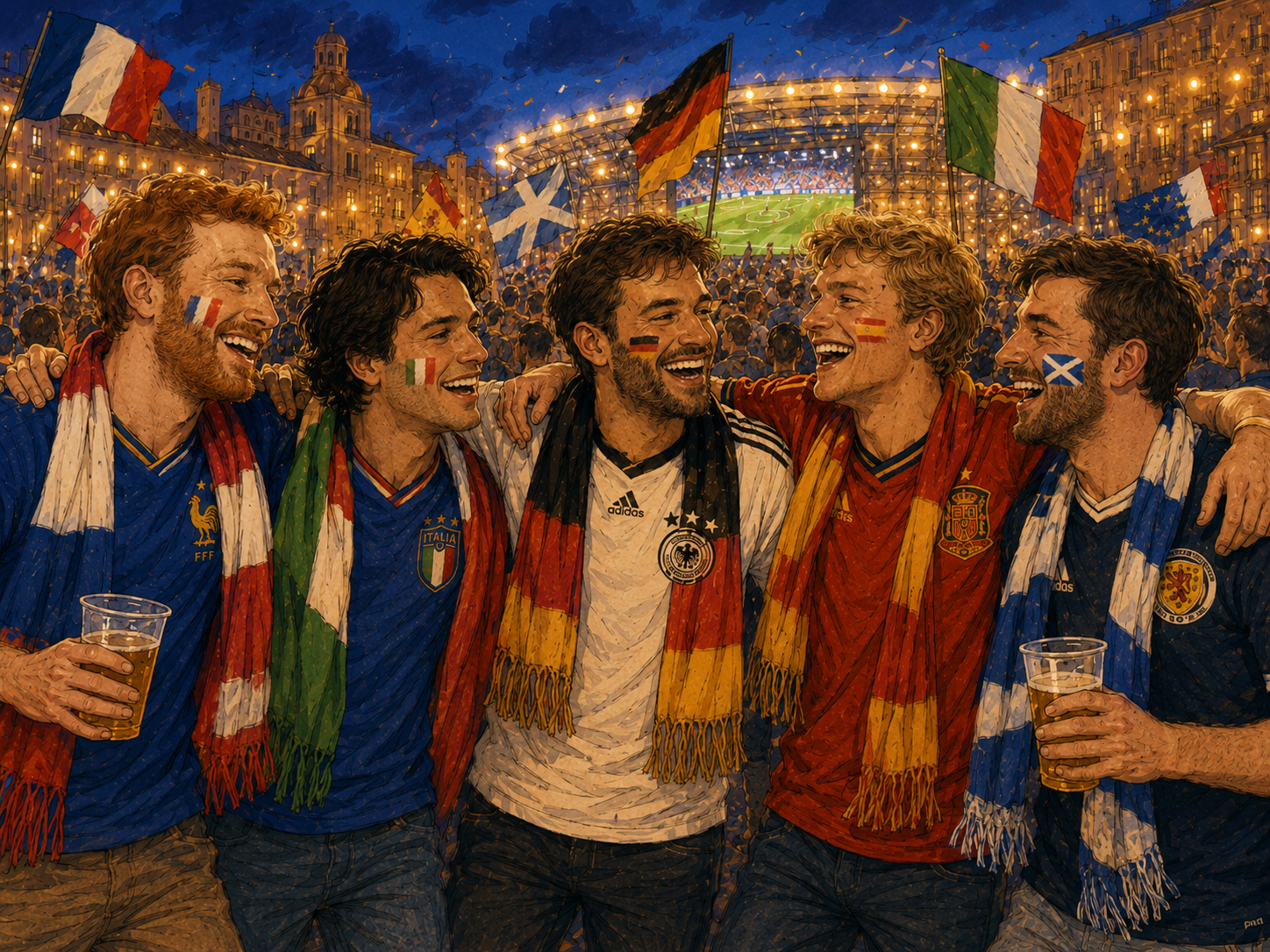
That is the contrast. FIFA gives us a World Cup that already feels tired before it begins. Euro 2028 offers the possibility of a tournament that feels awake.
Perhaps the pressure now has to come from the stands. Supporters do not owe FIFA their atmosphere, their savings, their holidays, their songs or their sentimental loyalty to what the World Cup used to mean. If FIFA wants a tournament for officials, sponsors, event tourists and corporate guests, then perhaps it should be allowed to enjoy exactly that: a beautiful product with the soul carefully removed.
The uncomfortable thought is that the World Cup may no longer be the tournament that matters most in the hearts of football people. It may still have the name, the trophy, the television numbers and the institutional arrogance that comes with owning the calendar. But prestige is not the same as love. Reverence cannot be invoiced.
That is why my hope is already travelling elsewhere: to the islands, to the pubs, to the stadiums, to the songs, to the friends I want beside me, and to a tournament that, if UEFA keeps its word, could become the greatest football festival of our generation.
The World Cup may still have the name.
Euro 2028 may have the soul.
For once: my positive five cents.
//Alex


1 comment