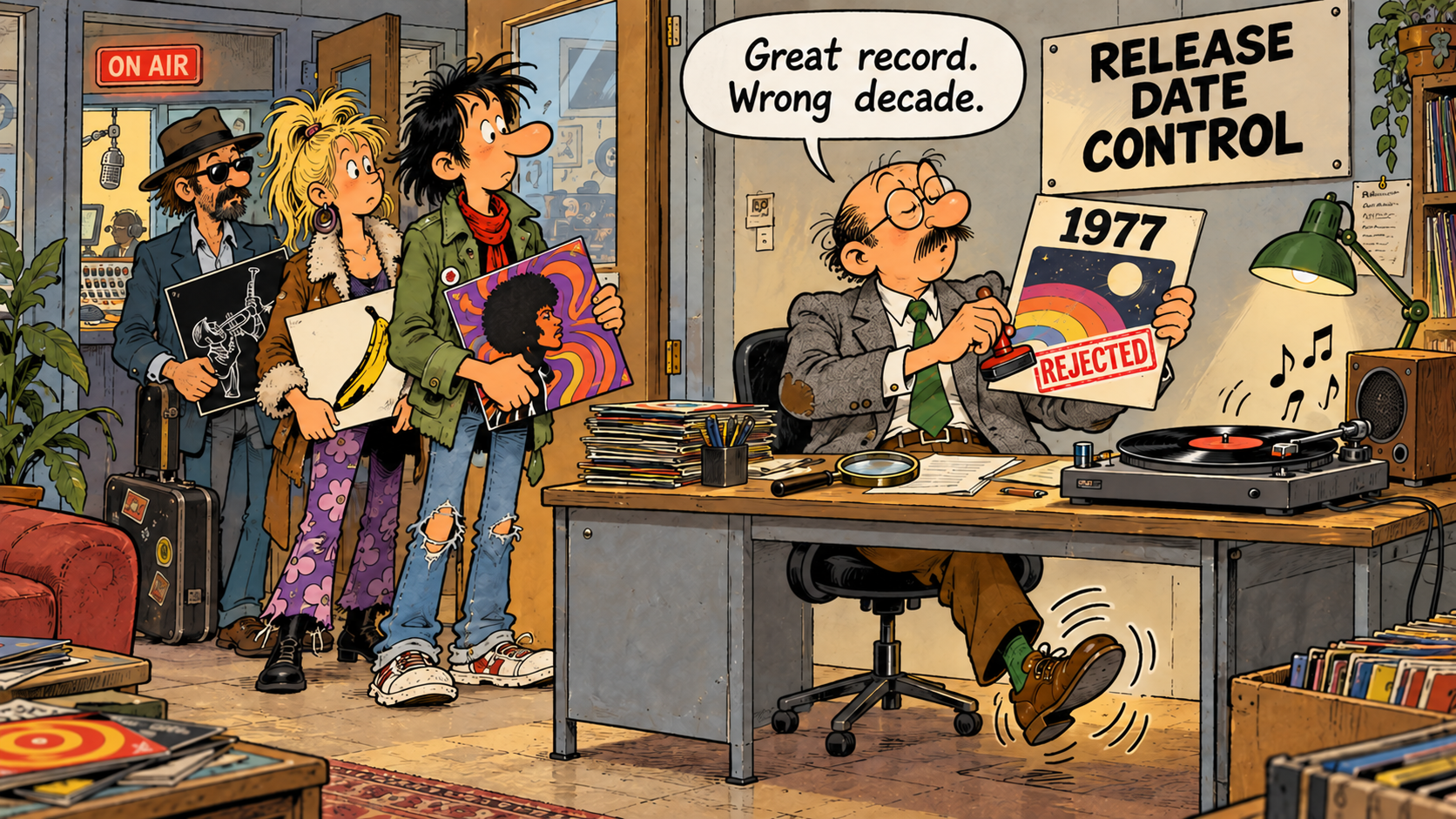
I switched on Radio Zürisee again today and had the familiar sensation that the music had barely moved since I last switched it off. Yazoo’s “Don’t Go” is becoming a particular test of my affection. I like the song. I would quite like the opportunity to miss it. At the moment, our relationship is suffering from rather too much contact.
In my previous article, I wrote about what happens when a station takes two wonderfully productive decades and keeps returning to the same small, familiar part of them. But another question has been bothering me since: why make those two decades the boundaries of your musical imagination in the first place? Somewhere along the way, the date on a record seems to have become more important than what comes out of the speakers.
I grew up largely with the music of the eighties and nineties, and I have considerable affection for both. There is no shortage of excellent material there. What I cannot understand is why growing up during a particular period should become a lifelong listening specification. I also discovered plenty of music made before I was born, and I have occasionally managed to enjoy something recorded after my youth had officially ended.
To be precise, Radio Zürisee advertises “Die grössten Hits der 80er, 90er und mehr”, so there is an “and more” attached to the proposition. Fair enough. My frustration concerns how narrow the result feels when I listen, and the broader radio habit of treating a couple of decades as a sufficiently complete description of somebody’s taste. A decade tells you when a record was released. It tells you remarkably little about whether it belongs next to the previous song.
What, exactly, did the seventies do to deserve their reduced importance in this arrangement? Were the sixties an unfortunate rehearsal? Consider the Beatles, the Stones and Aretha Franklin in the sixties, then Stevie Wonder and Fleetwood Mac in the seventies. That barely begins to cover the possibilities. Reach further back and there are records by Chuck Berry or Sam Cooke that still have more life in them than plenty of music produced with several decades of additional technology. A station interested in good pop and rock has every reason to explore that inheritance.
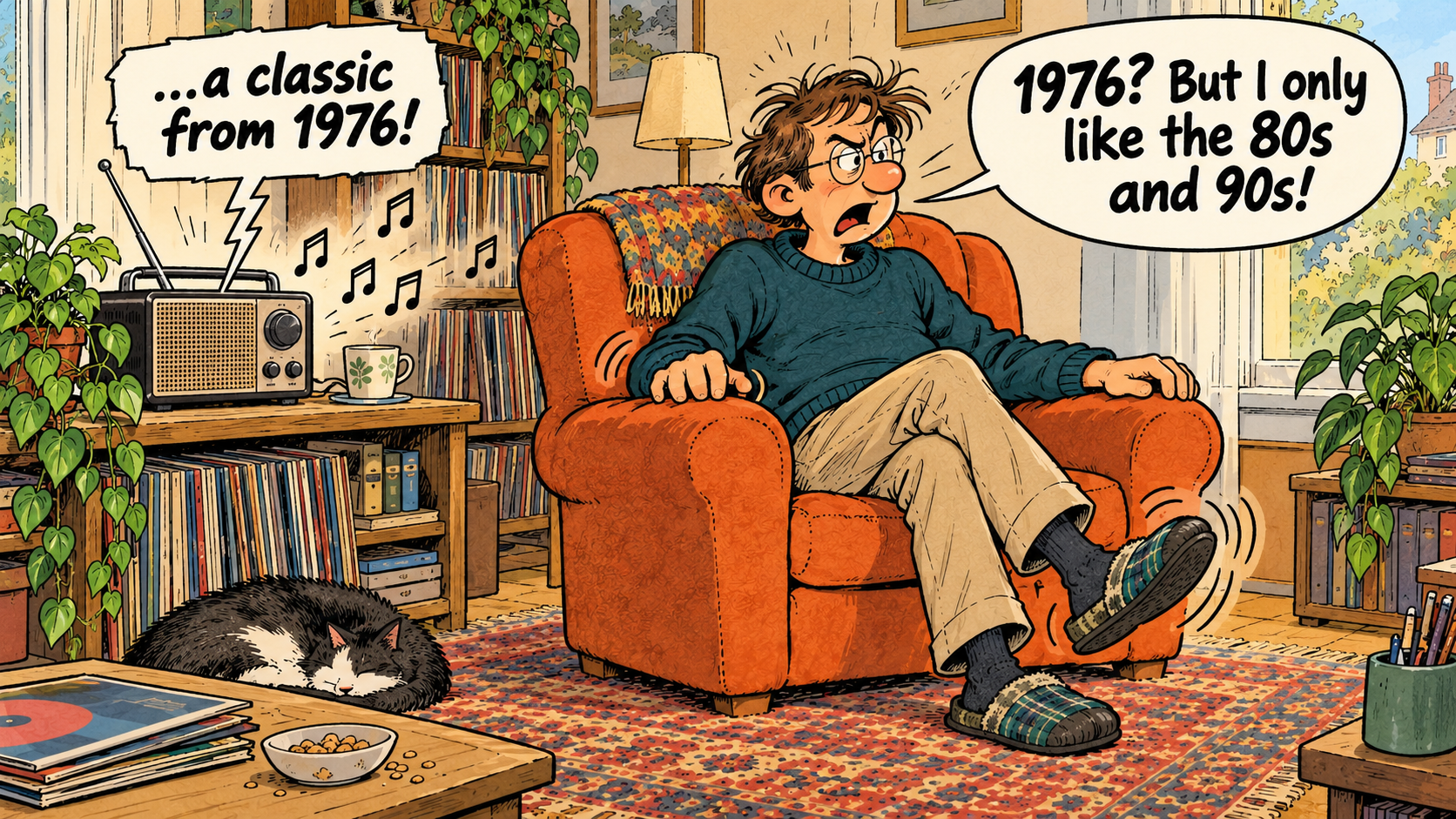
Of course, some older recordings sound dated. Some arrangements have aged badly, some songs have lost their appeal, and some deserve to remain a private embarrassment between the listener and their record collection. That is what selection is for. The eighties and nineties also produced their share of material that becomes considerably less impressive once you remove the memory of being nineteen. Nostalgia is an excellent source of pleasure and a rather unreliable quality-control department.
The same judgement should apply at the other end of the calendar. There is good music being made now, and current hits deserve a place. I simply struggle to understand why success should entitle a song to accompany every available moment of my day. Hearing something often enough to become familiar is pleasant. Hearing it until its opening notes provoke a small surge of hostility seems a strange way of supporting music. A broader programme could give new records an audience while allowing the successful ones an occasional afternoon off.
I made the case for digging deeper into familiar catalogues in the previous piece. Here, the question comes a step earlier: why should an otherwise excellent record need the right year on its sleeve before it is even considered?
Then there are the genre boundaries, which can be almost as unhelpful as the calendar. If a station’s centre of gravity is pop and rock, there is still ample room for rock, punk, soul, funk, a little jazz or acid jazz. Those labels do not describe sealed worlds, and listeners need not undergo a change of identity because the next record has a better bass line. Plenty of music from those traditions is melodic, immediate and perfectly capable of surviving contact with an ordinary weekday audience.
Acid jazz makes the calendar logic particularly entertaining. The scene emerged in the late eighties and flourished in the nineties, placing it comfortably inside the very period being celebrated. A station could explore it without so much as amending the slogan. These records should hardly have to plead their case under “and more”.
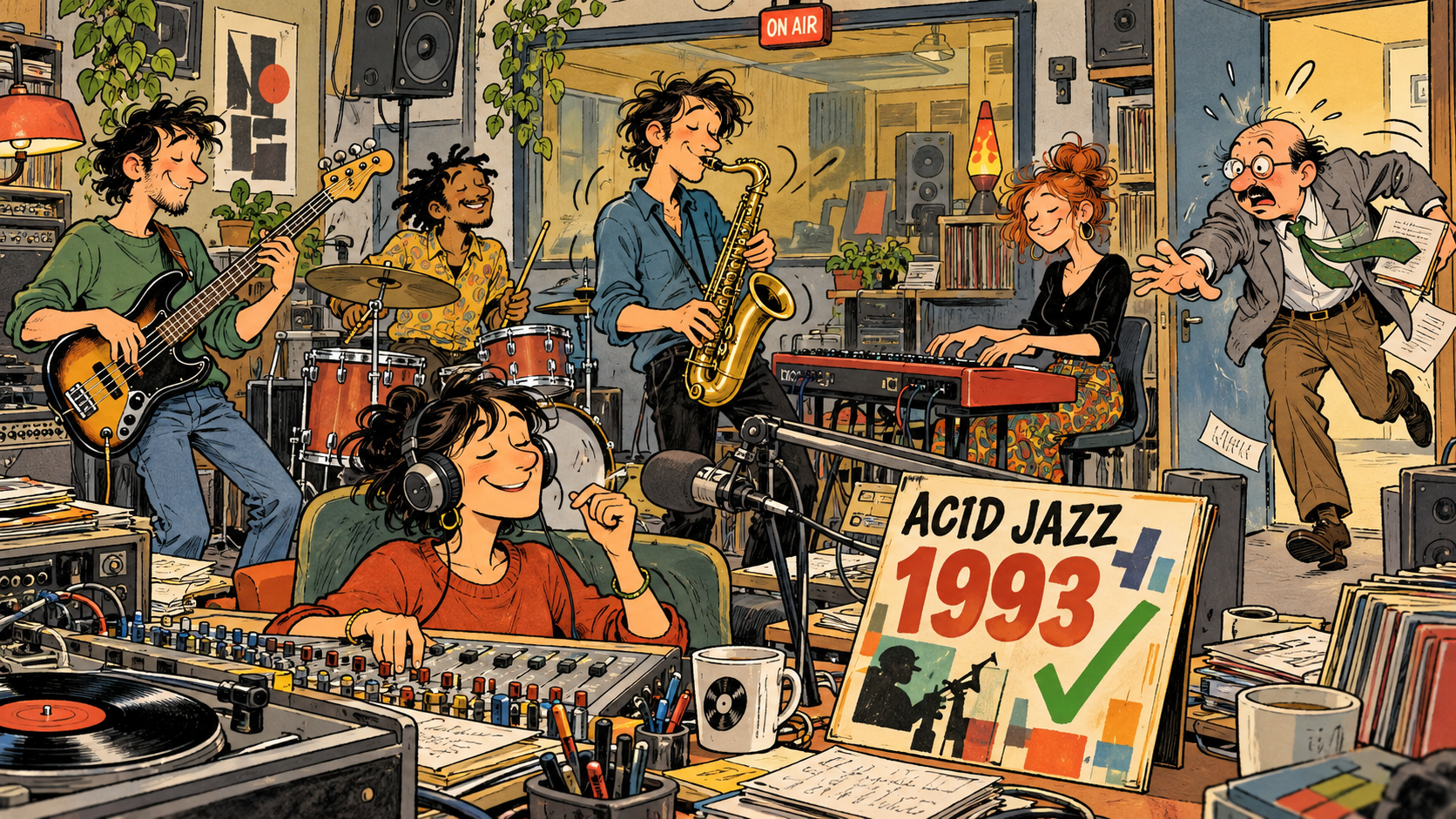
I would happily hear a seventies soul record followed by a good recent release, an eighties favourite and something with a little funk in it. With somebody choosing the tracks for how they sound together, the hour could still have a recognisable mood and character. It would be a peculiar listener who enjoyed the whole sequence and then complained that the first song was from the wrong decade.
I can see the appeal of a tightly defined format. It gives the station a clear identity, tells listeners what to expect and makes the audience easier to describe to advertisers. Familiar songs are reassuring, particularly when people are listening while doing something else. But that reassurance has limits. A listener who enjoys recognising a record may also enjoy being reminded of one they had forgotten. They might even like a song they have never heard before. It seems a little pessimistic to build the entire experience around the possibility that they will not.
The question for me is what a music station wants to contribute. I can already assemble a collection of songs I know I like. When I turn on the radio, I would welcome the benefit of somebody else’s knowledge: a wider collection, a good ear, an unexpected choice that makes sense once I hear it. That is a reason to keep listening. Being repeatedly reassured that I still recognise a hit from my youth becomes less valuable with each confirmation.
Radio has such a generous supply of material available that its narrowness feels entirely self-imposed. There are decades to explore, neglected corners of familiar careers, records that have aged beautifully and new ones worth making room for. Nobody needs to abandon the eighties and nineties. They could simply be allowed some company. Yazoo have been asking us not to go for decades. A slightly broader playlist might finally make that a reasonable request.
As always, just my five cents.
//Alex

