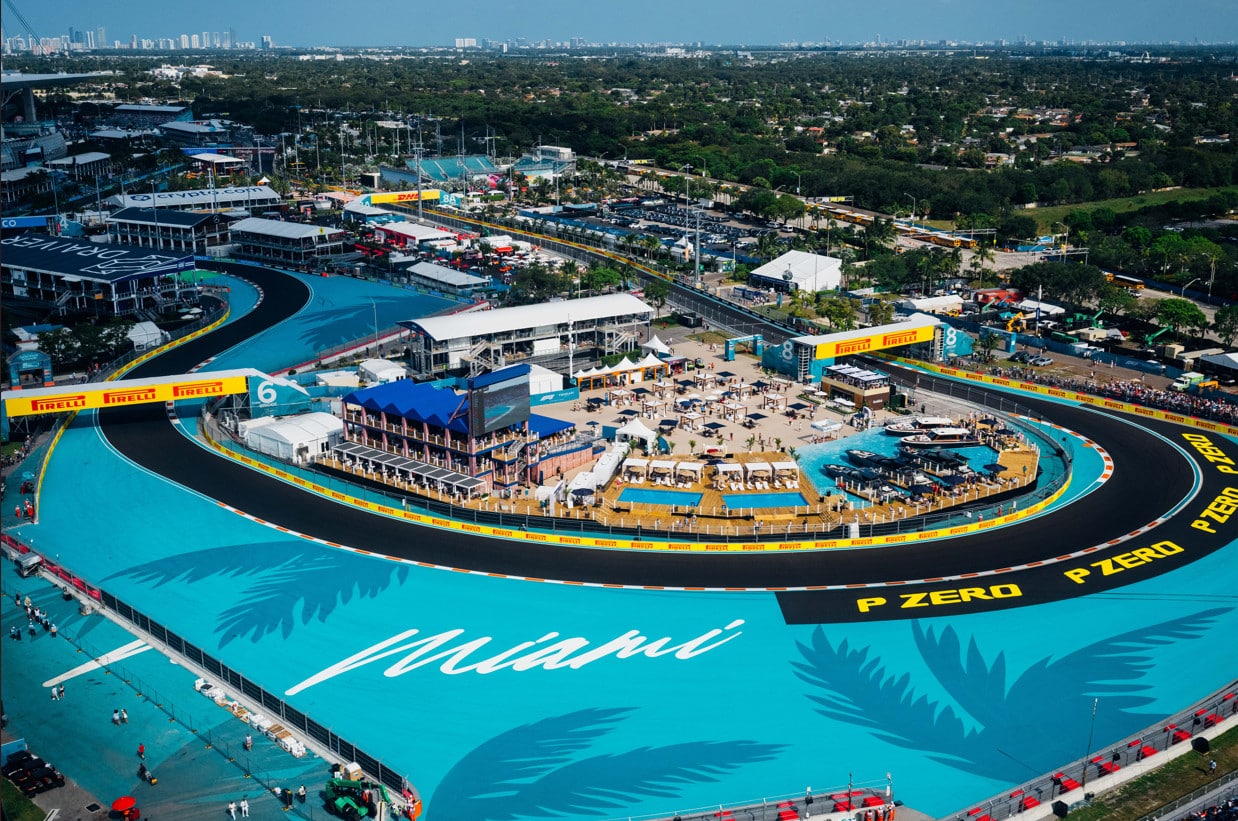
After weeks of frustration, I sat down for Miami qualifying and tried to be fair. It did not go well.
After complaining about Formula 1 several times this year, there comes a moment when you either stop watching entirely or give the sport one more honest chance. I decided to do the latter. Not because I expected a miracle, but because after almost 50 years of following Formula 1, the connection does not simply disappear overnight. You still hope there is something left. Some spark. Some reminder that the sport has not completely lost the thing that once made it impossible to ignore.
Miami qualifying seemed like the right test. The rules had already been adjusted, or at least massaged, to make qualifying more exciting, which is a revealing sentence in itself. Qualifying should be the part of the weekend that needs the least artificial help. It is supposed to be the cleanest expression of Formula 1: one car, one driver, one lap, maximum attack. No tyre-saving philosophy, no strategic boredom, no Sunday afternoon excuses about degradation, dirty air or energy management. If this new version of Formula 1 still had something convincing to offer, it should have shown up there.
So I sat down on Saturday night, around 10:30 p.m. in Central Europe, and watched. Or tried to watch. That distinction became important rather quickly. I was not looking for reasons to hate it. Quite the opposite. I wanted the sport to pull me back in. I wanted to think that perhaps I had been too harsh, that perhaps the new formula would look better once seen properly, in anger, with the cars finally pushed. But instead of being drawn in, I found myself drifting away. I actually had to switch channels because it was so dull. That should not happen during Formula 1 qualifying.
The problem was not merely that the cars looked slower. They looked slow in the wrong places. There are slower racing cars that are thrilling to watch because they still look alive. You can see the braking, the rotation, the instability, the commitment. You can see where the driver makes the difference. In Miami, the cars did not seem to attack the corners at all. They seemed to sail around them, as if the braking zones had been softened into some strange energy-management exercise. I could hardly recognise the dramatic moment where a driver arrives at the limit, brakes brutally late, forces the car to rotate and then launches it back onto the straight. That moment used to be one of the great visual signatures of Formula 1.
And that is where the new problem becomes more than an aesthetic complaint. If the cars no longer show clear moments of attack into the corners, then the talent of the drivers is pushed into the background. The braking zone is where the great drivers separate themselves from the merely competent. It is where nerve, precision and timing become visible. If that is flattened, softened or hidden behind whatever these cars now need to do to recover energy, manage systems or satisfy the cleverness of the regulations, then the sport removes one of its most important measures of excellence.
That is why this version of Formula 1 feels so frustrating. A driver like Max Verstappen should look different. He probably is the best racing driver in the world, and yet these cars seem to reduce the visible space in which that kind of talent can express itself. Of course the drivers are still doing something extraordinarily difficult. Nobody sensible denies that. But the spectacle no longer communicates it properly. The machinery makes the exceptional look managed, processed and strangely ordinary.
No wonder Verstappen seems drawn to other forms of racing. Put him in a GT car at the Nürburgring, especially in the world of 24-hour racing, and the contrast becomes obvious. Those cars may be slower on paper, but they often look far more alive. They move, fight, brake, slide and punish mistakes. There is traffic, consequence, noise and texture. It looks like racing. That sounds like a stupidly simple requirement, but apparently it now needs to be said.
The stopwatch only confirmed part of what the eyes already suspected. Around Miami, the cars were roughly two seconds slower than last year. In Formula 1, that is not a minor difference. It is a different performance class. Yet visually, they looked far worse than that. They may have been two seconds slower on the timing screen, but on television they looked ten seconds slower, especially through the corners. That is the real damage. The numbers are bad enough, but the sensation is catastrophic.
And then there is the sound, which has become a much bigger problem than Formula 1 seems willing to admit. Especially from the cockpit view, where you should feel the car working, breathing, screaming and fighting, the whole thing now sounds almost completely without emotion. The engine does not sound alive. It does not sound angry, stressed or mechanical in any meaningful racing sense. It sounds like an electric lawnmower having a difficult afternoon. That may be technically unfair, but emotionally it is exactly the impression. If the cars already look like they are sailing through corners instead of attacking them, the sound should at least provide some drama. Instead, it confirms the lifelessness.
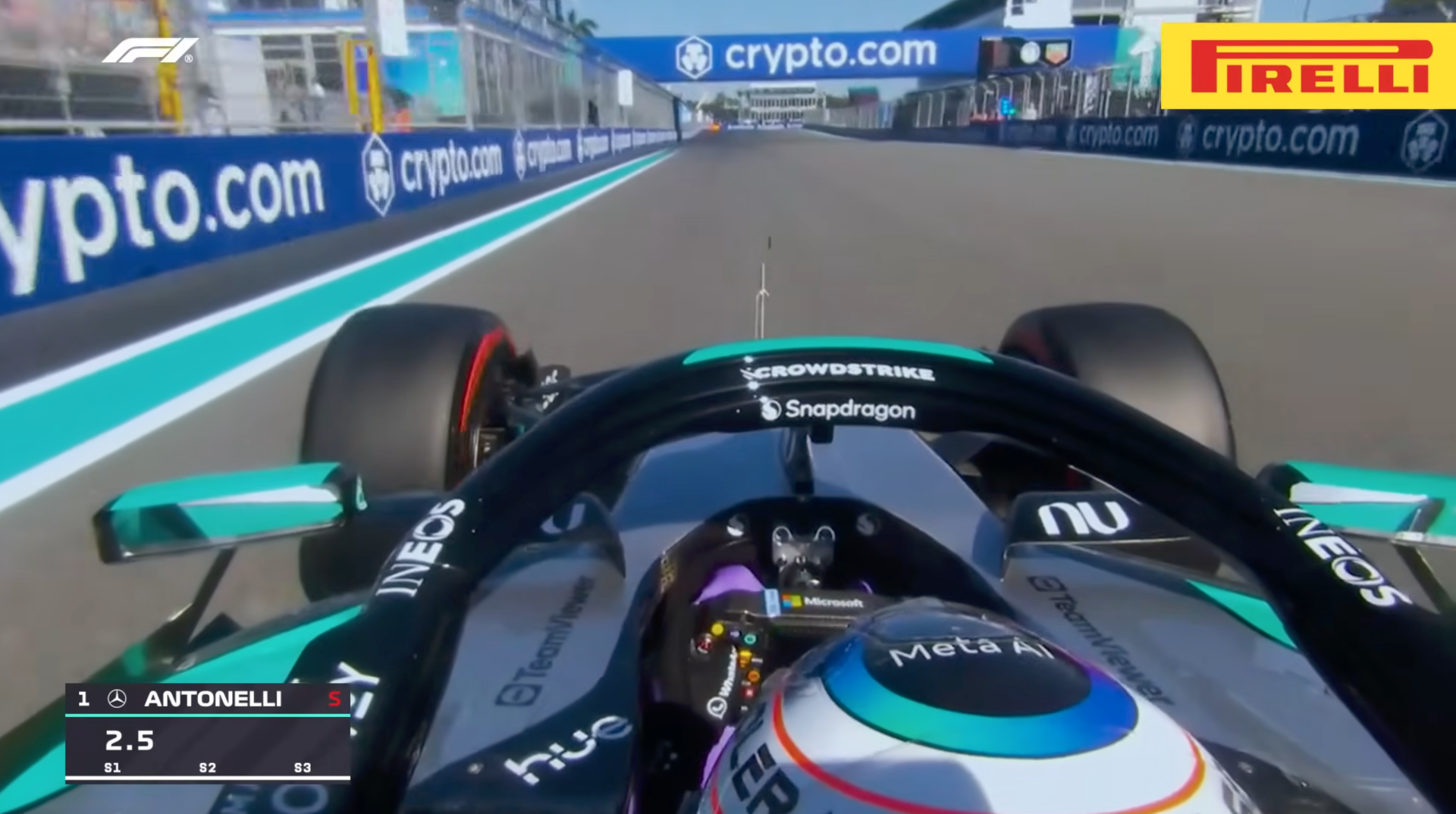
Miami qualifying failed that test for me in the most basic way. I took the time, sat down, watched it live, and tried to let it pull me back in. But the spark never jumped. Instead, I got bored and started zapping. That is far more damaging than anger. Anger still means attachment. Boredom means the bond is breaking.
Of course, the season may still improve. Teams usually find performance, and cars often become sharper once engineers and drivers understand them better. And Formula 1 will again ask us to be patient while the latest revolution slowly becomes less embarrassing. But my Saturday night experiment did not make me hopeful. It confirmed the suspicion I wanted to lose: the current cars are not just slower. They are dry, muted and visually dull in the exact places where Formula 1 should be most exciting.
A racing car still has to look like it is racing.
At this point, I am out.
//Alex
Enjoy the topc? Here some more F1 related articles:
🏁 My F1 Series – The full Rant
- Shut Up, Max? Why F1 Media has become Part of the Problem
- Formula 1 is dead. Long live Formula Eco!
- It’s not just the Monaco Circuit, Dummy — It’s the Tanks we call F1 Cars
- The 2026 F1 Regulations: You’re doing it wrong!
- Papaya Paradox: How McLaren’s own Rules undermined Oscar Piastri’s Championship Run
- F1: The Movie – Driven by Ego, Powered by Bullshit


1 comment