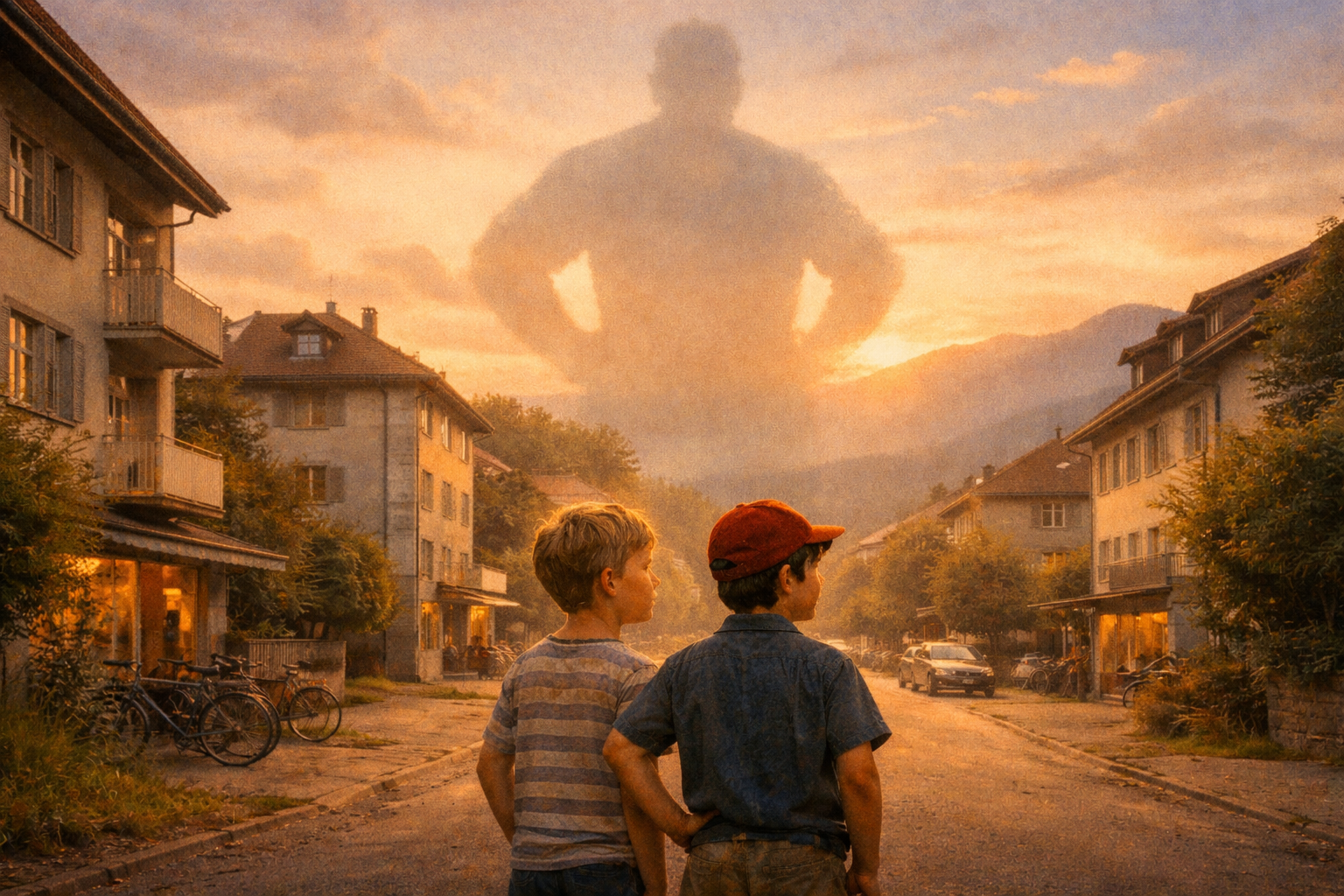
Every childhood has its giants.
Not the official ones, not the glossy heroes from cinema screens or comic books, but the ones that somehow grow in the wild. They arrive through playground whispers, schoolyard mythology, half-understood adult conversations, and the strange authority with which children repeat things they themselves do not fully understand. And once they are there, they become real enough for all practical purposes. As a child, I had such a giant.
His name was Max Wolfensberger.
Or rather, to be precise, he was not just my giant. He was our giant. The ultimate one. The strongest of the strong. The last line of defence one could call upon when an argument with other children had escalated and ordinary words no longer seemed sufficient.
And then some of us would say it:
“Then we’ll get Max.”
That was our last and greatest threat, the ultimate warning shot in the diplomatic conflicts of childhood. That was it. The nuclear option. The end of the argument, at least in our minds.
There was no need for Superman, Batman, or any other imported saviour in tights. We had no use for Marvel before Marvel had turned into a global weather system. In our world, the real ultimate force was Max Wolfensberger. He was the one who, in our imagination, could flatten everybody, restore justice, and settle matters once and for all. Anyone could have tried to call in a comic-book hero. That would have been far too obvious. We had Max. That sounded much more serious, much more exclusive, and somehow far more impressive. Because who among the neighbouring children could claim to have a Max in the background? Who could suggest that somewhere in the wider orbit of family, neighbours and local legend there existed an immensely strong figure, known simply as Max, who would appear if things got serious? It was complete nonsense, of course, but it was magnificent nonsense.
The beautiful part is this:
I had absolutely no idea who he was.
I did not know what he looked like. I had never met him. I could not have picked him out in a crowd. If memory serves me right, the father of one of my best childhood friends may have mentioned him once or twice. Perhaps he knew him personally, perhaps he simply spoke of him with admiration. I cannot say for certain anymore. Memory, after all, is not an exact science. But that may well have been how the name entered our little universe. My friend said it first, or at least said it with enough conviction for it to stick: Max Wolfensberger was the strongest and would knock them all into the ground. And that was good enough for us.
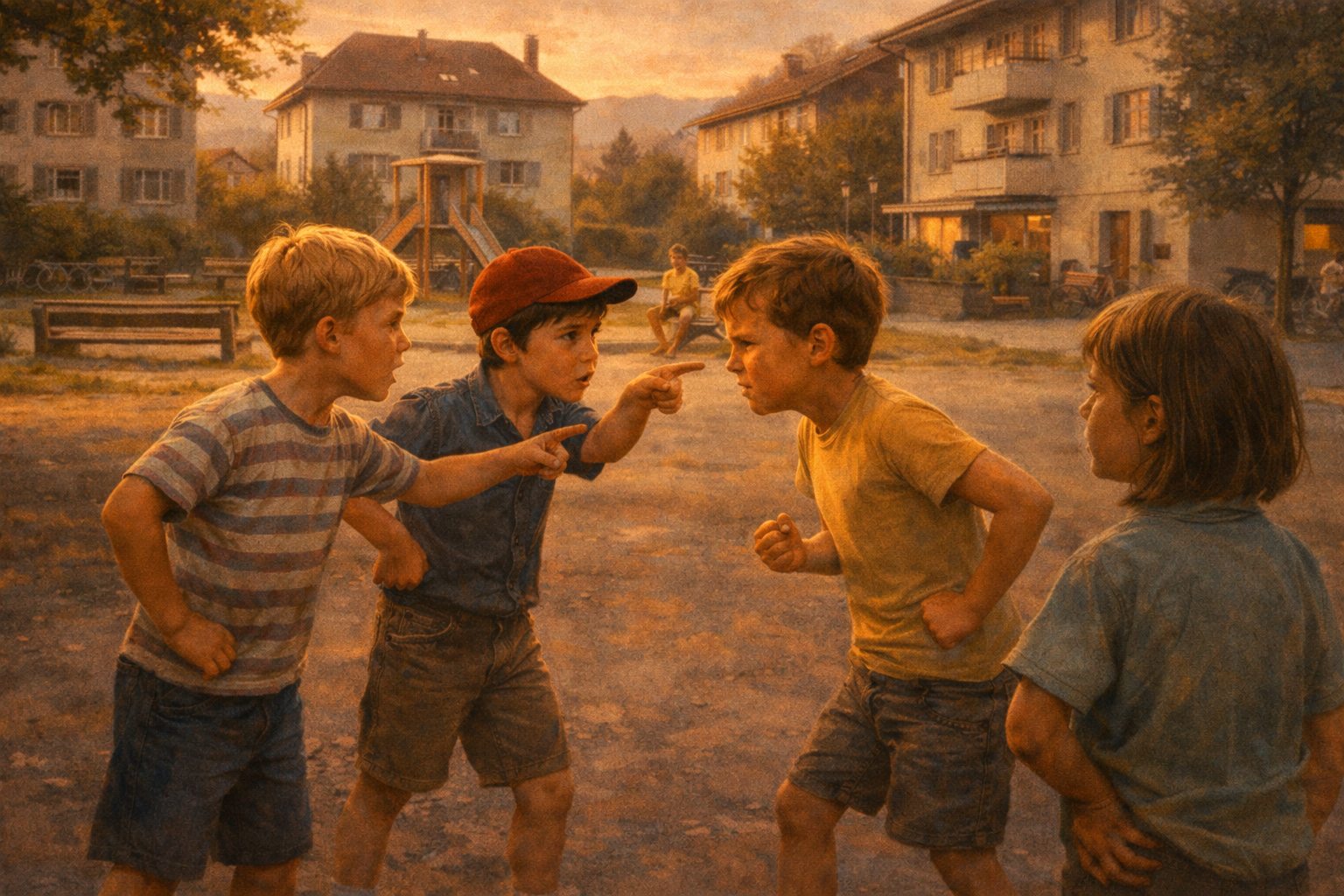
That was how these things worked. Children did not always fight physically. More often, they engaged in a kind of strategic theatre. One child would threaten to call his big brother. Another claimed to know someone even stronger. Alliances were formed, powers were invoked, reinforcements announced, and dramatic consequences promised. Most of it was bluff, of course. The older brothers and cousins being invoked in these situations usually had no idea that they had just been drafted, without consultation, into a completely unrelated childhood conflict. But that was not the point. The point was to project strength and to suggest that one was not alone.
Children do not always need evidence. They need confidence. They need a name. They need a figure onto whom they can project safety, strength, and the comforting possibility that somewhere out there exists someone who could sort everything out. For us, that someone was Max.
I had not thought about him in years. Probably decades. And then, not long ago, one of those strange little memory doors opened. A phrase came back. A tone of voice. A fragment from somewhere deep in the attic of childhood…
“We’ll get Max.”
And suddenly I found myself wondering: Who on earth was Max Wolfensberger? So I looked him up. And there he was.
Not a made-up superhero. Not a playground invention. Not just a name carried through the air by children with scraped knees and oversized confidence. Max Wolfensberger had really existed. He was a well-known Swiss wrestler (see Swiss National Sport: Schwingen), one of the most successful of his time, with major successes from the late 1960s into the 1970s. In a canton (Zurich) not especially famous for producing wrestling legends, Max Wolfensberger must have stood out even more. In other words, exactly the right era for his name to still be floating through conversations when I was a small boy growing up in the Zuercher Oberland.
Suddenly, it all made a kind of sense. What had once been for us a half-mythical force of nature was in fact a real athlete, a real local figure, a man with an actual life and career. We had simply turned him into something else. Without ever meeting him, without knowing much about him, we had promoted him into the highest rank of childhood legend.
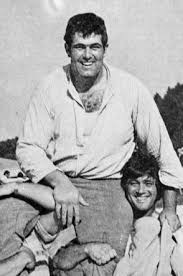
I only learned all this properly after his death. Max Wolfensberger passed away a little over two years ago, and reading about him now felt strangely moving. Not because some great mystery had finally been solved, but because a name from childhood suddenly became human. The giant from our harmless little disputes turned out to have been a real person all along, one who had clearly left an impression far beyond the wrestling ring.
So today I tip my hat to Max Wolfensberger.
He may never have known that somewhere, in the small quarrels and oversized imagination of a few boys, he played the role of the ultimate hero. But he did. For us, he was the strongest man of all, the one nobody else could match, the one we could always invoke when things became diplomatically difficult on the playground.
Looking back, I have to smile at the absurd innocence of it. There we were, small boys with grand rhetoric and no actual plan, summoning a man we had never met as if he were a benevolent mountain spirit with exceptionally strong hands. How good childhood can be when it is allowed to be small, local, and full of borrowed legends. How rich those years were, even with so little. A few friends. A few phrases. A few names that seemed to carry the weight of the world. A village-scale universe in which someone like Max Wolfensberger could become bigger than Superman simply because he was ours.
That world is gone, as such worlds always are. But every now and then, a name returns, and with it the atmosphere of an entire time: The light of it, the trust of it, the harmless drama of it, the silly grandeur of children who believed that, should things turn serious, help was only one famous local giant away.
“We’ll get Max.”
What a wonderful thing that was to believe.
//Alex

