The Final Step of the HiFi Reality Series
So… you’ve made it this far. You’ve survived How to Build the Perfect HiFi System (Without Losing Your Mind), breezed through HiFi on a Budget for Dummies, and maybe even swallowed The Blue Pill for an elegantly simple all-in-one setup.
But now you’re ready for the other capsule, the one Morpheus warned you about. Because once you take the Red Pill, there’s no going back.😱
Welcome to the World of the Slightly Insane
This is 🔴 Option B: Unified Electronics + Passive Speakers: One smart box that combines streamer + DAC + amplifier, feeding a proper pair of passive speakers (plus a few honest cables). Not a tower of separates. Not a spaghetti lab. Just a sensible, grown-up HiFi rig with real flexibility and real sound.
Even within this tighter concept, the combinations are vast — and that’s the thrill. To stay sane, we stick to one rule:
💰 Roughly 50% for speakers, the rest for electronics.
(And ~3% for cables — enough to connect, not to join a cult.)
🎚 Why Unified + Passive?
Because it hits the sweet spot between convenience and control. All-in-ones are great until an app dies. Full separates are great until your living room looks like mission control. Unified electronics + passive speakers sits beautifully in the middle: modern streaming, proper amplification, TV/turntable/CD friendliness — yet still just one brain and two speakers. Clean, flexible, and seriously musical.
🧩 Understanding Connectivity and Streaming Protocols
With today’s integrated HiFi systems, two features have become almost essential. The first is HDMI eARC (H), which allows the connection of a television so the system can also serve as a high-quality audio setup for movies and TV. It’s a simple but powerful feature that turns your stereo into a complete entertainment system.
The second aspect is a bit more complex. Modern integrated HiFi systems offer a surprisingly wide range of streaming functions. Most manufacturers provide their own control app that bundles many streaming services into a single interface. This can be practical, but these apps often differ in functionality and handling compared to the official apps of the streaming providers themselves.
This becomes especially important when you listen to music on the go. If you are travelling or commuting, you naturally use the native app of your streaming service. Once you return home, you might need to switch to the manufacturer’s control app in order to play music through your HiFi system. This means two different user interfaces and sometimes two different feature sets. Many users find this inconvenient because the workflow feels inconsistent and the manufacturer apps often do not offer the full capabilities of the streaming service.
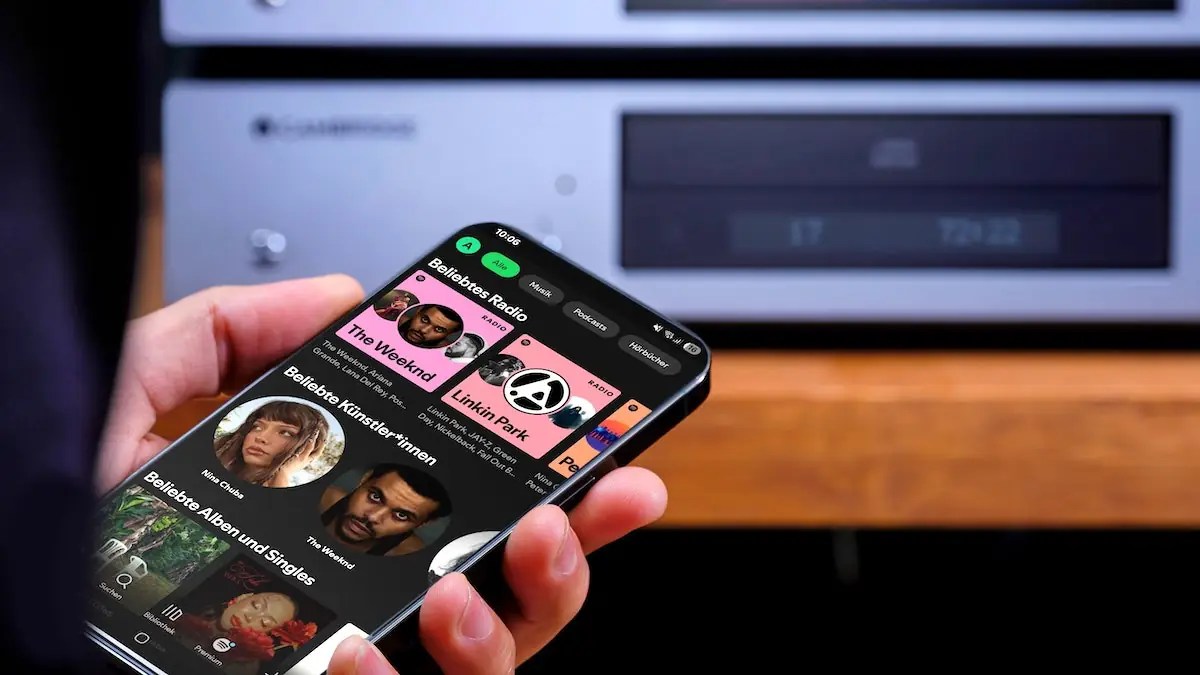
To solve this, several streaming platforms have introduced native streaming protocols. These allow you to use the official app of the streaming service to control playback directly on your home audio system. You browse music, start albums or playlists and manage your library in the familiar mobile interface, but the audio plays through your HiFi system at home. This creates a seamless experience between mobile listening and home listening, without switching apps.
The most relevant native protocols are:
- Roon Ready (R)
- Qobuz Connect (Q)
- Tidal Connect (T)
- Spotify Connect (S)
- Alexa Cast (A)
- Google Cast (G)
I will list only these native protocols for each device because they are the ones that define the real user experience. The support of additional streaming services inside the manufacturer’s own control app is not shown in the table. This would become too extensive and is something that interested readers can check in the technical specifications of the respective product.
The order of the protocols reflects my personal view of their overall quality and relevance. Roon is not a streaming service in the classic sense, but a high-end platform for music organisation and playback. It remains the gold standard for many audiophiles. For actual streaming services there are audible differences, even when they claim to deliver identical formats or lossless resolution. These differences are frequently discussed in audiophile communities and appear to be related to variations in mastering and signal handling. My ranking follows this consensus.
To keep the tables clean, I will use the following abbreviations:
H/R/Q/T/S/A/G
This way you can immediately see whether a device supports your preferred ecosystem and whether it integrates smoothly with your daily listening habits.
💸 Category: $500 to $1,000
(Approx. $250 – $500 speakers + $250 – $500 electronics)
This is where you finally escape the world of party boxes and discover real stereo imaging. Suddenly, instruments appear in space instead of being mashed together in a blurry pile. At this level, you begin to experience coherence, timing, and musical flow rather than brute force. Sure — physics still limits scale and deep bass, but the emotion per dollar ratio here is simply unbeatable. For many, this is where the true HiFi journey begins.
🔊 Passive Speakers (Pair)
The range of passive speakers in this segment is already surprisingly broad, but the strongest contenders are clearly bookshelf models. Compact speakers simply perform better at this price, with more refinement and accuracy per dollar spent. Finding a truly capable floorstanding speaker below $500 per pair is possible — but much harder. Most floorstanders at this level tend to sacrifice quality drivers or cabinet design to reach their size, which often results in a less balanced sound. So if in doubt: go bookshelf first.
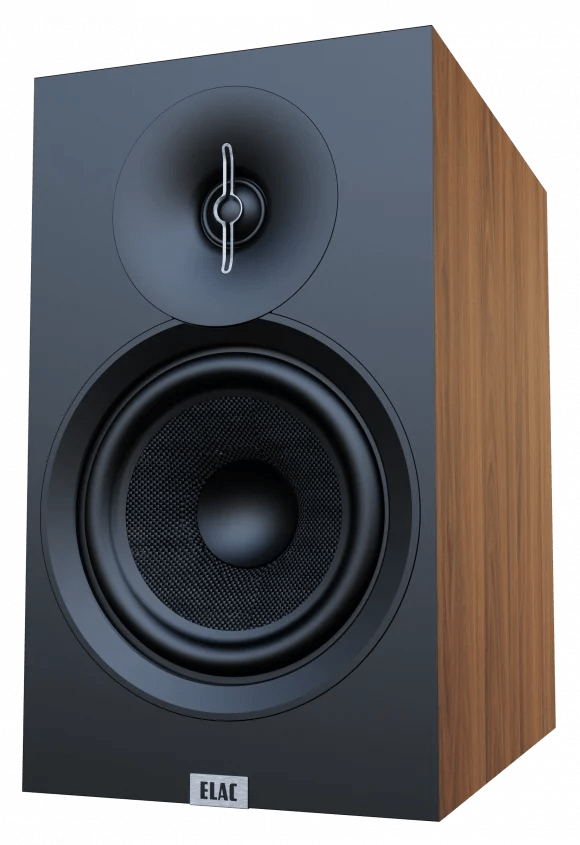
The ELAC Debut 3.0 DB63 stands out in this price range because it offers an unusually high level of performance and build quality for the money. The cabinet is solid, well finished and visually refined, giving the speaker a more elegant presence than most entry-level designs.
Its aluminium tweeter and aramid-fibre woofer deliver a clean and confident sound with impressive weight and control. Voices remain natural, details are clear and the overall balance works well with a wide variety of music.
In terms of value, the DB63 performs at a level that is typically associated with much more expensive bookshelf speakers, making it one of the strongest and most compelling options in the entire entry-level segment.
How to think: Keep the room size in mind, go bookshelf over floorstander if budget is tight, and prioritize placement. Spend sensibly on stands and basic acoustic common sense (distance from walls, a rug, a bookcase) — they matter more than fancy cables at this level.
What follows below is not an exhaustive list, but rather my personal shortlist — the six models I would choose myself if I had to assemble a starter system in this category today.
| Brand | Typical Price (USD / pair) | Formfactor |
|---|---|---|
| Klipsch R-50M | 315 | Bookshelf |
| Polk Audio Signature Elite S20 | 400 | Bookshelf |
| Q Acoustics QA 3010c | 445 | Bookshelf |
| Acoustic Energy AE 100.2 | 485 | Bookshelf |
| Canton GLE 30 | 495 | Bookshelf |
| Elac Debut DB63 | 495 | Bookshelf |
Note: This is just a snapshot of what’s available. There are also many other great options in this price range from brands such as DALI, Magnat, Paradigm, or JBL, all offering their own take on how budget HiFi should sound — and that’s exactly what makes this entry-level segment so much fun to explore.
📻 Electronics (Unified Amp + Streamer)
But when it comes to electronics, there is only one real answer in this category: Wiim. It is simply the only manufacturer offering a unified solution with full modern streaming capability in this price bracket.
| Brand | Typical Price (USD) | Native Streaming Protocols |
|---|---|---|
| Wiim Amp / Wiim Amp Pro | 345 / 405 | H/R/Q/T/S/A/G |
Even more impressive:
The Wiim performs far above its price class.
You can pair it with speakers from the next tier (or even the one above that) and you still won’t be disappointed. It is, without exaggeration, one of the most disruptive entry-level HiFi products in recent years.
💸 Category: $1,000 to $2,000
(Approx. $500 – $1 000 speakers + $500 – $1 000 electronics)
Power, grip, and refinement step up. The sound opens, instruments breathe, and the music gains weight and texture. This is where HiFi stops sounding “good for the price” and simply starts sounding good. You can finally sense the difference between punch and precision, air and ambience. Welcome to the part of the hobby where listening becomes intentional.
🔊 Passive Speakers (Pair)
In this price range, the selection of capable floorstanding speakers grows noticeably, with several excellent options that deliver real scale, dynamics, and presence. Still, a good bookshelf model will often offer slightly higher precision and refinement for the same money, at the cost of bass extension and physical impact. It’s a trade-off that depends largely on your room size and listening habits.
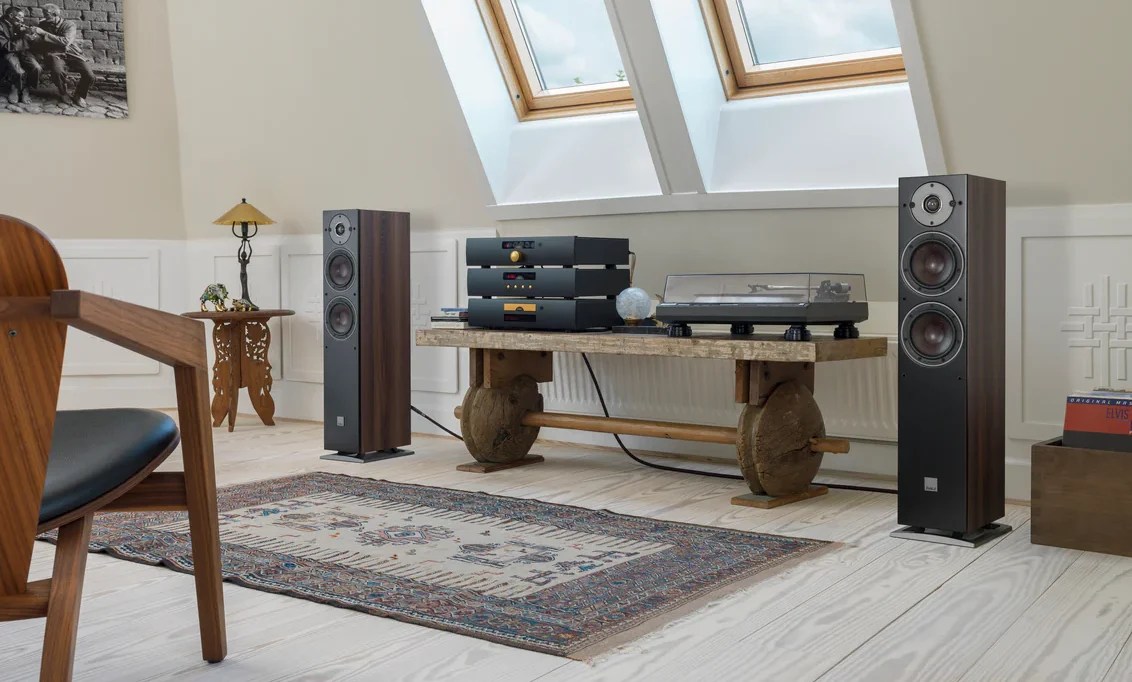
What follows is not an exhaustive overview, but rather my personal selection of speakers that, in my view, represent the most balanced and rewarding choices in this range. It’s a blend of proven all-rounders and fresh challengers — models that, when paired with the right electronics, can already deliver an experience that feels distinctly high-end.
| Brand | Typical Price (USD / pair) | Formfactor |
|---|---|---|
| Magnat Monitor S70 | 840 | Floorstanding |
| Canton GLE 70 | 870 | Floorstanding |
| DALI Oberon 5 | 870 | Floorstanding |
| Klipsch R-600F | 905 | Floorstanding |
| DALI Opticon 1 MK2 | 915 | Bookshelf |
| Bowers & Wilkins 607 S3 | 945 | Bookshelf |
Note: Naturally, this list reflects my personal preferences. Many of the manufacturers featured here also offer alternative models within the same price range that may suit different tastes or room setups just as well. And of course, there are plenty of other strong contenders from brands such as Elac, Focal, KEF, Monitor Audio, Polk Audio, Q Acoustics, Tannoy, or Wharfedale, each offering their own interpretation of what great HiFi at this level should sound like.
📻 Electronics (Unified Amp + Streamer)
While the first category already introduced Wiim as the ultimate budget disruptor, the Wiim Amp Ultra takes everything up a notch — and does so for only slightly more money. Its performance-per-dollar ratio is borderline absurd. A good friend of mine currently runs the Ultra with a pair of $20K loudspeakers (yes, seriously… just until his “real” high-end amp arrives). But to say the Wiim is out of its depth would be flat-out wrong. It holds its own with surprising authority, refinement, and control. It’s that good.
Joining the party is Eversolo, another young brand that has shaken up the streaming market. Known primarily for their outstanding streaming DACs, Eversolo has now entered the all-in-one game with the Eversolo Play, and even offers a version with an integrated CD drive and the option to rip your CD’s to its internal storage. Priced slightly above the Wiim, it’s still astonishingly affordable and brings remarkable build quality, a slick interface, and a premium user experience.
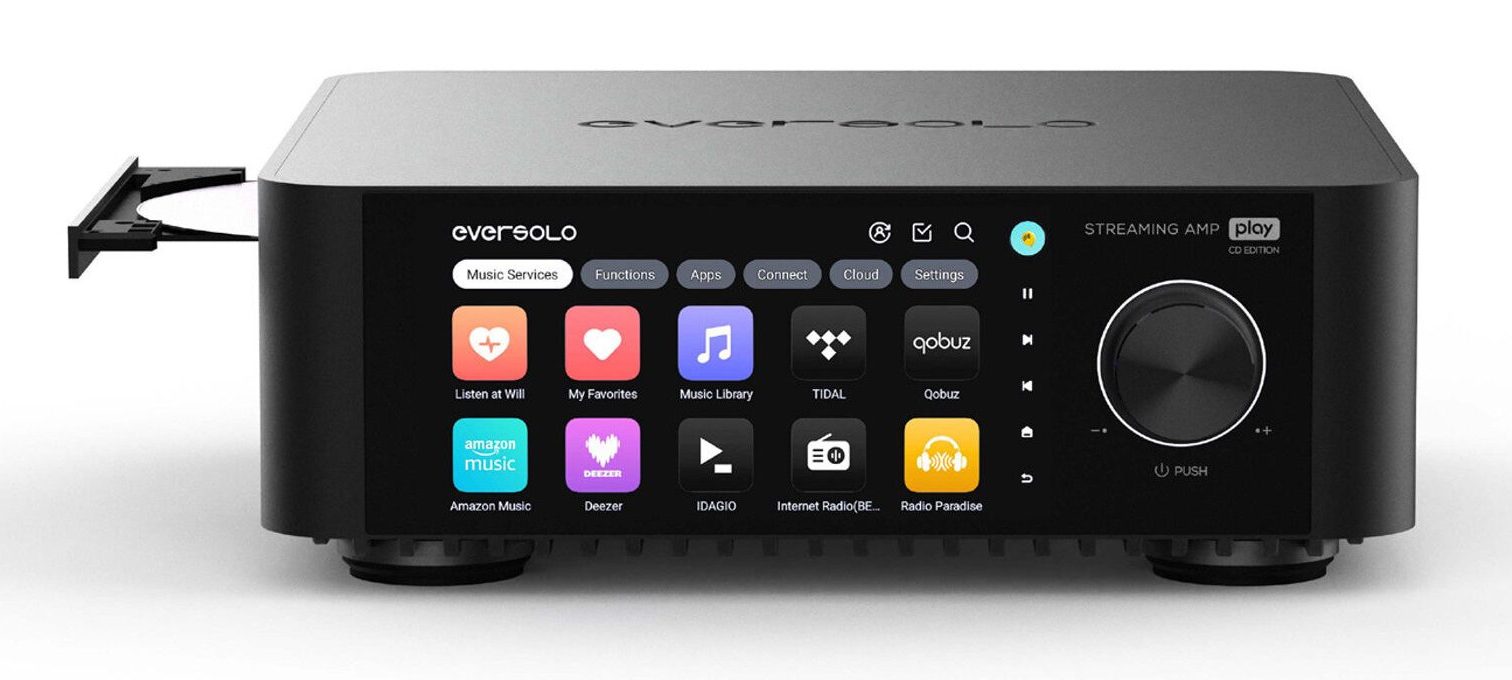
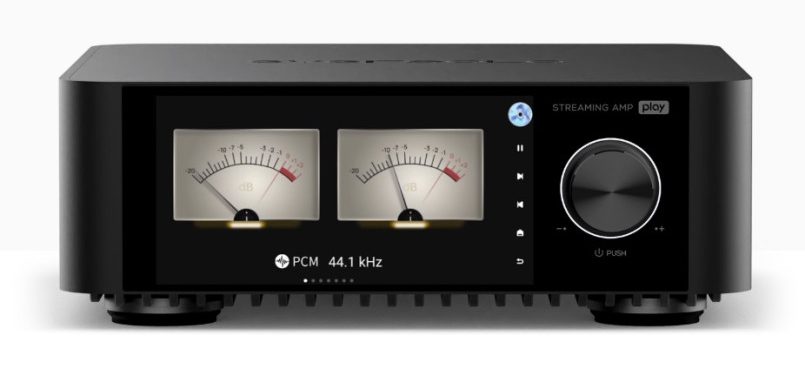
Both Wiim and Eversolo share a modern philosophy: Big, bright touch displays, full support for all major streaming services, and frequent software updates that keep these devices fresh and relevant. This is the new hot stuff: Serious sound, sleek design, and genuine usability without the audiophile snobbery.
| Brand | Typical Price (USD) | Native Streaming Protocols |
|---|---|---|
| Wiim Amp Ultra | 580 | H/R/Q/T/S/A/G |
| Eversolo Play / Eversolo Play CD | 835 / 960 | H/R/Q/T/S |
| Bluesound Powernode Edge | 870 | H/R/Q/T/S/A |
| Marantz Stereo 70s | 870 | H/R/Q/T/S/A |
| Yamaha R-N800A | 990 | S/A |
How it feels: The stereo image widens, dynamics wake up, and familiar tracks reveal little ghosts… A breath here, a room reflection there. You’ll catch yourself sitting down “just to listen,” not just to have background music. Welcome to the hobby.
💸 Category: $2,000 to $3,500
(Approx. $1 000 – $1 750 speakers + $1 000 – $1 750 electronics)
This is where HiFi becomes truly emotional. We’re leaving the entry-level fun zone behind and entering the realm where music starts to feel real. Systems in this price bracket no longer sound impressive; they sound believable. You begin to forget the equipment and simply listen. A well-matched setup at this level can already deliver genuine high-end performance, the kind that gives you goosebumps on the right track, at the right moment.
🔊 Passive Speakers (Pair)
In this segment, the mix of options between bookshelf and floorstanding models becomes genuinely interesting. Roughly half of my shortlist represents compact monitors that excel in finesse and precision; the other half are slim floorstanders that offer more physical presence and bass authority. That balance reflects the reality of this price class: it’s actually harder to find truly great floorstanding speakers here than it is to find an outstanding bookshelf. The best compact designs often play in a league that belies their size — and can outperform taller speakers with cleaner imaging and tighter control.
What follows is again my personal selection: A curated list that balances sonic character, craftsmanship, and diversity in design philosophies. I’ve included a range of voices: from refined Swiss precision to emotional Italian flair, from timeless retro aesthetics to modern minimalism.
| Brand | Typical Price (USD / pair) | Formfactor |
|---|---|---|
| JBL L52 Classc | 1,215 | Bookshelf |
| Wharfedale Linton Heritage 85th | 1,350 | Floorstanding |
| Q-Acoustics QA 3050c | 1,365 | Floorstanding |
| Piega ACE 30 | 1,465 | Bookshelf |
| Acoustic Energy AE 120.2 | 1,680 | Floorstanding |
| Sonus Faber Lumina 2 | 1,730 | Bookshelf |
Note: Naturally, there are plenty of excellent alternatives from other manufacturers in this price range, like Canton, DALI, KEF or Totem Acoustic.
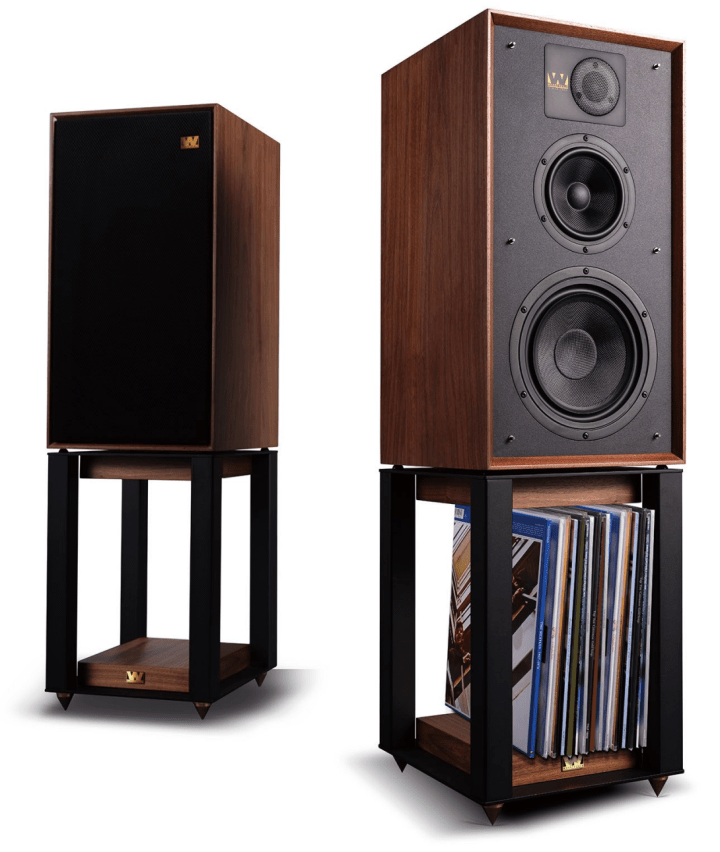
Many brands offer different models within the same series that could fit equally well. I’ve chosen the ones that, to my ears and taste, best represent what this tier can deliver — both in sound and in soul. The Wharfedale Linton Heritage 85th, for example, might visually divide opinions with its unapologetically retro design, but anyone who takes the time to actually listen will be rewarded with a beautifully rich, musical presentation. The vintage look may not be for everyone, yet it carries a charm and authenticity that fits the sound perfectly. And the Sonus Faber Lumina 2? A handcrafted Italian masterpiece: Pure elegance for both the ears and the eyes.
📻 Electronics (Unified Amp + Streamer)
In this price range, systems become more refined, but also a bit more traditional. Many products in this class follow the classic HiFi formula: Solid build, clean amplification and decent streaming support, yet without the freshness and innovation seen in lower categories. The sound quality is excellent, but the overall concept can feel rather conventional.
Most of these systems are reliable, though not particularly exciting. Platforms such as MusicCast (Yamaha) or HEOS (Denon/Marantz) still lag behind in user experience and integration. Marantz redeems itself through a good support of natve streaming protocols, which allow direct playback without relying on the HEOS app. Yamaha’s implementation is stable, but its ecosystem remains quite closed.
The Technics SA-C600 remains an interesting option. It offers broad native streaming support, and even includes a built-in CD player for anyone with a legacy collection. However, it lacks HDMI eARC, so it cannot be used easily with a TV. If TV integration matters, the other systems in this category are better suited.
| Brand | Typical Price (USD) | Native Streaming Protocols |
|---|---|---|
| Bluesound Powernode | 1,200 | H/R/Q/T/S/A |
| Technics SA-C600 | 1,250 | R/Q/T/S/G |
| Marantz MODEL 60n | 1,485 | H/R/Q/T/S/A |
| Yamaha R-N1000A | 1,620 | H/S/A |
💸 Category: $3,500 to $5,000
(Approx. $1 750 – $2 500 speakers + $1 750 – $2 500 electronics)
You are still technically “on a budget”, but at this stage you are fully committed. This is where HiFi stops being a hobby and becomes part of your identity. Everything about these systems feels more mature: tighter bass, cleaner highs, deeper soundstage and an effortless sense of control that makes even complex recordings sound natural and alive.
🔊 Passive Speakers (Pair)
For this level I decided to go all in on floorstanding speakers only. There are some great bookshelf models in this range, but this is where you stop pretending to be reasonable and start enjoying yourself. Time to turn it up! Full-size speakers simply deliver more of everything: Weight, presence and energy. They fill a room not only with sound but with confidence.
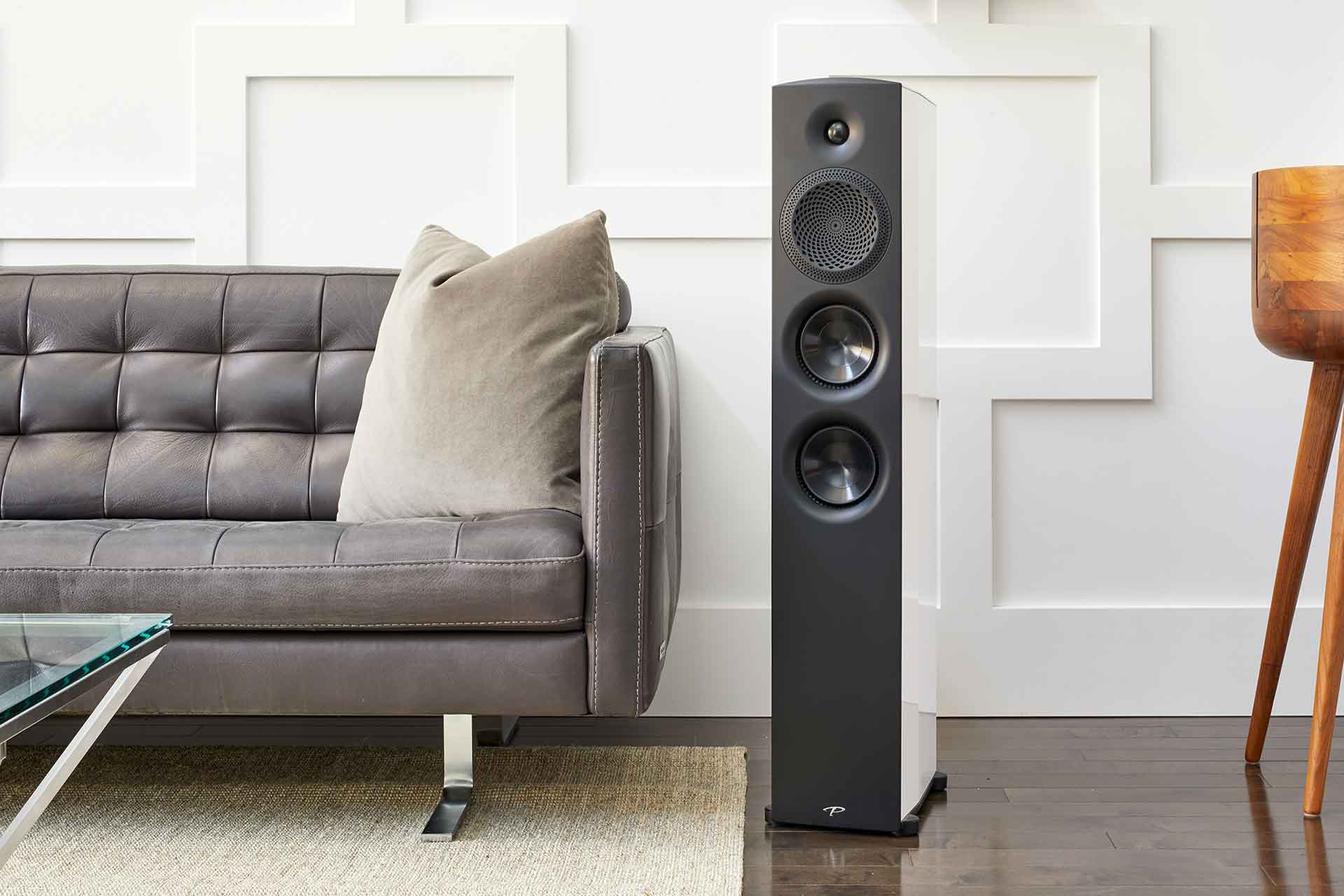
Among my favourites (see table below), the Paradigm Premier 700F deserves special attention. It offers outstanding performance for its price and a very balanced tonal character. The Focal Theva No3 stands out with its lively, detailed sound and modern design, while the DALI Opticon 6 MK2 combines musical warmth with precision and a remarkably open stage. These are not speakers you just listen to. You live with them.
| Brand | Typical Price (USD / pair) | Formfactor |
|---|---|---|
| FOCAL Theva No3 | 2,070 | Floorstanding |
| Monitor Audio Silver 200 7G | 2,180 | Floorstanding |
| Paradigm Premier 700F | 2,230 | Floorstanding |
| KEF Q11 Meta | 2,370 | Floorstanding |
| DALI Opticon 6 MK2 | 2,480 | Floorstanding |
| Bowers & Wilkins 603 S3 | 2,500 | Floorstanding |
Note: Many other brands offer strong alternatives (Acoustic Energy, Canton, Elac, JBL or Sonus Faber) and the differences often come down to personal taste, room acoustics and amplifier pairing (think: Synergy). And of course, you might still prefer to go with bookshelf speakers. If you have reached this stage, you have already crossed the line. There is no way back to casual listening.
📻 Electronics (Unified Amp + Streamer)
In this price range, we enter the world of real all-round performers. These units combine power, finesse and convenience in ways that finally make “one box” solutions sound like true high-end systems. They deliver not only the strength to drive demanding speakers but also the tonal control and subtlety that bring music to life.
The Lyngdorf TDAI-1120 stands out as one of the most advanced options here. Its built-in room calibration is exceptionally effective and can transform even difficult spaces into well-balanced listening environments. It is also one of the most flexible devices when it comes to streaming, supporting virtually every relevant service and protocol. For anyone looking for precision and adaptability in a compact form, this is a top contender.
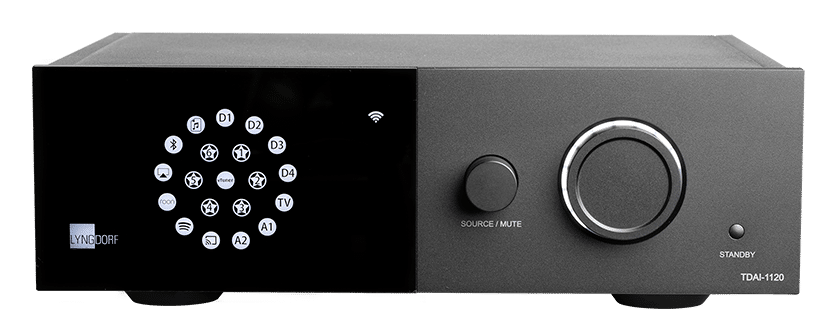
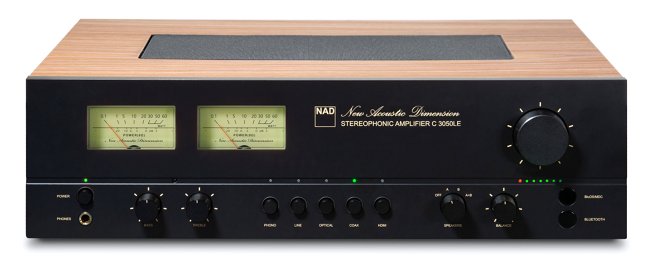
The NAD C3050 takes a very different approach. Visually it feels like a time machine back to the seventies, but under the hood it runs modern BluOS streaming and offers modular upgrade slots for future expansion. It is a clever fusion of nostalgia and technology that appeals to both heart and brain.
naim has long been recognised as one of the pioneers of modern streaming audio. The naim CI-Uniti 102 continues that tradition with refined sound, elegant ergonomics and rock-solid streaming stability. Combined with speakers from Focal, which share the same design heritage, this pairing can produce a level of synergy that feels completely natural and effortless.
The other two units in this class take very different approaches. Primare’s I15 Prisma MKII focuses strongly on its own control app and does not offer native Tidal or Qobuz support, nor an HDMI connection, which makes it a more closed ecosystem overall. It delivers clean Scandinavian design and sound, but with less flexibility in everyday use. The Sonoro Maestro Quantum, on the other hand, is something of a flexibility wizard. With its built-in CD drive, wide streaming support and broad connectivity, it fits easily into almost any modern setup. It offers a surprisingly versatile feature set for this category and works equally well as the hub of a music-first system or a TV-integrated solution.
| Brand | Typical Price (USD) | Native Streaming Protocols |
|---|---|---|
| NAD C3050 | 1,860 | H/R/Q/T/S/A |
| naim CI-UNITI 102 | 1,870 | H/Q/T/S/G |
| Sonoro Maestro Quantum | 2,000 | H/R/Q/T/S/A/G |
| Primare I15 Prisma MKII | 2,420 | R/S/G |
| Lyngdorf TDAI-1120 | 2,500 | H/R/Q/T/S/G |
Reality check: This level exposes recording quality: Glorious with great masters, cruel with bad ones. You will hear everything. That’s the blessing and the curse… and the reason you’ll start talking about toe-in angles at dinner.
🌀 The Point of No Return
From here on, you’re one of us. You’ll nudge speakers by millimeters, debate room modes with strangers, and swear you hear differences after moving a plant. But you’ll also rediscover music — not just sound, but performance, presence, and emotion. That’s the whole point.
If you made it this far, congratulations. You are now officially close to the edge to crazyness. This is where reason rapidly fades and passion takes over. The gear starts to look and feel special, and the prices finally begin to make sense only to those who are already deep into the hobby.
There is a magical range between about $3,200 and $5,000 for unifed electronics where things suddenly become very interesting. Here we find components that deliver breathtaking quality combined with true innovation. Systems like the Cambridge Audio Evo, NAD M10, Naim Uniti Atom, or the HiFi Rose RS520 show just how far modern engineering has come. These devices offer stunning sound, thoughtful design and a level of refinement that makes you want to rediscover your entire music collection.
The same magic happens on the speaker side. Once you reach this level, the performance leap is impossible to ignore. Models such as the Canton Vento 80, Bowers & Wilkins 700 Series, JBL HDI-3800, Focal Aria Evo X, Sonus Faber Lumina V Amator, Piega Premium Series or the DALI Rubikore Series demonstrate what is possible when craftsmanship and acoustic science meet.

From here on, things can get very wild. This is no longer about budget or practicality. This is about joy, curiosity and the sheer pleasure of experiencing music at a level where emotion and technology merge into one. You have officially entered the world of the happy lunatics. And honestly, it only gets more fun from here. And we did not even start to talk about cables…
🎬 Final Words
But stop! This journey was never about worshipping gear. It was about goosebumps on demand. Whether you stayed with the Blue Pill or embraced the Red, you now know the truth:
Great sound isn’t a luxury. It’s joy, amplified.
Pour a drink, cue your favorite record, and smile at the beautiful madness. Because you, my friend, took the Red Pill — and your ears will never be the same.
Cheers,
// Alex
Enjoy the topc? Here is the complete HiFi Guide Series (in chronological order):
🎧 The Complete HiFi Guide Series
- 🎵 How to Build the Perfect HiFi System (Without Losing Your Mind)
- 🎧 HiFi on a Budget for Dummies
- 🔵 HiFi on a Budget: The Blue Pill
- 🔴 HiFi on a Budget: The Red Pill (you are here)
 alexreusch
3 comments