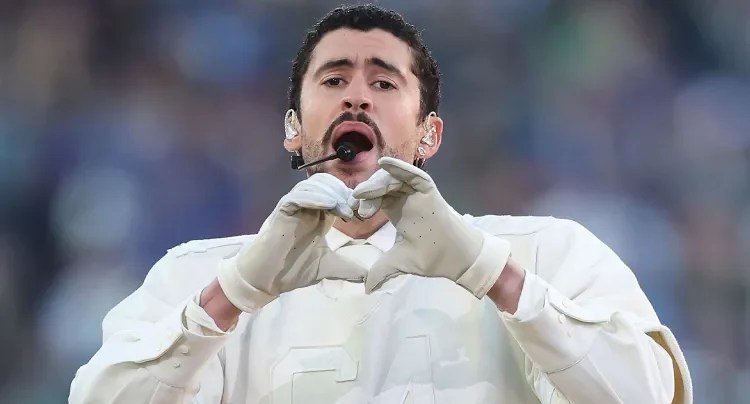
Three weeks ago, America experienced what some commentators described as a cultural earthquake. Others described it as “confusing.” And a small but very loud minority described it as an outrage.
Because how dare someone perform at the Super Bowl halftime show… in Spanish.
Let’s not even unpack that too much. Over 50 million people in the United States speak Spanish at home. Across the Americas, you are looking at roughly 450 million Spanish speakers. Spanish is not some exotic niche language whispered in corners. It is one of the great cultural arteries of the Western Hemisphere.
But this article is not about outrage fatigue.
It’s about something much more interesting.
And no, it’s not about spoken language.
Some understood every word.
Some understood none.
It didn’t matter. That’s the part I can’t stop thinking about. Because when Bad Bunny took the Super Bowl halftime stage, something interesting happened: Millions of people felt something they couldn’t necessarily translate.
And yet, they understood it perfectly.
The thing that made some people uncomfortable
What unsettled some viewers wasn’t the language.
It was the feeling.
The atmosphere.
It wasn’t a performance about domination.
It wasn’t about military flyovers, GDP charts, or patriotic bombast.
It was about togetherness.
About rhythm.
About family.
About people moving as one.
And that, ironically, can feel subversive in a culture that often measures success in individual net worth and quarterly growth.
What Music reveals about a Society
Music is never random. It reflects what people cling to.
When you listen to Latin music — whether from Bad Bunny, reggaetón collectives, or traditional rhythms — you hear something consistent:
Celebration is communal.
Joy is shared.
Pain is processed together.
You can hear resilience in the beat. You hear dignity. You hear criticism. Sometimes subtle, sometimes unapologetically direct, woven into melody instead of shouted from podiums. And maybe that is the most elegant way to question a system: Not by lecturing it, but by living differently.

You can hear “we” more than “me.”
And that matters.
Wealth vs. Warmth
Let’s be honest.
Some of the happiest celebrations on this planet do not happen in countries topping the GDP rankings. They happen in neighborhoods where money is scarce but doors are open.
Look at street festivals across Latin America. Look at families gathered around plastic tables, music playing from a single speaker, children dancing barefoot (and falling asleep on chairs later while the party continues).
There is no IPO announcement.
No stock option plan.
No defense budget discussion.
Just people.
Together.
Meanwhile, in parts of the so-called “developed world,” we have perfected the art of isolation in high-resolution. We have streaming platforms, climate control, and food delivery apps, and yet epidemics of loneliness. We measure success in square meters and horsepower. And then we wonder why something as simple as collective joy feels foreign.
This is not romanticizing poverty. Financial stability matters. Food on the table matters. But when did financial success become the dominant, sometimes the only definition of being “ahead”? And if being ahead requires someone else to fall behind… what exactly are we celebrating?
The subtle Lesson
What that halftime show delivered wasn’t rebellion.
It was a reminder.
You can be financially modest and emotionally abundant. You can live in a country wrestling with corruption, instability, or economic pressure, and still protect your culture of celebration.
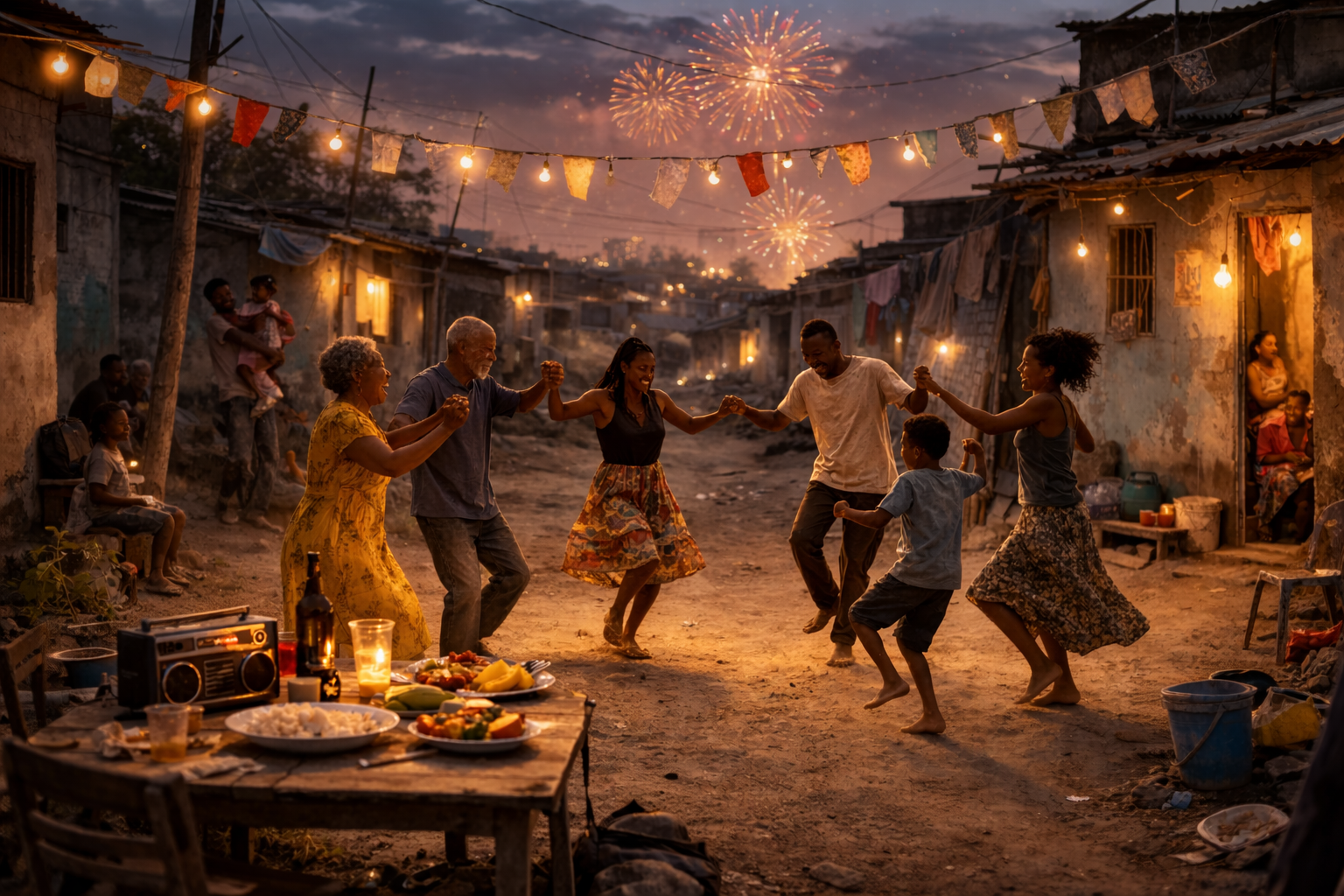
You can have less… and still have more.
More music.
More shared meals.
More intergenerational presence.
More actual human contact.
And here’s the uncomfortable thought: Maybe the world’s most powerful nations don’t need to teach everyone else how to build stronger economies. Maybe they need to relearn how to build stronger communities.
What we could steal (in the best way possible)
Not the politics.
Not the chaos.
Not the instability.
But the warmth.
The instinct to gather.
The refusal to let joy depend on wealth.
The understanding that culture is not a luxury. It is infrastructure.
And maybe that’s why that performance didn’t just resonate in one country.
It travelled.
Across both American continents, obviously.
But also across Europe, where conversations weren’t about outrage.
They were about energy. About pride.
About the fact that something different had taken the biggest stage in American sports.
And then something even more telling happened: In China, thousands of kilometers away from the culture war debates, his album climbed to the top of the charts.
Not because people suddenly mastered Spanish grammar.
But because feeling travels faster than translation.
And maybe that’s why that performance resonated globally.
Not because it was loud.
Not because it was Spanish.
But because it was human. And humanity, it turns out, translates perfectly.
As always: Just my 5 cents.
And if I ever become a live streamer on YouTube, my channel should be just like this one:
Enjoy!
//Alex
 alexreusch