The World Cup draw should be a moment of pure anticipation. Fans look at the screen, the balls come out of the bowls, and the imagination starts to race. Who plays whom, which group becomes the group of death, where could a fairy-tale story begin?
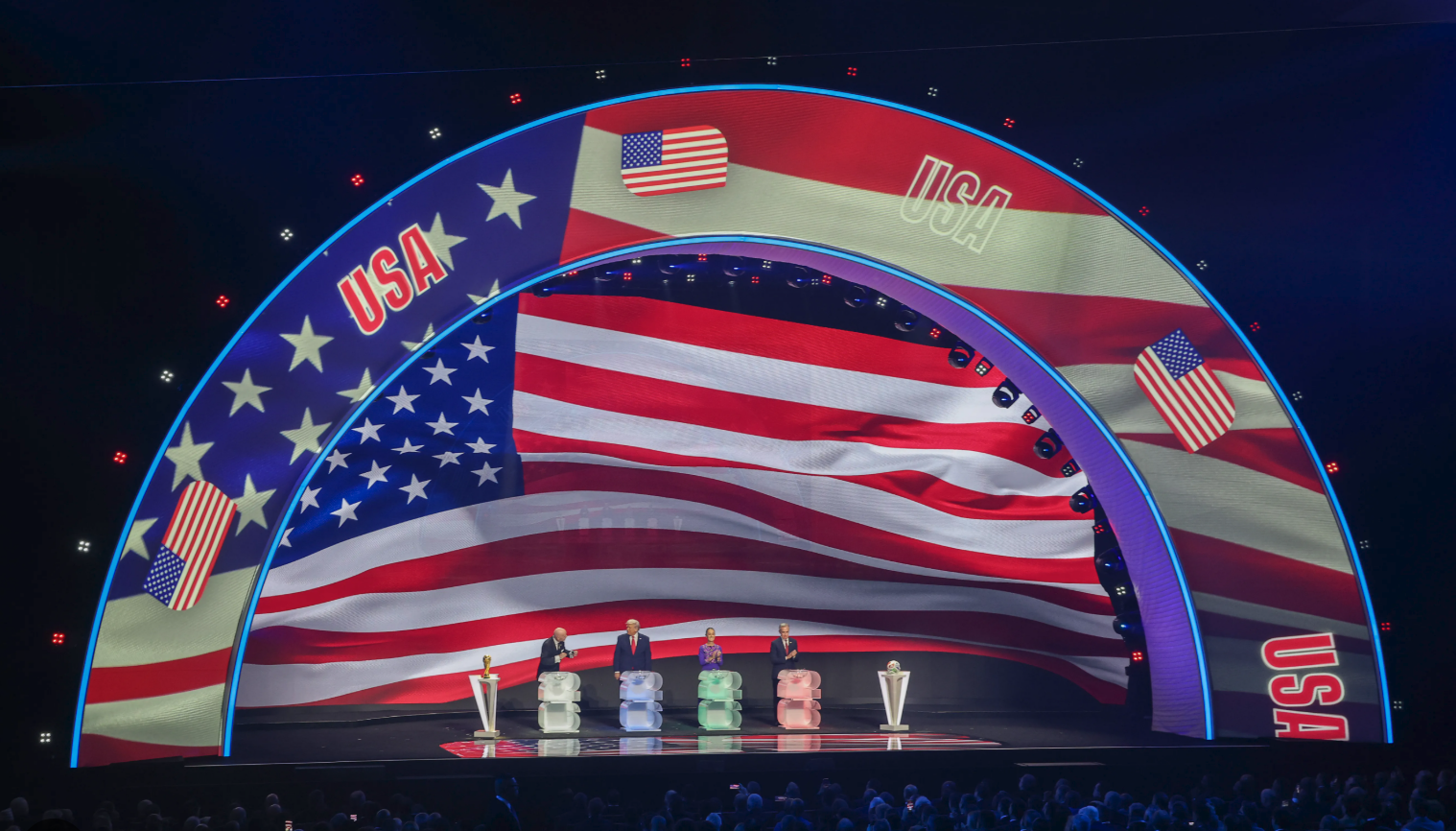
On 5 December 2025, at the draw for the 2026 FIFA World Cup in Washington D.C., we saw the opposite. Instead of a celebration of football, the world got a three-hour embarrassment. It was a bloated political show, technically sloppy, full of awkward mistakes and confusion, built around one thing only: The self-promotion of Gianni Infantino and his favourite political partners.
International media did not hold back. German outlets wrote of “humiliating behaviour” and “sycophantic grovelling” by Infantino towards Donald Trump. British and Spanish papers described the event as a “theatre piece” and “Trump show”, not as a sporting draw (see: Kicker; The Independent). From the United States, columnists called the whole thing “cringe” and even compared the atmosphere to propaganda events at the Olympics in the 1930s (see: San Francisco Chronicle).
They are right. This draw was not only embarrassing in content. It also showed how far the World Cup, and with it world football, has drifted away from its supposed values.
1. A Draw turned into a Political Stage for Trump
If anyone still believed that FIFA tries to keep politics out of football, the draw in Washington destroyed this illusion.
Instead of focusing on the teams, FIFA built the evening around Donald Trump. He gave a speech, his presence dominated the staging, and he received the newly invented “FIFA Peace Prize” right before the draw. (see: Reuters).

The timing and design of this award were anything but innocent. The prize was created just weeks ago, and Trump was widely expected to receive it from the start. Many commentators and human-rights experts pointed out how absurd it is to present such a prize to such a divisive figure, and to do so at a football draw of all places.
The FIFA Peace Prize was more than just bad optics, it was a calculated gesture. Everyone knows Trump has long thirsted for a Nobel Peace Prize, and everyone knows the Nobel Committee dismissed the idea outright because actual moral criteria apply. FIFA, apparently, operates without any. Infantino stepped in to offer a made-up alternative, a cheap imitation crafted purely to flatter Trump. But the real scandal is the arrogance behind it: A deeply compromised organisation, drowning in corruption allegations, suddenly pretending to arbitrate global peace. The fact that FIFA even dares to award such a prize is beyond audacity. It’s proof that the institution has completely lost its sense of reality and legitimacy.
Instead of neutrality, FIFA delivered a carefully choreographed public relations show for a politician. Ann Killion of The San Francisco Chronicle wrote that if you ever wondered what it might have felt like at the infamous Olympics or World Cups of authoritarian regimes in the 1930s, the 2026 draw gave you a taste of that.
This is not football anymore. It is political theatre with a ball somewhere in the background.
2. Technically sloppy, confusing, and almost unwatchable
Even if you ignore the politics, the draw failed on the most basic level: organisation and clarity.
The ceremony dragged on endlessly. Estimates speak of around 90 minutes of music, speeches and self-congratulation before the first ball was even drawn. Many fans on social media called the event “unwatchable” and “a waste of time.”
When the draw finally started, confusion continued to reign:
- The new 48-team format is already complicated. Groups, playoff placeholders, cross-over paths and seeding rules all had to be explained. Broadcasters struggled to keep viewers oriented. Some local news outlets even felt the need to publish separate explainer pieces just so fans could make sense of the format and rules (see: The Guardian).
- Graphics appeared late or in the wrong order. Some screens showed incomplete groups while presenters kept talking over each other. The atmosphere was closer to a poorly rehearsed talent show than to the flagship event of the world’s biggest sport.
- The suspense, traditionally inherent to a transparent drawing process, was destroyed by endless interruptions for jokes, musical numbers and cross-promotion. Many fans, including journalists, complained they had to actively search online after the fact just to see the final group overview because the live broadcast was too messy to follow.
FIFA tried to turn what should have been a straightforward sporting procedure into a Hollywood-style entertainment product. What came out was neither entertaining nor professional. It was simply chaotic.
3. A 48-Team World Cup: Quantity over Quality
Behind all the show and confusion lies a much bigger problem. World Cup 2026 will be the first edition with 48 teams. That means more matches, more broadcasting hours, more sponsorship deals and therefore more money for FIFA. It does not mean better football.
Critics have warned for years that this expansion would dilute the quality of the tournament. They argued that the number of games was already too high, that players’ workload was near the limit, and that the main incentive behind the change was political: More federations loyal to the man in charge (see: Cornell University; Yahoo Sports).
Now their warnings are coming true:
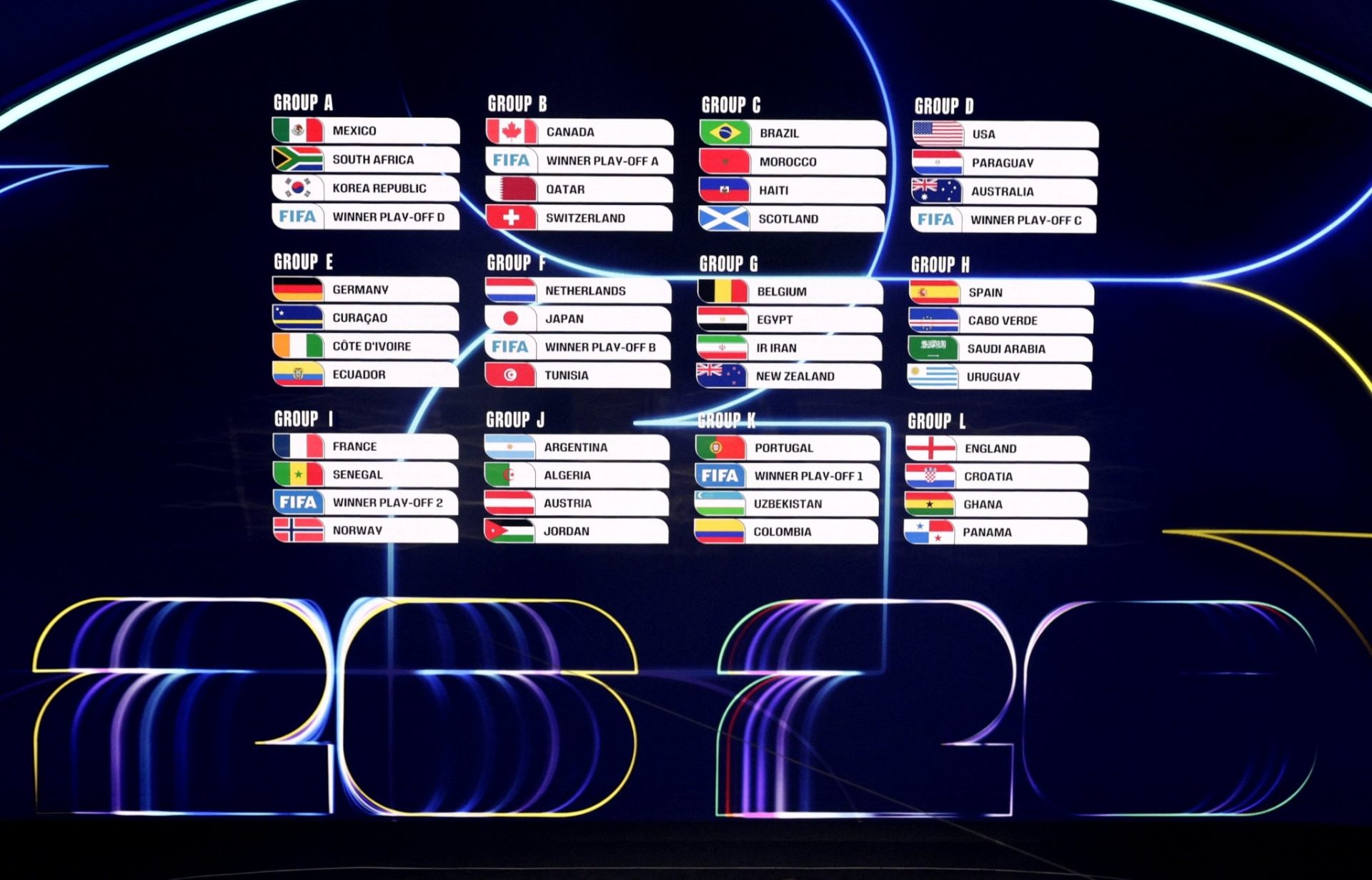
- With 48 teams and 12 groups, it becomes almost impossible to avoid groups filled with clearly weaker teams. Many media outlets have already questioned whether the group stage will contain long stretches of matches between nations ranked far down the FIFA list — games that draw barely any global audience beyond the involved countries.
- The risk of one-sided, boring matches skyrockets. In top leagues, weaker sides never drift so low that a match is decided before it begins. The World Cup, by definition, always had a broader range, but there used to be a clear sporting filter. You had to earn your place. Now, a much larger percentage of countries automatically qualify. The bar drops.
- Players face an even longer and more intense tournament. The 2026 edition will feature 104 matches instead of 64. For clubs and players this is another scheduling nightmare, another source of fatigue and injuries. For fans it is simple content inflation. The product becomes less special when you stretch it endlessly.
Of course, there is a romantic argument that “more nations get a chance.” But at some point a World Cup loses its character if nearly everybody qualifies. A final tournament packed with clearly overmatched teams does not grow the game. It simply produces more broadcast hours for television. The harsh truth is this: if you love football as a high-level sport, you do not want to see two teams from the very bottom of the rankings stumble through a group game that feels like a pre-season friendly. You certainly do not want a tournament where the most interesting thing for weeks is the opening ceremony and the next scandal at the top of FIFA.
4. Gianni Infantino: A President who uses Football as his Personal Power Instrument
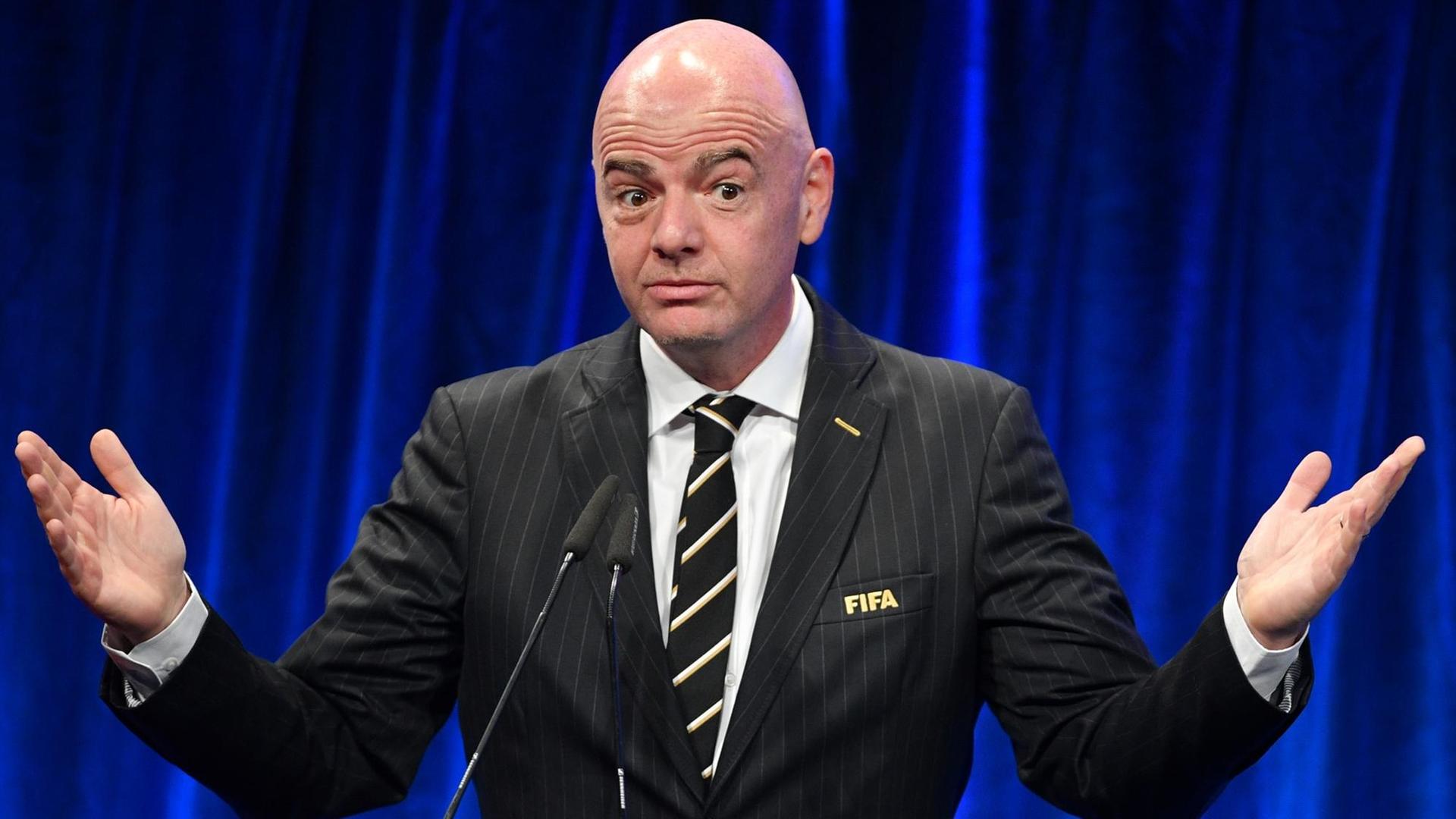
All of this: The bloated format, the political staging, the embarrassing draw show, has one common denominator. Gianni Infantino.
Infantino presents himself as a modern reformer who globalises football. In reality, he has constructed a system that keeps him firmly in power and ties the survival of many small federations to his decisions.
He does this in several ways.
4.1 Buying loyalty with World Cup slots and tournaments
By expanding tournaments and creating new competitions, FIFA under Infantino sends a clear message to smaller national associations: stay loyal and you will receive more prize money, more participation, more exposure. Analysts have highlighted how this strategy has greatly extended his support in Africa, Asia and the Caribbean, even when major European federations and many fans disagree with his policies.
When almost a third of all FIFA members can dream of a World Cup appearance, criticising the president becomes risky. Who dares to bite the hand that feeds them?
4.2 Cosying up to powerful states, no matter their record
Infantino has developed a pattern of aligning himself with governments that can offer money or prestige.
- He granted the newly established FIFA Peace Prize to Donald Trump, a political figure whose record includes aggressive immigration policies, travel bans, and a divisive internal agenda. The prize was introduced just a month before the draw.
- The draw was moved from an originally planned Las Vegas venue to the Washington D.C. Kennedy Center, reportedly at Trump’s behest. FIFA complied without a fight (see: The Independent)
- This is not governance. It is subservience.
- The very existence of a “FIFA Peace Prize” is pure arrogance. An organisation mired in scandal pretending to replace the Nobel Prize it could never influence. Nothing illustrates FIFA’s delusion of moral authority more clearly.
He treats FIFA like a personal brand, where alliances and political optics matter more than sporting integrity.
5. From Qatar 2022 to 2034: How FIFA normalised the Unacceptable
The 2026 draw disaster did not come out of nowhere. It is simply the latest episode in a long, dirty series. Under Gianni Infantino, FIFA has moved from “occasionally corrupt” to “structurally rigged”. The way Qatar 2022 and Saudi Arabia 2034 were handled shows exactly how this system works.
5.1 Saudi Arabia 2034: A World Cup gift-wrapped by Infantino
Saudi Arabia did not “win” the 2034 World Cup. It was handed the tournament on a silver platter, after the rules were quietly bent into the shape of a Saudi flag.
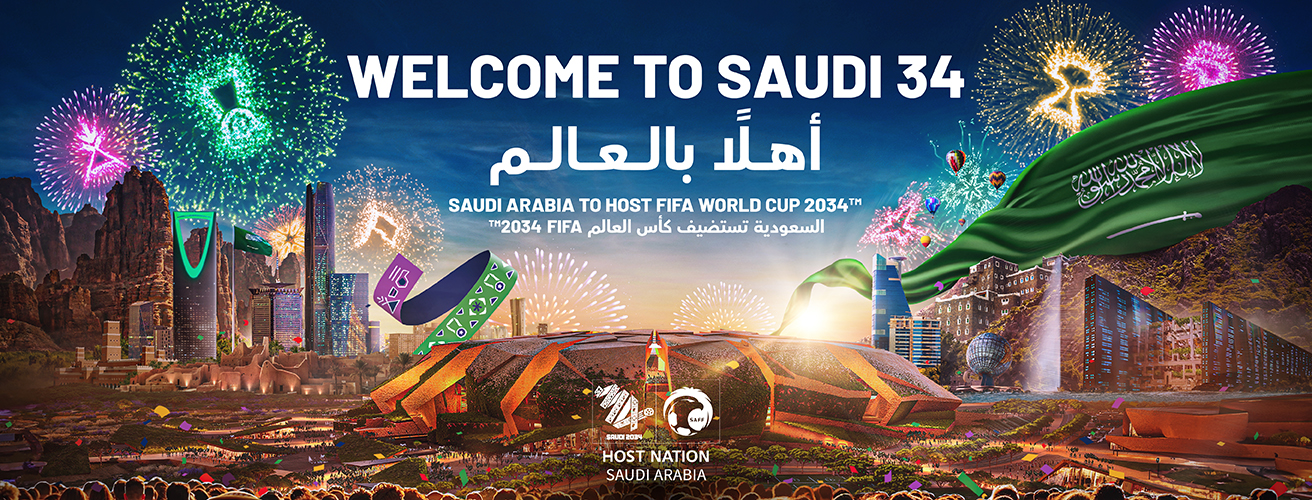
Here is how the trick worked:
- Confederation rotation as a weapon
After the 2030 World Cup was stitched together as a multi-continent Frankenstein tournament (Spain–Portugal–Morocco with opening games in South America), FIFA announced that only Asia and Oceania would be allowed to bid for 2034. That conveniently excluded Europe and South America, the only regions with the infrastructure, money and political weight to seriously challenge Saudi Arabia (see: 2034 World Cup bids). - A deliberately insane deadline
Potential bidders were given just 25 days to submit an official expression of interest. Australia, the only serious alternative, publicly said it was “exploring” a bid but admitted the deadline made it nearly impossible to prepare a credible proposal (see: The Guardian). On the very same day FIFA opened the process, Saudi Arabia announced its bid, with the Asian confederation immediately lining up behind it. Almost as if everyone had been told in advance. - Eliminate the competition, then pretend there was a vote
Australia pulled out a few weeks later, leaving Saudi Arabia as the sole bidder (see: Reuters). In December 2024, FIFA held a so-called “vote” by acclamation – basically everyone clapping on cue – to confirm Saudi Arabia as host. No secret ballot, no real debate, no alternative on the table. (see: The Guardian) - Silence critics inside the system
The Norwegian FA called the whole bidding process “flawed and inconsistent” and formally recorded its opposition, accusing FIFA of undermining its own governance reforms and ignoring human-rights due diligence (see: Reuters). Governance expert Mark Pieth later said FIFA’s internal democracy had “deteriorated” under Infantino and that he was astonished how little criticism there was of handing 2034 to Saudi Arabia (see: Play the Game). - Ignore FIFA’s own human-rights rules
FIFA has a human-rights policy that, in theory, requires rigorous due diligence before awarding tournaments. Yet for Saudi 2034, leading human-rights lawyers have filed formal complaints arguing that FIFA simply skipped that step and breached its own rules (see: The Guardian). Amnesty International went further, calling the whole 2030/2034 process “dangerously flawed” and warning of serious risks in Saudi Arabia, from labour abuse to repression of women and LGBTQ+ people (see: Amnesty “High Stakes Bids” report).
In short: Infantino redesigned the playing field so that only one team showed up, blew the whistle, and then applauded himself for a “united football family” choosing Saudi Arabia. This is not a bidding process. It is a rigged auction where the winner was fixed before the catalogue was printed.
5.2 Qatar 2022: The Human-Rights Blueprint for future Sportswashing
Saudi 2034 is not some shocking new low. It is simply the sequel to Qatar 2022, the tournament that already proved how cheap human life becomes once FIFA sees a cheque.
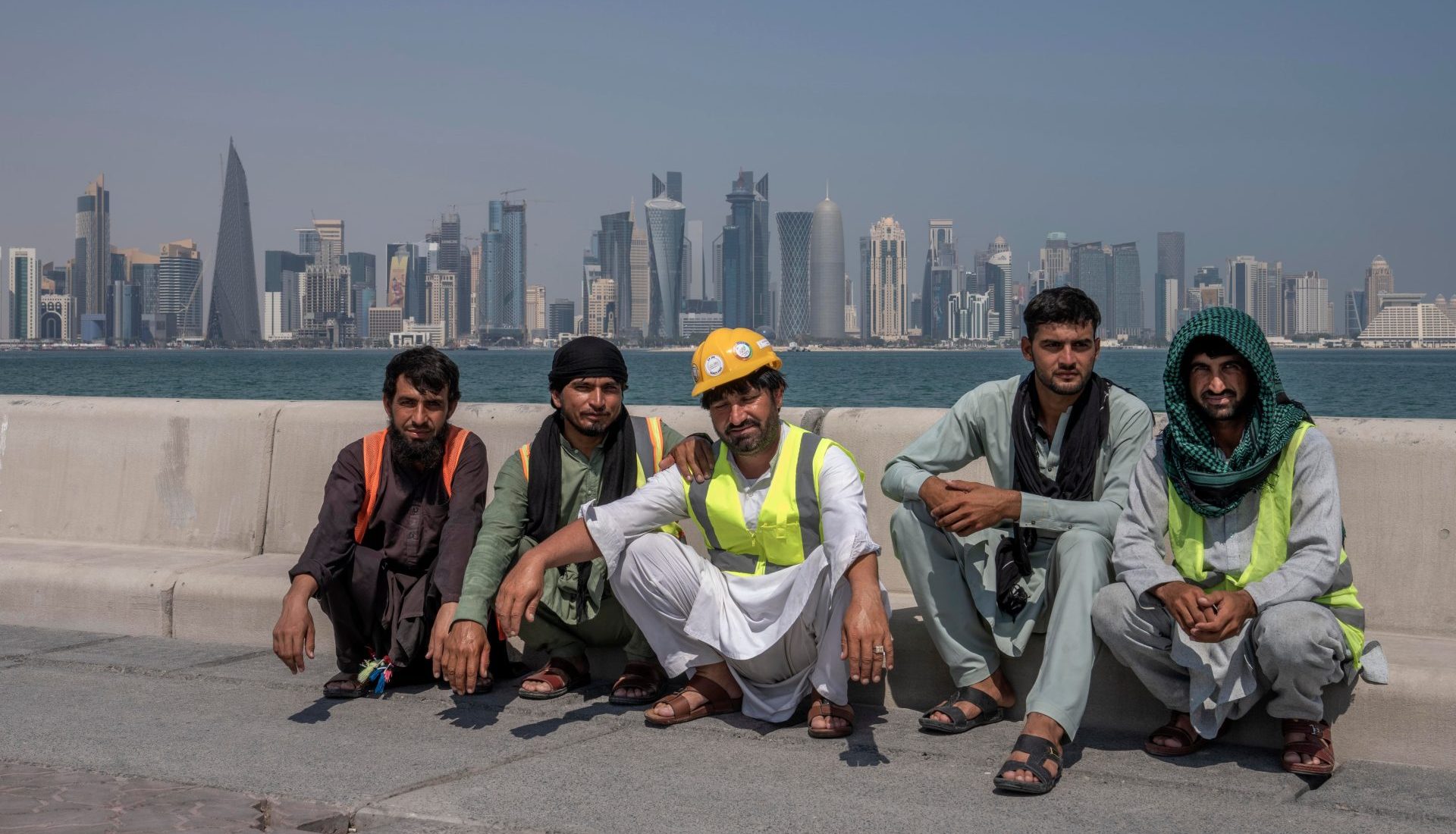
The record in Qatar is brutal:
- Thousands of migrant workers dead
A Guardian investigation estimated that more than 6,500 migrant workers from India, Pakistan, Nepal, Bangladesh and Sri Lanka had died in Qatar since the World Cup was awarded, with 15,000 non-Qataris dying in the country between 2010 and 2019. Many worked in construction or related sectors, but Qatar’s authorities never properly investigated how many deaths were directly tied to World Cup infrastructure, hiding behind vague causes like “cardiac arrest” (see: The Guardian). - Systemic exploitation, not “isolated incidents”
Amnesty International and other NGOs documented years of wage theft, forced labour, confiscated passports, illegal recruitment fees, appalling living conditions and dangerous heat exposure for migrant workers. Some reports date back to 2013 and show that abuses continued even after Qatar promised reforms (see: Amnesty background on Qatar 2022; Amnesty Qatar Country Report). - FIFA refuses proper compensation
Amnesty and Human Rights Watch demanded that FIFA set aside at least 440 million US-dollars (the size of the World Cup prize fund) to compensate workers and families who suffered abuses in the preparation of the tournament. FIFA still has not committed to such a fund (see: Amnesty; HRW). - Infantino’s infamous “I feel like a migrant worker” speech
Instead of confronting these abuses, Infantino gave a surreal press conference on the eve of the tournament, claiming: “Today I feel Qatari, today I feel Arab, today I feel African, today I feel gay, today I feel like a migrant worker” and accusing critics of “Western hypocrisy” (see: Human Rights Watch). Human-rights groups called the speech insulting and “misleading”, an attempt to relativise real suffering with shallow PR lines.
Qatar 2022 was a neon sign: If you pay enough and say the right things, FIFA will look away while people die building your stadiums. Saudi Arabia watched closely, took notes and is now applying the playbook on a larger scale.
6. The Real Scandal: The Silence of the Football World
Infantino behaves this way because he can. No meaningful opposition. No structural resistance. Only quiet nods, grumbling in private, and votes when it counts.
Smaller federations stay silent because they benefit from World Cup access. Larger federations, even when disgruntled, prefer diplomacy over confrontation. Sponsors pay, broadcasters sign contracts, fans grumble for a day, then move on to club football.
So we all watch as the machine grinds on.
We see a World Cup draw that looks more like an over-long late-night show than a sporting ceremony. We see a president hugging controversial politicians, awarding them peace prizes and smiling for cameras. We see a tournament structure that sacrifices quality for quantity. We see communities and rights being trampled for stadiums, sponsorships and PR stunts.
And yet, nobody stops it.
That is, perhaps, the greatest shame. Not only that football has been hijacked by self-serving opportunists. It is also that most of the football world simply accepts it.
7. The Solution? The only way the corrupted System could be overthrown
There is, frankly, only one force left on this planet that could bring FIFA to its knees and force real reform: The united withdrawal of the world’s great football nations. Not petitions, not polite letters, not “dialogue” — but a mass exodus of the teams that actually give the World Cup its meaning. Imagine a tournament without the champion nations: Brazil, Germany, Italy, Argentina, France, Spain, England, Uruguay. Imagine other great football nations like the Netherlands, Portugal, Belgium, Croatia joining them. Imagine a World Cup made exclusively of footballing dwarfs while the giants play elsewhere. That wouldn’t be a World Cup. No, it would be a tourist trophy, an amateur festival sponsored by whichever petrostate writes the next cheque.
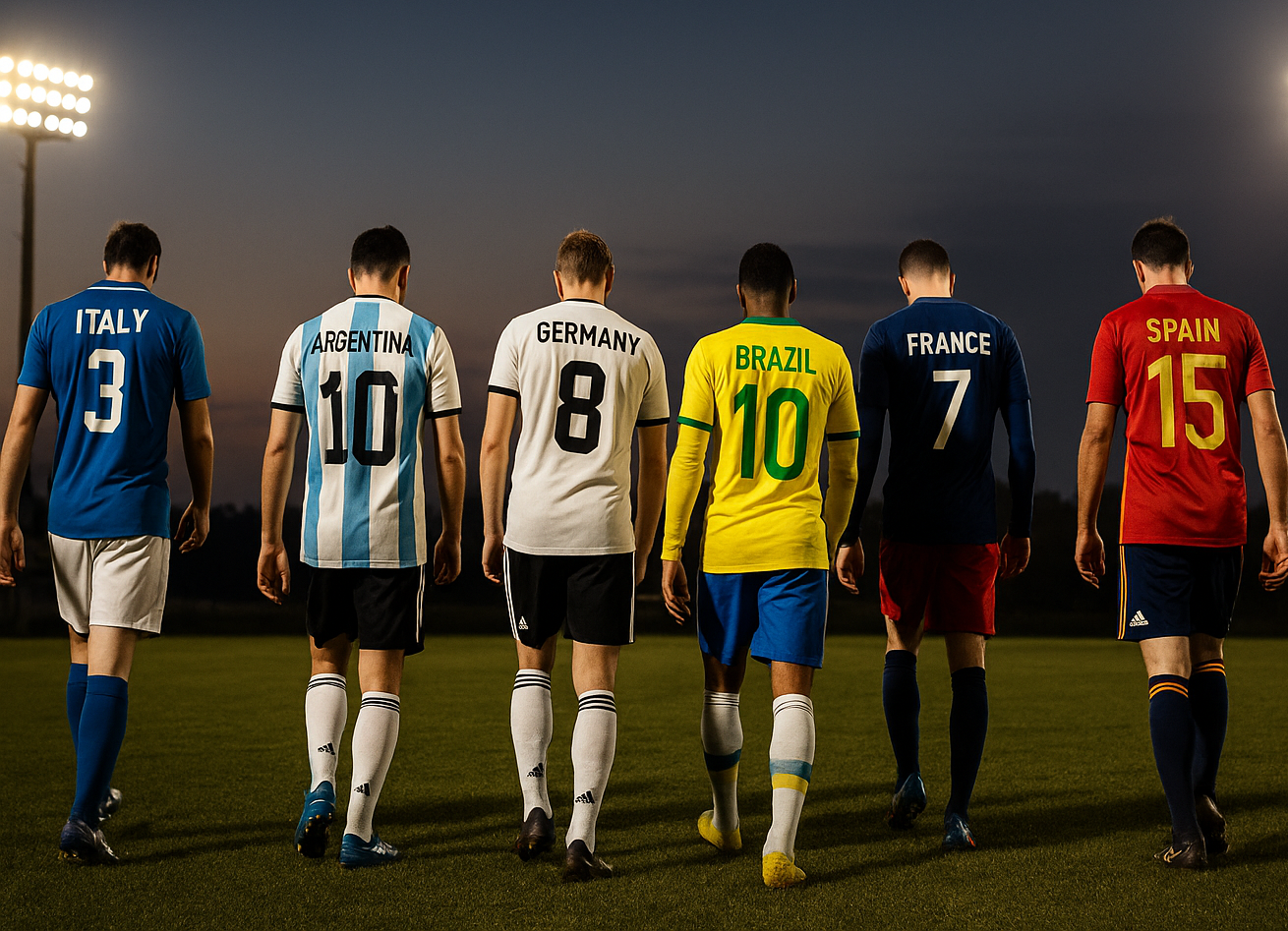
This is the nightmare scenario that would finally terrify FIFA: A breakaway competition run by nations that actually have footballing heritage, sporting quality, global fanbases and real commercial power. Because without these countries, the World Cup collapses into irrelevance. Broadcasters walk away. Sponsors vanish. Stadiums empty. Infantino’s empire evaporates overnight.
I have reached a point where I believe no reform is possible within the current structure. FIFA, as it stands, cannot be repaired. It must be broken, dismantled, and rebuilt. Not with “one country, one vote”, but with a system that reflects sporting relevance and competitive legitimacy. Why should micro-associations with no footballing footprint decide the fate of the global game? Why should countries that never qualify determine World Cup hosts, tournament structures, or the future of the sport?
If the rest of the world wishes to continue playing their “World Cup of the Minnows”, fine. Let them. But the true football nations, the ones that matter, the ones that built this sport, must reclaim control. Because only a competition with real quality deserves to be called a World Cup. And only when the giants walk away will FIFA finally understand that its power was always borrowed — and can be taken back in an instant.
But none of this will ever happen, because the national federations are just as corrupted, just as eager to hold out their hands, and just as invested in the system that feeds them. Which is why this solution, as right and necessary as it is, remains nothing more than an unrealistic dream. And so football marches steadily toward its own abyss.
Conclusion: The World Cup has lost its Soul. And WE sold it!
The 2026 draw made one thing clear. Football as we knew it is dead. It died behind the glitter, the speeches, the awards and the misplaced “entertainment”. What we got in Washington wasn’t a draw. It was a confession.
FIFA under Infantino no longer pretends to stand for sport. It stands for power, money, spectacle and influence. If the rest of the world’s football leaders do not grow a spine soon, this won’t just remain a tantrum. It will be a full collapse. Because once you accept that a global sports institution can publicly bow down to political vanity, you have no foundation left. None.
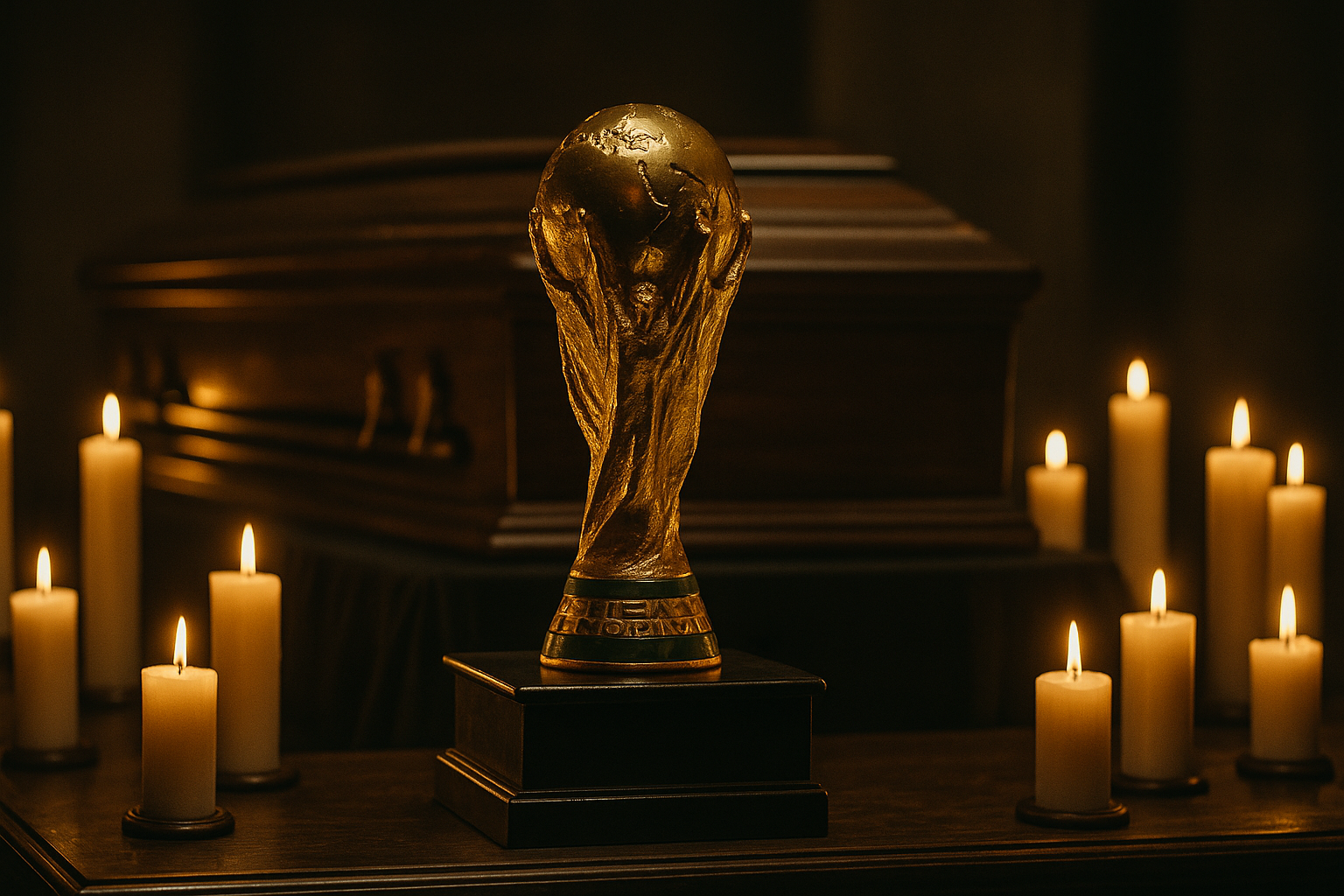
So here it is: The World Cup is no longer sacred. It is a circus. And the ringmaster is unchallenged. For me personally, it died yesterday.
If we keep applauding, if we keep turning up for the next show, if we keep pretending this is still “our” football… then we are not fans. We are spectators at the funeral of the game we once loved.
As always: Just my 5 cents.
//Alex
 alexreusch
1 comment