
From the Grand Coalition to Crisis
Under the leadership of Angela Merkel, Germany was characterized for many years by a grand coalition of the CDU/CSU and SPD. This constellation led to the Union increasingly approaching social democratic issues, while the SPD in turn adopted conservative positions. The result was a political center that became increasingly homogeneous and hardly allowed any clear differences to be seen between the two once opposing parties. This political fusion had profound consequences: the edges of the political spectrum were neglected. Issues that were once represented by the CDU (bourgeois-conservative) or SPD (social democratic) no longer found adequate political representation. This gap was increasingly filled by new parties – especially by the AfD, which took up right-wing positions and was thus able to win over protest voters. The population’s dissatisfaction with the established politics steadily increased.
The Difficult Formation of a Government after Merkel
After Merkel’s withdrawal from politics, a “traffic light” (Ampel) coalition was formed from the SPD (red), Greens, and FDP (yellow). But this government was characterized by major internal contradictions from the very beginning. The economically liberal FDP was often in conflict with the ecological and social ideas of the Greens and SPD. In addition, there was the ongoing Ukraine war, which created further uncertainties.
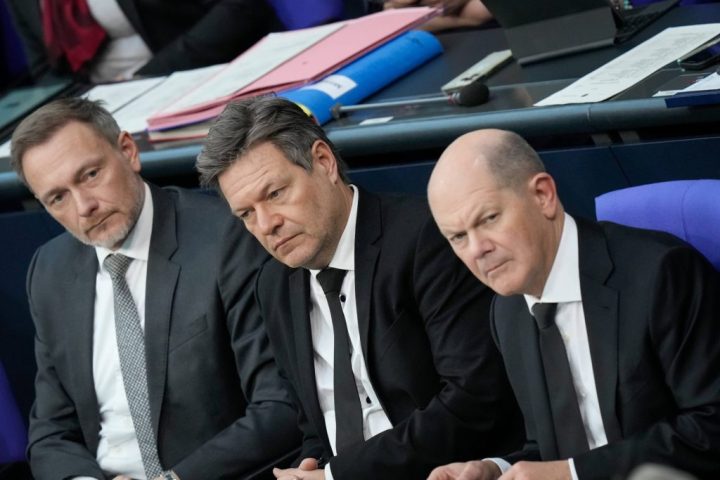
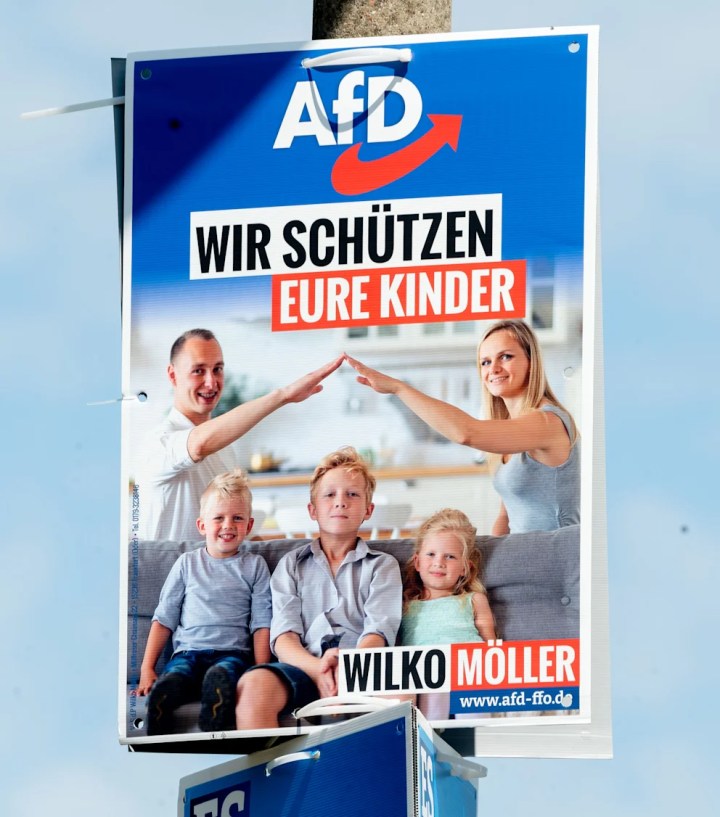
In addition, sometimes for ideological reasons, excessive measures were adopted that were not supported by the general population. An example of this was the controversial heating law, which would have burdened homeowners with high costs for switching to heat pumps and necessary renovation measures. Since heat pumps require electrical energy, the complete phase-out of nuclear power without sufficient expansion of CO2-neutral alternatives such as solar and wind energy came into focus of criticism. The Ukraine war also led to supply bottlenecks and a massive increase in the price of gas – a critical point, since Germany still generates a lot of electricity from gas. Even though the implementation of the law was later relaxed and energy prices returned to normal, the clumsy approach of the traffic light coalition had already caused lasting damage. The AfD party (AfD = an alternative way for Germany) cleverly used this phase for its propaganda by further fueling public sentiment with a great deal of misinformation.
Even more problematic, however, is the illusion that Germany can save the world single-handedly. Climate protection is undoubtedly a central challenge, but an economically strong Germany is a prerequisite for financing sustainable solutions at all and exerting global influence. If ideological decisions massively weaken the competitiveness of the German economy, they endanger not only prosperity in the country, but also social stability. Politics must offer pragmatic solutions that reconcile ecology and economy. An economically weakened Germany cannot make an effective contribution to global climate protection – neither technologically nor financially. Instead of going it alone at great expense, Germany should focus on well thought-out strategies that are sustainable in the long term and involve international partners.

International Crises as a Catalyst for Division
Recent years have been marked by global crises such as the COVID-19 pandemic and the Ukraine war. These events led to deep social divisions and uncertainties. While the governing parties often reacted hesitantly or in disagreement, the AfD party in particular succeeded in effectively using the new digital communication channels – above all social media – for its own purposes. Through targeted communication and simple, populist messages, the narrative that the government was no longer acting in the interest of the population was strengthened. This further exacerbated social polarization.
Inflation Eats Away at Prosperity: A Ticking Time Bomb for the Government
Inflation is one of the biggest challenges currently facing the German economy and society and is a major contributor to the government crisis. The causes of the continuing price increases are complex and have been exacerbated in recent years by a concatenation of unfavorable circumstances. An important factor is the expansive monetary policy of the European Central Bank (ECB), which has greatly increased the money supply in the wake of the financial crisis and the COVID-19 pandemic.

This boosted the economy, but at the same time fueled inflation. Added to this are supply chain problems caused by the pandemic and the Ukraine war. Raw materials and intermediate products have become scarce and expensive, which is having an impact on prices for end products. The energy crisis, which has been exacerbated by the Ukraine war and dependence on Russian gas supplies, also plays a central role. The sharp rise in energy prices is not only burdening consumers, but also companies, which have to pass on the higher costs to their customers. Inflation is leading to a noticeable reduction in citizens’ purchasing power and to a general feeling of uncertainty among the population.
Many people are afraid of a further rise in prices and are worried about their financial future. The government is under pressure to take effective measures to combat inflation without choking off the economy. However, this is proving difficult because the causes of inflation are complex and multi-layered. Inflation is therefore not only an economic challenge, but also a political one. It contributes to public discontent and can lead to a further aggravation of the government crisis.
The Refugee Crisis and its Consequences
Another major factor was the large wave of immigration in recent years. Many people flee to Europe because of wars, political persecution, economic hardship, and lack of future prospects in their home countries. Conflicts in countries such as Syria, Afghanistan, or Sudan are forcing millions to flee, while in other regions poverty, unemployment, and unstable governments are causing people to seek better living conditions. Europe is chosen as a destination because it offers relative security, economic opportunities, and social support. In addition, existing diaspora communities and established escape routes encourage migration.
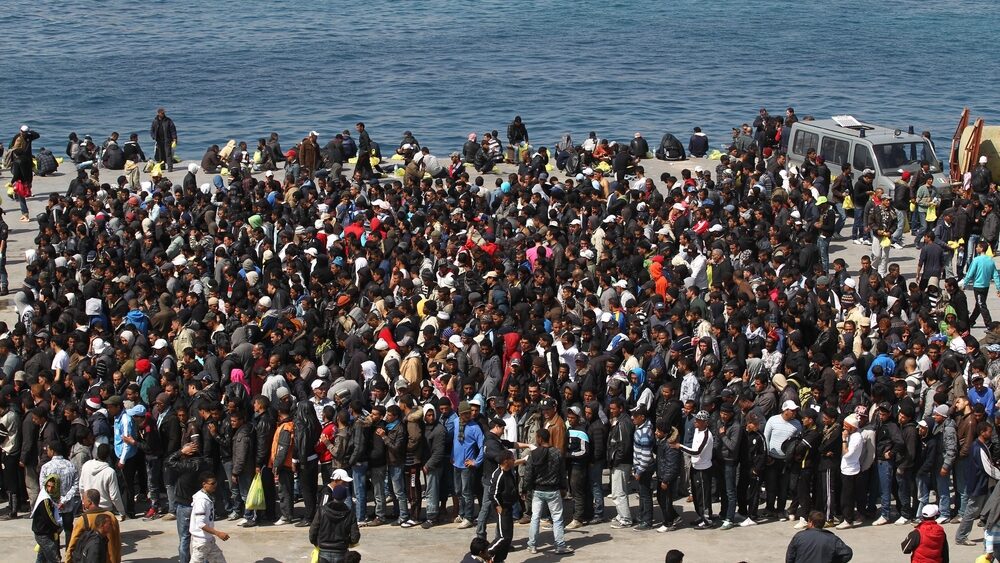
The almost uncontrolled admission of refugees led to social tensions, especially because it was also accompanied by security problems. A series of attacks and acts of violence perpetrated by people with a migration background increased rejection and led to an increasing division of society. This was a direct legacy of Merkel’s welcome policy, which was implemented without a sufficient concept.
However, successful integration can only succeed if migrants are prepared to respect the culture, values, and laws of the host country. Germany is a liberal democracy with clear principles such as equality, freedom of expression, and the rule of law. Those who reject these will have difficulties becoming part of society in the long term. Integration is not a one-sided task of the state, but also requires the willingness of immigrants to integrate into the new environment. If this willingness is lacking, integration inevitably fails and leads to social segregation and growing rejection within the population.
More than just Politics: The Responsibility of Companies in the Automotive Crisis
The German automotive industry, once a guarantor of economic strength and innovation, is in the midst of a profound crisis that goes far beyond cyclical fluctuations. High site costs, runaway competition in electric cars, and the worsening weakness in sales in the Chinese market are putting considerable strain on German manufacturers such as Volkswagen, Mercedes, and BMW. The industry is at a crossroads, and Germany is in danger of losing touch with technological development.

A central problem lies in the rapid digitalization of automobiles. “Software-defined” cars are the future, but Germany lacks qualified specialists and the necessary expertise in this area. The German automotive industry has rested on its existing know-how for too long and has missed the boat on change. The rapid development of computer technology, which is playing an increasingly important role in modern vehicles, poses an additional challenge. Computer technology quickly becomes obsolete, and the longevity of cars is thereby impaired. Who wants to operate a 10-year-old infotainment system? Accordingly, the lifespan of vehicles is shortening, especially for electric cars, which are additionally susceptible to aging processes due to the combination of battery and computer technology.
This development also has an impact on the price structure in the automotive market. The trend is towards low- to mid-priced vehicles, while the high-price segment, in which German manufacturers are traditionally strongly represented, is coming under increasing pressure. To remain competitive, German manufacturers must cut costs and at the same time be able to offer state-of-the-art software.
However, it would be too easy to blame politics alone for this crisis. Companies also bear responsibility for the current situation. Bureaucracy has gotten out of hand in large German corporations, and decision-making is often hampered by complex structures with works councils and supervisory boards. The corporate culture is sometimes characterized by a certain inertia, and employees often concentrate more on complying with the 35-hour week than on overcoming global challenges. This mentality stands in contrast to the dynamism and hunger for innovation that can be observed in other countries, especially in Asia. While German corporations are already on the weekend on Friday afternoons, competitors in other parts of the world are working flat out on the future of mobility. The German automotive industry must face up to this reality and adapt its structures and processes to the demands of global competition. Only in this way can it regain its position as an innovation leader and secure the country’s prosperity.
The End of the Traffic Light: The FDP’s Exit and the Path to New Elections
As a result of these flashpoints, all three parties in the traffic light coalition lost considerable support. The FDP feared slipping below the 5% hurdle and thus political oblivion. Fearing a loss of importance, it ultimately decided to terminate the coalition, which led to the failure of the government and the calling of early elections.

The Rise of the AfD: Dangerous Protest Party Without Responsibility
The AfD benefited significantly from the dissatisfaction of many voters, especially those who had turned away from the CDU. Originally founded as an economically liberal party, it was increasingly permeated by right-wing extremist ideologies and xenophobic rhetoric. At the same time, it took over former bourgeois-conservative topics of the CDU and provided them with populist simplifications. The AfD had the advantage of not having to take responsibility for practical political solutions as an opposition party. It was able to take up existing problems, criticize the governing parties, and present simple, albeit unrealistic, solutions. This gave it a large following, especially in economically weaker regions.
Freedom of Expression With Limits – Why Democratic Societies Need Rules
At the same time, the AfD is increasingly invoking a radical interpretation of the “freedom of speech” ideology propagated in the USA by figures such as Elon Musk.
In doing so, it deliberately ignores the fact that freedom of expression in Germany – as in most democratic states – is not without limits, but rather moves within a legal framework. There are good reasons for this: unrestricted freedom of expression would mean that sedition, calls for violence, or targeted disinformation would also have to be tolerated. However, a society can only function if there are certain rules for public discourse.
Without these limits, hatred and agitation could be spread unhindered, which not only endangers minorities, but also further fuels social division. In addition, targeted misinformation could undermine trust in democratic institutions by manipulating and radicalizing the population.
Historical experience shows that hate propaganda – whether in the Third Reich or by authoritarian regimes worldwide – ultimately always leads to violence and oppression prevailing. Controlled freedom of expression is therefore not a contradiction to democracy, but an essential prerequisite for protecting it.
Co-Responsibility at the Ballot Box – The Consequences of Ignoring Right-Wing Extremist Tendencies
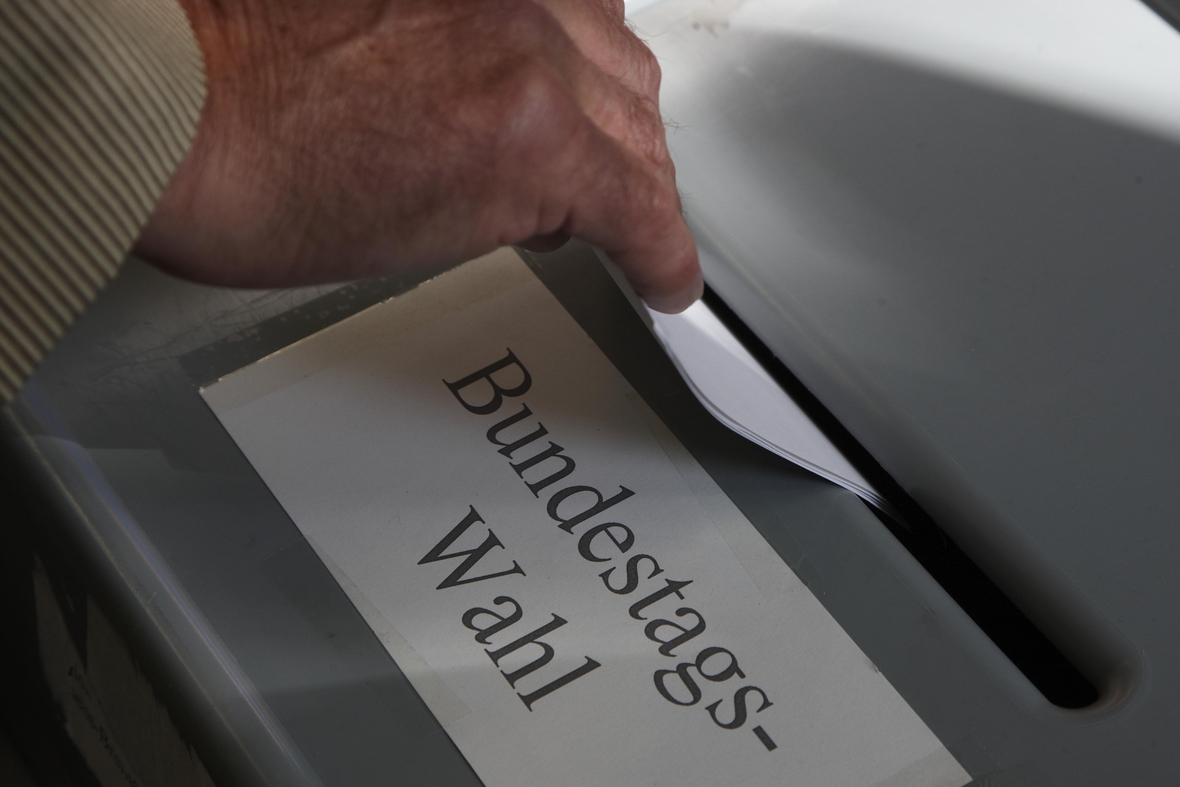
This raises the question of the responsibility of voters. Many deliberately ignore the openly National Socialist sentiments of some leading AfD members as well as their anti-constitutional rhetoric because they feel addressed by other positions of the party. But can this be justified? Anyone who votes out of protest or for economic concerns for a party whose representatives engage in racist agitation and question basic democratic values bears a co-responsibility for their actions.
Imagine being out with a group of ten friends. Two of them verbally abuse and insult foreign passers-by in the worst possible way – without any provocation. What does it mean when the rest of the group remains silent and ignores the friends’ tirades? Isn’t that tacit approval? Anyone who stays in such a group and does nothing is complicit. The same applies to AfD voters: anyone who supports a party that stands for hatred and division cannot simply claim that they are only voting because of economic or social issues. They tolerate and legitimize the party’s right-wing extremist tendencies – whether out of conviction, indifference, or simply lack of education. In the end, an uncomfortable truth remains: anyone who supports Nazis is either one himself or too uneducated to understand the consequences of his actions.
The AfD and its “Black Sheep” – Tolerance Instead of Distancing?
I am of the opinion that the majority of AfD members themselves do not have National Socialist sentiments. But they tolerate the “black sheep” in their ranks and often even defend them against criticism. If the AfD wants to become a political force to be taken seriously, it must clearly and consistently distance itself from these extremist elements. Otherwise, it will remain a party that not only allows anti-democratic ideologies, but also supports them itself through its silence and inconsistency.
Alice Weidel and the AfD – A Life and a Party Full of Contradictions
The conflict and contradictions within the AfD become particularly clear when one considers the biography and lifestyle of its Federal Chancellor candidate, Alice Weidel. She represents a party that outwardly propagates traditional values, national sovereignty, and a strict limitation of migration. But her personal life reality is in direct contradiction to these principles.
Alice Weidel lives in Einsiedeln in Switzerland, a country that does not belong to the EU and pursues a restrictive immigration policy. Nevertheless, she is involved in politics for Germany, where she herself is not directly affected by the effects of her demands. She does not have to support measures that she demands for German citizens – whether in social policy, or economic regulations. Especially when it comes to issues such as high energy prices, inflation, or the tax burden, she remains largely unaffected as a Swiss resident.
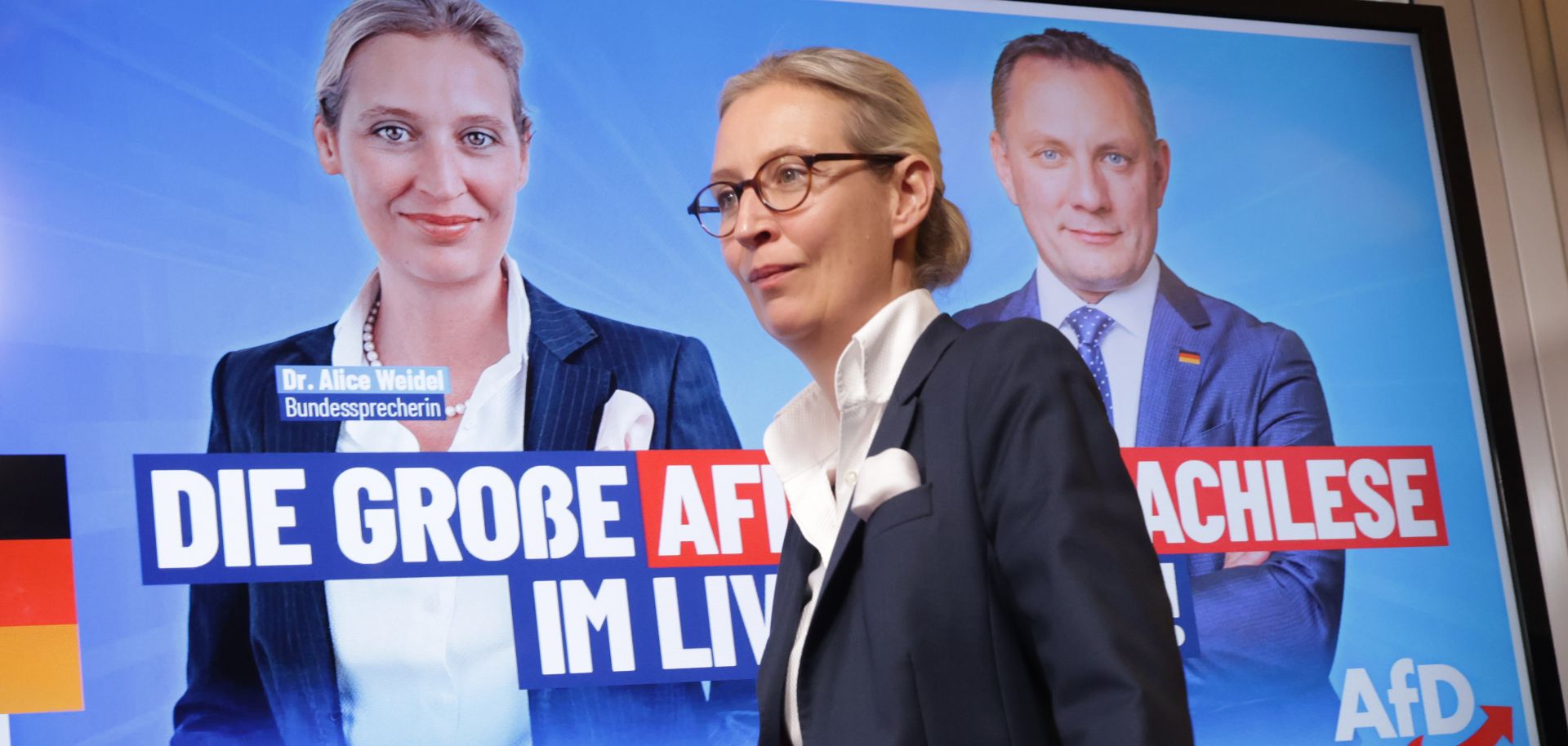
Another contradiction can be seen in her own family. While the AfD pursues a strictly anti-migration line and demands a massive restriction of immigration, Weidel is in a relationship with a woman with a migration background – her partner was born in Sri Lanka. The AfD often portrays migrants as a burden on Germany, but Weidel’s own family is living proof that migration is not problematic per se.
The contrast between AfD ideology and Weidel’s lifestyle is particularly blatant when it comes to the image of the family. The party propagates the classic family – consisting of man, woman, and children – as a social ideal and vehemently rejects an alleged “gender ideology”. Nevertheless, Weidel herself lives in a same-sex registered partnership. By the standards of her own party, she would not fit into the propagated ideal. While the AfD is mobilizing against LGBTQ+ rights, this does not seem to matter to its own top candidate.
These contradictions show the double standards within the AfD. While it outwardly represents a reactionary, conservative worldview, completely different rules seem to apply to its own top politicians. Weidel’s personal lifestyle refutes the core statements of the AfD program and makes it clear that the party is not concerned with consistent principles, but with political calculation and catching voters.
The CDU’s Dilemma
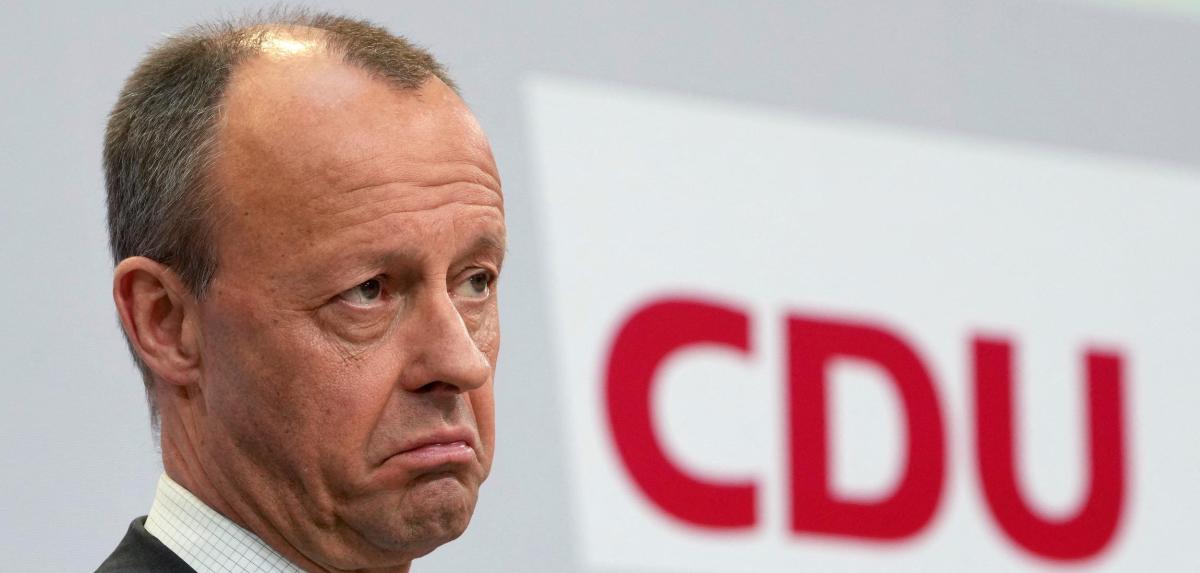
After the failure of the traffic light coalition, the CDU is now the strongest force again, but faces a difficult situation. It cannot govern without a coalition partner.
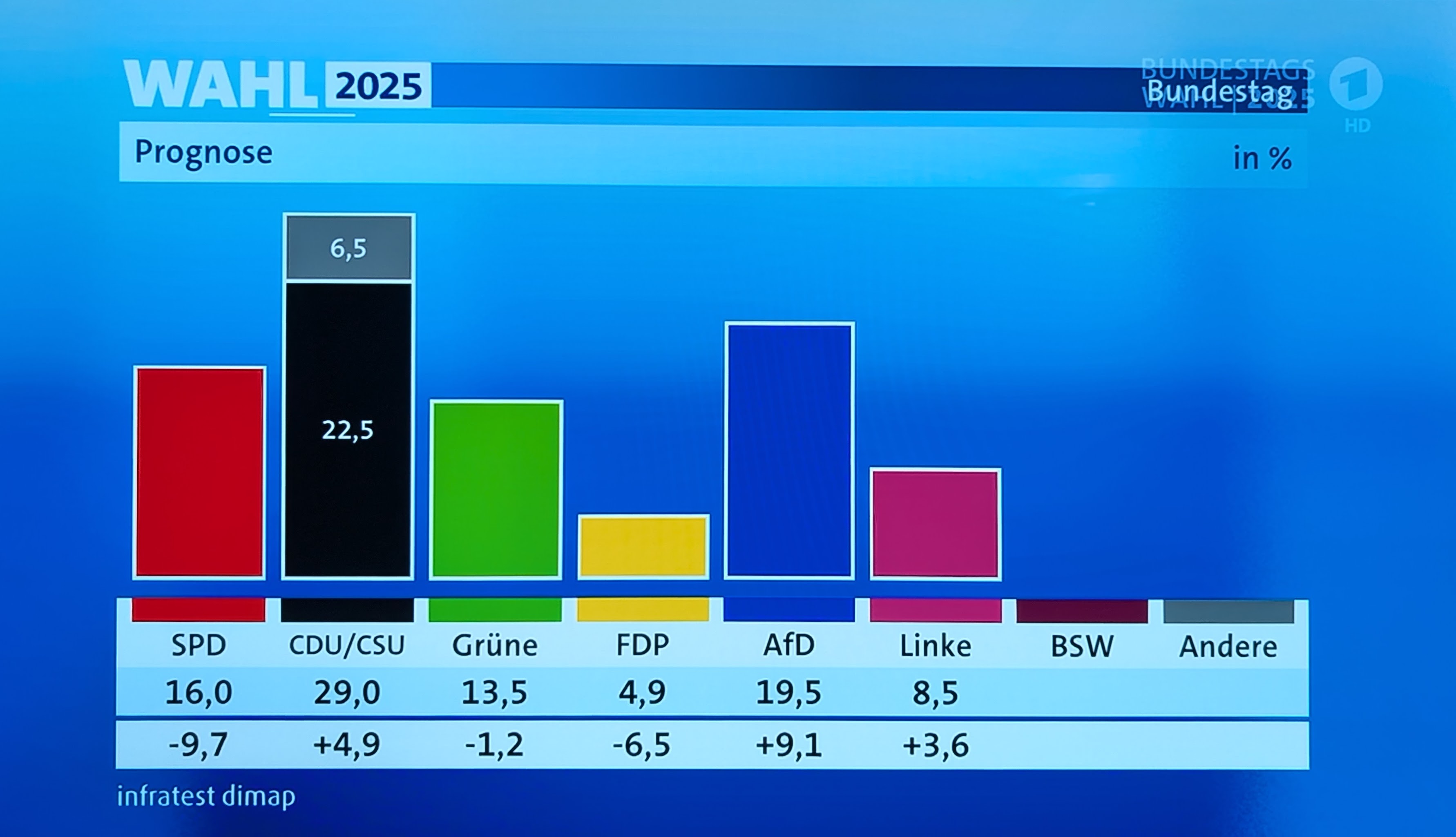
However, a renewed coalition with the SPD could be not only unattractive for the CDU, but also life-threatening in the long term. Through further cooperation with the SPD, it threatens to further dilute its own profile and be perceived as a purely administrative party without a clear substantive distinction. This could lead to conservative voters turning further away from the Union and more radical parties such as the AfD continuing to gain strength.
Cooperation with the Greens is also not very promising, as their ideological environmental policy is perceived more as an obstacle than a solution in the current economic crisis. The FDP is too weak to form a reliable basis for government.
A coalition with the AfD is out of the question, as this could ruin the CDU politically in the long term – both substantively and strategically. Is it really? On the one hand, forming a coalition with a party that tolerates radical Nazis in its leadership team is simply not an option. On the other hand, another coalition with the SPD would only strengthen the AfD, as it would once again evade responsibility and continue launching its poison arrows at the governing parties from the opposition. The AfD is now officially extending a hand for coalition talks, but in truth, they have no real desire to take on this responsibility just yet. Being in opposition is far easier—it allows them to gain even more votes at the expense of the traditional parties and continue to grow. For this reason, the CDU would have to strategically “force” the AfD into a coalition to expose them. After all, they possess no magic to solve the country’s real problems. But this would be a very dangerous game—one that went disastrously wrong nearly a century ago. Moreover, this move could also threaten the CDU’s own future. But perhaps it is the only way to show the people that the AfD is not an alternative for Germany?
I don’t believe the CDU will take that risk. That’s why I expect a coalition with the SPD. Not an ideal solution for Germany, as it will only further strengthen the AfD. In order to remain politically viable in the long term, the CDU must urgently regain its traditional bourgeois issues credibly. This must not only be about weakening the AfD, but rather about making its own, convincing substantive offers. Only if the CDU is once again perceived as a credible representation of bourgeois interests can it prevent its voters from continuing to migrate to more radical parties.
Does Germany Need a Far-Reaching Reform of the Government System?
In view of the political blockades and the increasing fragmentation of the party system, the question arises as to whether the German government system needs to be reformed. The current challenges – economic weakness, social division, international dependencies – require an effective government. The German Bundestag, with over 730 members, is increasingly appearing bloated. The entire civil service has grown considerably in recent years, and with it the bureaucracy that paralyzes many processes. Instead of acting efficiently, the system often suffocates in formalities, votes, and administrative acts. This contributes significantly to the feeling that the country is in a state of political stagnation. Without fundamental reform, Germany threatens to continue to suffer from an inability to make decisions, while other nations react more flexibly and pragmatically to global challenges.
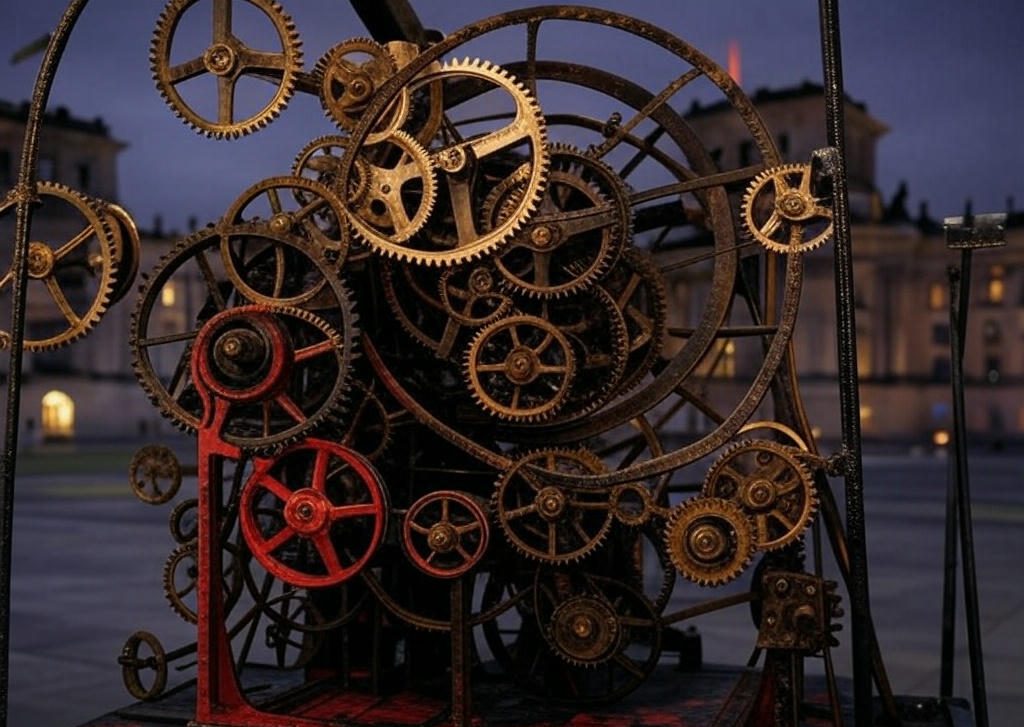
The classic systems of government, which are based on fixed coalitions and a clear opposition, are increasingly reaching their limits. A central problem is that party politics and coalition discipline often carry more weight than objective, non-partisan solutions. Decisions are determined less by the best substantive option than by party tactical considerations. This leads to stagnation, inefficient compromises, or even wrong decisions that do not serve the common good, but primarily their own voter clientele.
One possible way out would be a more topic-related approach, as practiced in Switzerland. There, political decisions are not made strictly along coalition lines, but it is common to form majorities depending on the issue. This flexible cooperation enables more pragmatic and sustainable solutions in the long term, as political actors do not allow themselves to be paralyzed by rigid alliances or ideological blockades.
Another problem is that voters have little influence on political decisions after they have cast their ballots. While politicians often act for years detached from the needs and opinions of the population, there is a lack of direct democratic elements that would enable greater involvement of citizens. The Swiss model does not have to be adopted one-to-one, but greater integration of the population in central political decisions could help to strengthen democratic legitimacy and regain trust in politics.
The European Parliament Problem
Structural deficits are also evident at the European level. The European Parliament is often perceived as a reservoir for failed national politicians, while real leaders are lacking. In addition, it is not considered effective in Germany and contributes significantly to the growing bureaucracy. Numerous decisions are shaped by lobby interests, which means that political measures often do not serve the well-being of citizens, but rather influential economic actors. But Germany cannot survive alone in global competition – a strengthened European decision-making ability would be essential to remain internationally competitive. Otherwise, Germany threatens to take on the role of a junior partner to major economic powers such as the USA or China.
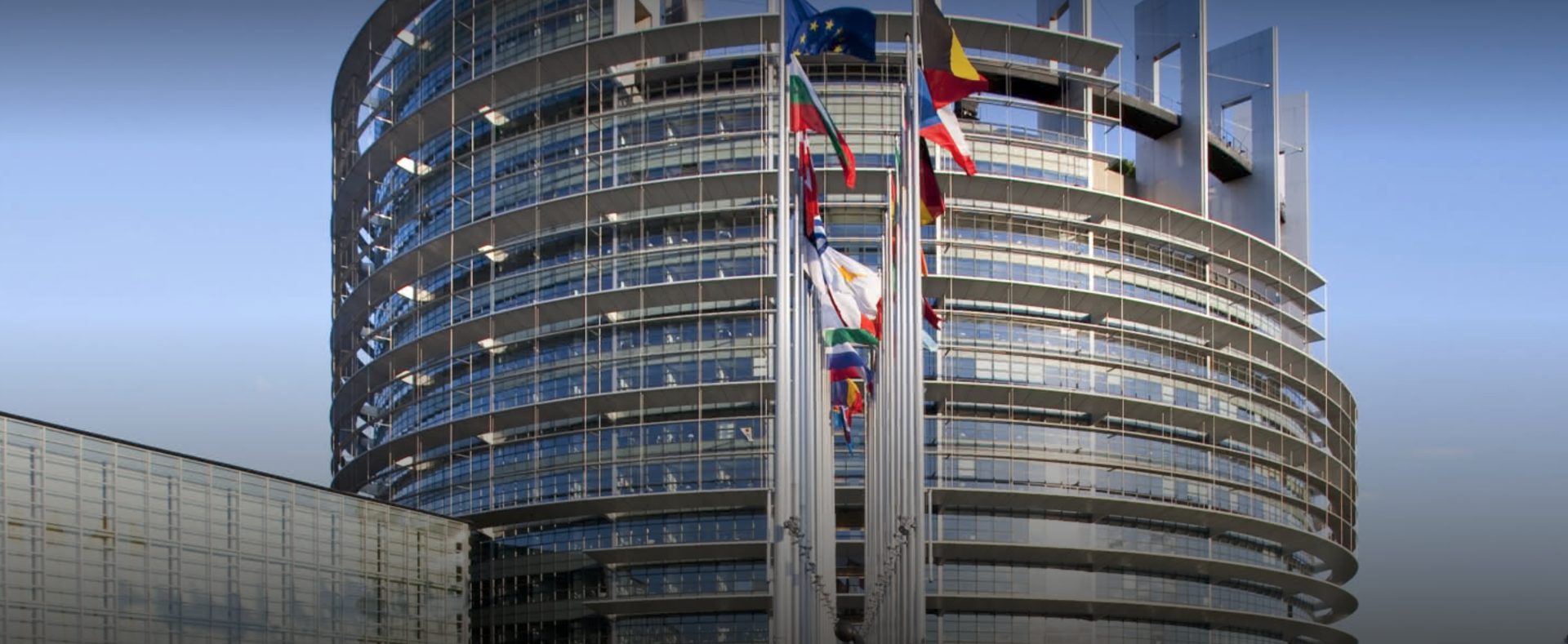
Especially in the current geopolitical situation, the EU’s lack of ability to act is becoming increasingly problematic. With a resurgent Donald Trump, transatlantic relations are threatened with a new test. The USA is increasingly putting pressure on Europe, be it economically or in terms of security policy. In this situation, it is essential for the European Union to act in unison and to be able to act as a global player. As the largest common economic area in the world, with an economic output around 30% larger than that of the USA, Europe would have the potential to play a leading international role – if it were able to speak with a common voice and act decisively.
Conclusion: Germany at a Crossroads – Political Reorganization or Continued Instability?
Germany is in a deep political crisis that poses existential challenges not only to the current government, but to the entire party system. The growing fragmentation of the political spectrum has led to an inability to govern, which is blocking central reforms and increasingly undermining citizens’ trust in democracy. While traditional people’s parties are losing their profile and support, more extreme forces are benefiting from social insecurity – above all the AfD, which cleverly portrays itself as the mouthpiece of the discontented without, however, offering practicable solutions.
The erosion of political responsibility is particularly worrying. Voters who opt for a party with anti-democratic tendencies out of protest contribute to further poisoning the political culture and deepening social division. At the same time, after the failure of the traffic light coalition, the CDU finds itself in a quandary: on the one hand, it must remain capable of governing, and on the other hand, it must prevent further ideological dilution from losing more voters at the political fringes.
The structural deficits in the German government system are further exacerbating this crisis. An oversized Bundestag, a cumbersome bureaucracy, and ideologically motivated political approaches prevent pragmatic solutions to pressing problems such as inflation, migration, energy policy, and economic competitiveness. It is repeatedly shown that Germany is isolating itself through political solo efforts instead of relying on internationally coordinated strategies.
The future of the country depends on whether it is possible to initiate a political renewal that guarantees both stability and the ability to reform. One possible solution could be a structural reform of the parliamentary system – for example, through greater integration of direct democracy or more flexible coalition formation based on the Swiss model. A rethink is also required at the European level: the EU must break away from internal blockades and act as an actor capable of acting if it wants to survive in geopolitical competition.
One thing is certain: without far-reaching reforms, Germany threatens to remain trapped in a cycle of political crises, economic weakening, and social polarization. Whether this trend can be reversed depends on the ability of political actors to look beyond party-political interests and develop real solutions to the challenges of the future.
Like always: Just my 5 cents.
//Alex
 alexreusch