
Elon Musk, the tireless visionary of Silicon Valley, had promised something monumental: The Tesla Robotaxi event would “go down in history,” and people would still be talking about it a hundred years from now. Bold, sure, but not entirely out of character for a man known for his far-reaching predictions and fearless ambition. But what happens when such sky-high expectations are met with a reality check? Well, that’s exactly what we witnessed — and instead of a historic moment, it felt like a glaring missed opportunity for Tesla to seize its future.
The stage was set, but the spectacle never came
Musk’s grand entrance at the event: He drove up to the stage in a two-seat, steering wheel-less robotaxi — the futuristic promise literally rolling in. But what followed wasn’t the inspiring, visionary speech many had hoped for. Instead, we got a collection of vague statements and half-baked ideas that even Tesla’s most loyal fans found hard to digest.
“It drives better than a human,” Musk boasted about the robotaxi, but without offering any hard data or proof to back up the claim. Rather than showcasing the progress of the Full-Self-Driving (FSD) program — for instance, how many fewer interventions per mile the system now requires — Musk stuck to platitudes. This was a perfect opportunity for Tesla to impress the world with concrete evidence of its advancements, highlighting how close they are to achieving the milestone of “1 million miles per intervention.” Yet, all we got was a fog of uncertainty. One could even sense Musk’s own lack of confidence; after all, he was sitting in the car, seemingly praying that the vehicle wouldn’t crash him to death.
A Cybercab cheaper than a bus — or is it?
Another head-scratcher from Musk’s performance was his claim that the robotaxi — which he dubbed the “Cybercab” — would be cheaper than riding a bus, with operating costs of just 20 cents per mile. A nice thought, but Musk offered no explanation for how Tesla would reach this magical number. Cheaper than a bus? That’s a bold statement, but without any solid data, it feels like wild speculation.
Cybercab confusion: A taxi or just another car?
Perhaps the most puzzling moment came when Musk mentioned that you could actually buy the Cybercab. But hang on, doesn’t that completely defeat the purpose of a “taxi”? By definition, a taxi is a service you hire for a ride from point A to point B — not something you own. If you’re purchasing it for private use, then it’s just an autonomous car, not a taxi.

The lack of a coherent business model around this concept was glaring, and it felt like Tesla was missing a golden opportunity to revolutionize the taxi industry.
The real profit potential: A service, not a sale
This was Tesla’s moment to introduce a groundbreaking business model — not just selling vehicles, but providing a service. The concept of autonomous ride-hailing could transform Tesla from a car manufacturer into a mobility-as-a-service provider. According to conservative estimates from Morgan Stanley, Tesla could generate a net profit over $14,000 annually per robotaxi (instead of the current average one-off 6K). In more optimized scenarios, that number could jump to $40,000 or higher per vehicle per year. Instead of focusing on selling a product, Tesla could shift to a model that brings in recurring revenue by operating fleets of robotaxis. The potential profit here is enormous and could propel Tesla into a multi trillion-dollar company territory.
Yet, rather than seizing this opportunity, Tesla remained fixated on its traditional business model: selling cars. No mention was made of developing a service that would allow consumers to hail these robotaxis on-demand, creating a steady stream of income. And at the same time to massively reduce the number of vehicles required worldwide! It’s also worth recalling Elon’s earlier idea, where private Tesla owners could add their vehicles to a shared robotaxi fleet while not in use, allowing them to earn money as their cars operated as public taxis. While this concept initially sounds promising, it raises a host of unresolved questions, particularly around general operations, liability, insurance and maintenance. Now, with the introduction of a dedicated, purpose-built Robotaxi like the Cybercab, the business model feels even more confused. If Tesla is selling robotaxis directly to individuals, how does that align with the broader vision of a shared fleet? Elon Musk seems to be caught in a dilemma: he once promised his loyal customers a chance to profit from their vehicles, yet this model now seems to conflict with the very idea of Tesla running its own robotaxi service. After all, a fully autonomous vehicle designed to provide taxi rides doesn’t need a private owner to be profitable — if anything, removing the middleman would maximize its potential.
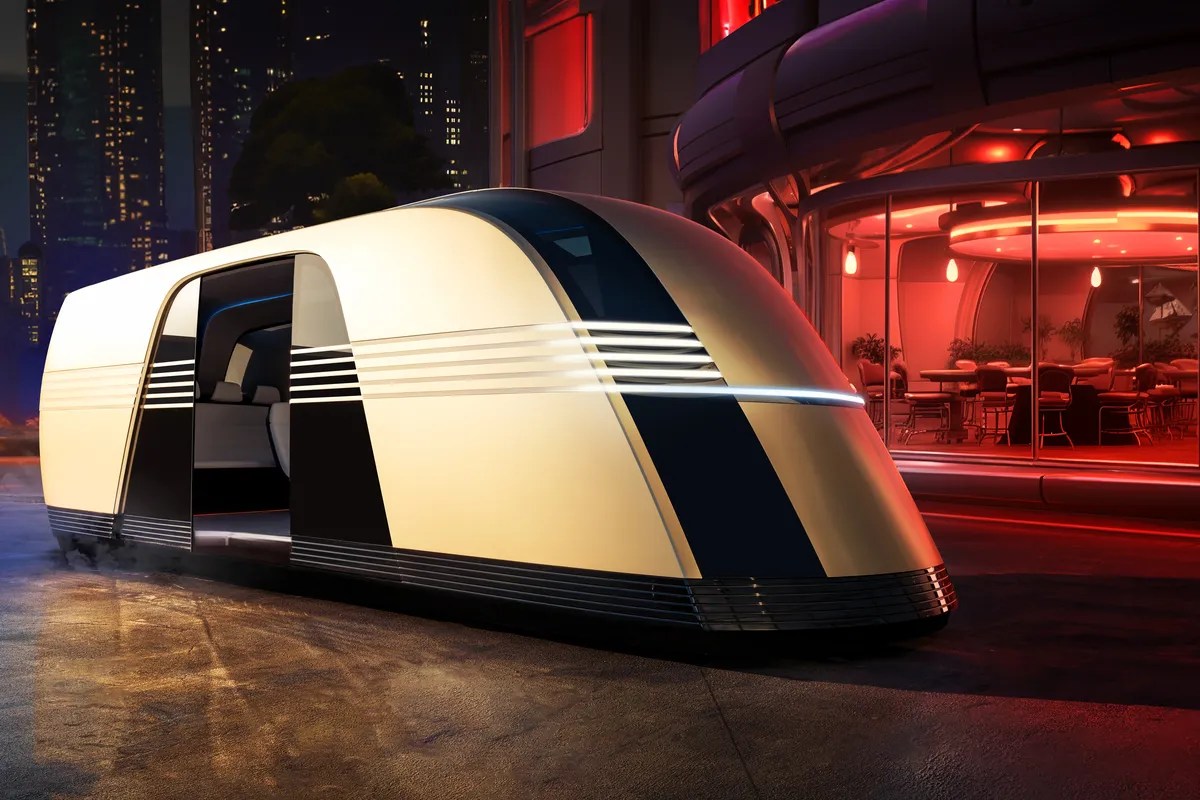
To add to the confusion, Tesla also presented the Robovan, a bus designed to transport up to 20 passengers. While it’s clear Tesla doesn’t disclose everything upfront, the question remains: why are they presenting this van without explaining its purpose? If Tesla isn’t planning to operate a cab service, what is the business model behind this vehicle? Who would buy a Robovan, and for what use? Who will operate it and who earns money from the service? Once again, this creates a contradiction in Tesla’s strategy, leaving us to wonder what role these vehicles will play in a future that Tesla itself has yet to fully clarify.
Tesla, with its mastery of low-cost production, cutting-edge software, and scalable infrastructure, is uniquely positioned to dominate this space. But the company missed its chance to announce a plan that would leverage its technological and market advantages — and you can’t complain if your stock is valued like that of a traditional automaker rather than as a groundbreaking and visionary creator of a new industry.
Elon Musk: Visionary or Reckless Dreamer?
This event wasn’t just a missed moment; it raises a larger question: Is Elon Musk still the visionary innovator we once thought he was? Or has he become entangled in a web of promises he can no longer deliver on? It seems that the cult of Musk has reached a point where many followers accept his words without question, no matter how vague or unfounded they may be. As a final realization, one has to wonder if Elon Musk is simply surrounding himself with too many banalities and simplifications, perhaps too deeply entrenched in the political election campaign. In this environment, facts seem to matter less, and a crowd of mindless followers can be inspired by any rhetoric, no matter how devoid of truth it may be. But business is not politics. For Tesla to thrive as a pioneering force in the industry, it must rise above empty promises and focus on delivering concrete, actionable plans (not a “concept of a plan” to stay in the political spectrum) that demonstrate its technological prowess and visionary leadership.

Yes, Musk has proven in the past that he can achieve the impossible. But how much longer can he keep the masses enthralled with grandiose claims and ambiguous goals before the magic fades? The Robotaxi event wasn’t a moment of triumph but a lesson in unmet expectations and squandered opportunities. Whether Tesla can learn from this stumble and finally realize the true potential of the robotaxi remains to be seen. But one thing is clear: this event won’t be going down in history — at least not in the way Elon Musk imagined.
As always, my 5 cents.
//Alex
 alexreusch