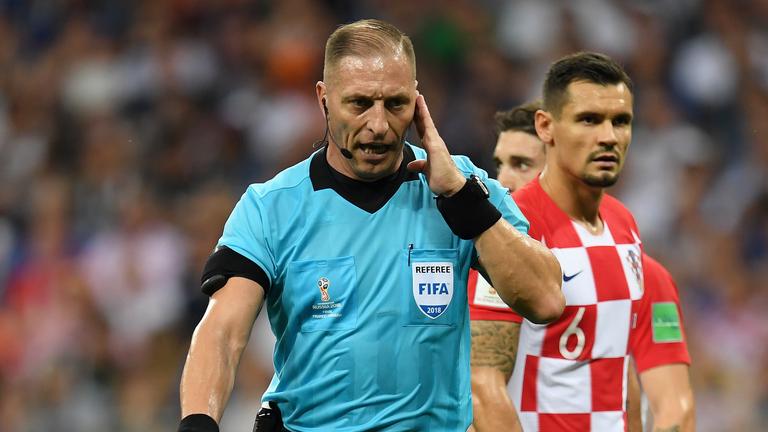
The introduction of Video Assistant Referee (VAR) technology was heralded as a revolutionary step towards fairness and accuracy in football. However, its implementation at Euro 2024 has sparked significant controversy. While technological advances are generally welcomed, their intrusive presence in the world’s most popular sport has raised questions about their impact on the game’s essence.
The overbearing presence of VAR
At Euro 2024, VAR has taken center stage, overshadowing the spontaneous and emotional nature of football. Intended to assist referees in making crucial decisions during uncertain or decisive moments, VAR has become an omnipresent force, frequently disrupting the game’s flow. This overreliance on technology has not only slowed down matches but also diluted the immediacy of the sport’s most exhilarating moments.
Petty interventions and disallowed Goals
One of the main criticisms of VAR at Euro 2024 is its propensity to intervene over minor infractions, often leading to the disallowance of goals. Fans and players alike have voiced frustration over goals being annulled due to incidents far removed from the actual scoring moment. For instance, a slight, unintentional handball or a minor foul that occurred much earlier in the play can result in a goal being disallowed, despite having no significant impact on the subsequent goal.
Example 1: Unintentional Handballs
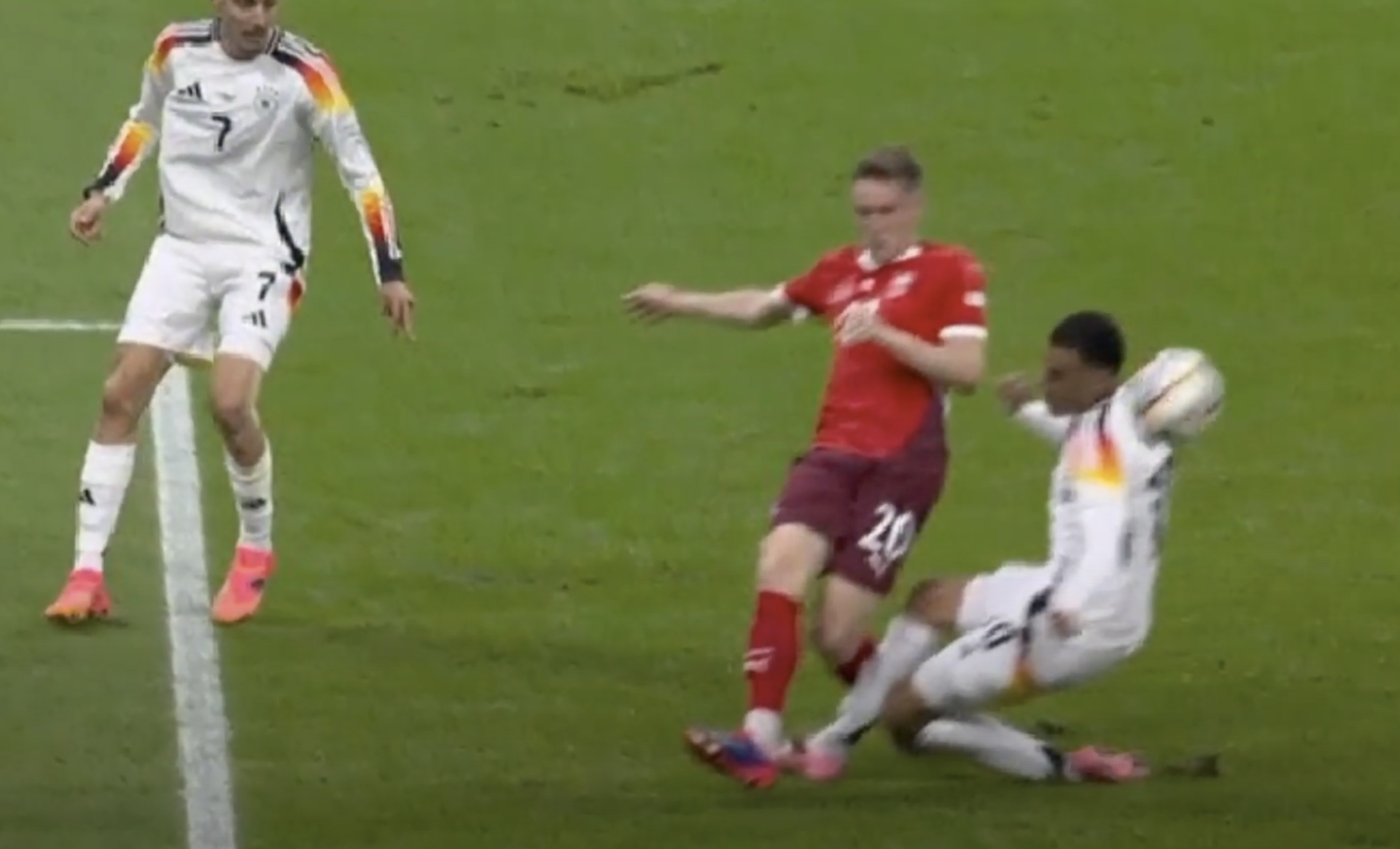
There has been an instance where VAR has disallowed a goal for inadvertent handball that did not influence the ball’s trajectory or the outcome of the play. Such stringent enforcement of the rules, even in situations where the handball is clearly accidental, has left many questioning the purpose of VAR. The technology was meant to correct clear and obvious errors, not to scrutinize every minute detail and undermine the referee’s on-field decisions.
Openda (BEL) bounces the ball to the hand without really influencing the game scene
Example 2: Minor Fouls
Similarly, minor fouls that go unnoticed by the referee during the game are often flagged by VAR, leading to the disallowance of goals. This strict interpretation of the rules not only interrupts the flow of the game but also saps the joy out of scoring, as players and fans are left in a state of uncertainty, waiting for the final verdict from the VAR officials.
Example 3: Millimeter Offsides
There have been multiple situations where an offensive player was millimeters offside, recognizable only by a computer-generated animation. In the past, the striker was given the benefit of the doubt if the defender and the offensive player were on the same line. Today, decisions on the pitch are reversed by a hair’s breadth. Often, nothing can be seen on the camera images themselves (not even in slow motion and no matter which perspective), so we have to trust a simulated graphic, which opens the door to potential manipulation. This level of precision does not feel right and detracts from the spirit of the game.
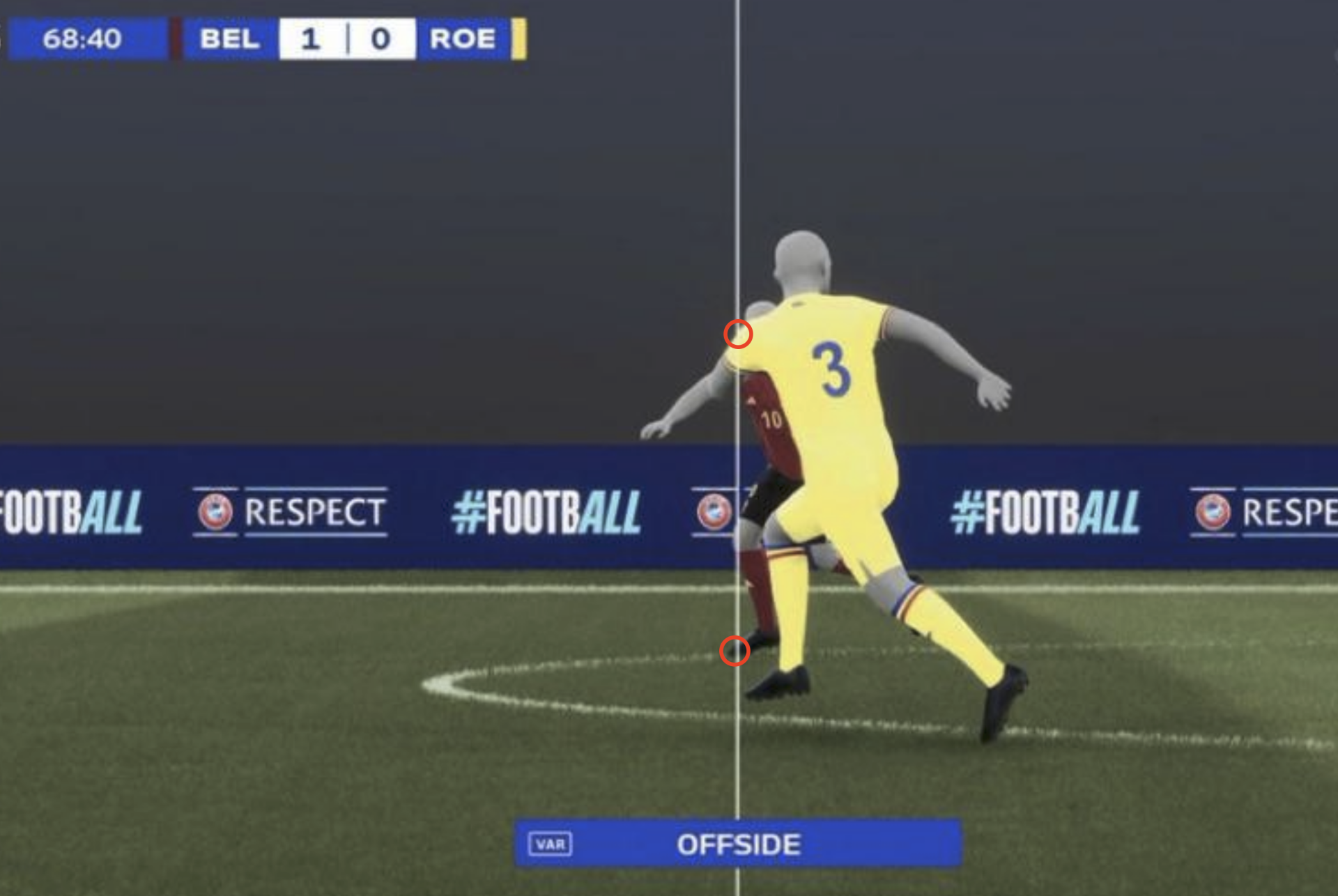
Romelu Lukaku has been hit the hardest so far. The Belgian scored for the third time in the tournament in the 2:0 win against Romania – but all three goals were disallowed after video evidence.
Inconsistencies and perceived Arbitrariness
Perhaps the most perplexing aspect of VAR at Euro 2024 is the inconsistency in its application. While some minor infractions are heavily scrutinized, clear fouls and obvious penalties sometimes escape VAR’s notice. This perceived arbitrariness has led to widespread confusion and frustration among football enthusiasts. The lack of a clear and consistent standard for VAR interventions undermines its credibility and fuels the debate over its role in the game.
Example 4: Unchecked Fouls
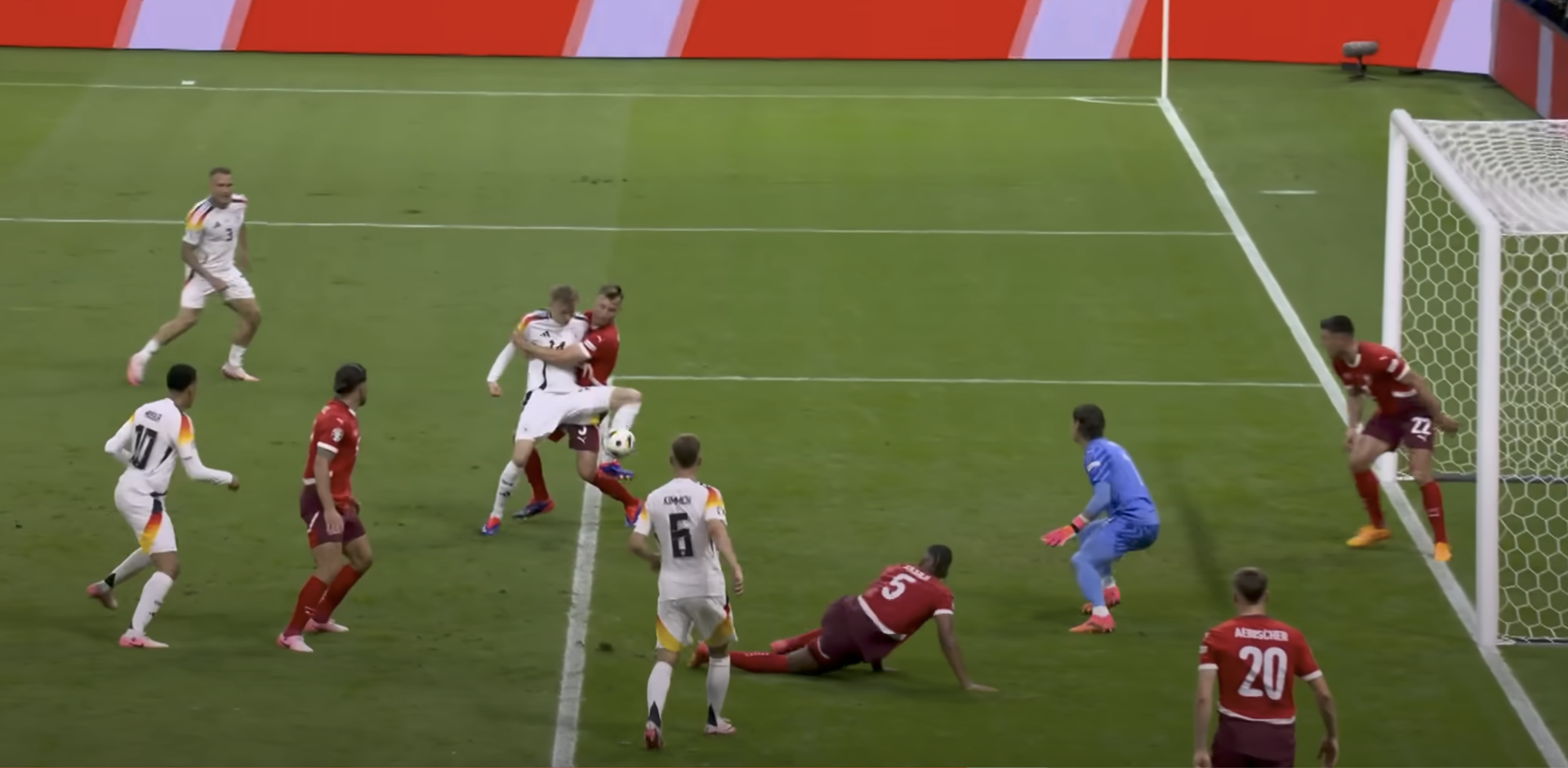
There have been several high-profile incidents where blatant fouls or clear penalty situations were not reviewed by VAR, leaving fans and players bewildered. The arbitrary nature of these decisions erodes trust in the system and highlights the need for more consistent and transparent use of the technology.
Conclusion
The use of VAR at Euro 2024 has sparked a heated debate about the role of technology in football. While its goal of ensuring fairness and accuracy is commendable, the current implementation has raised concerns about its impact on the game’s natural flow and emotional intensity. VAR should be a tool for correcting clear and obvious errors, not a mechanism for micromanaging every aspect of the game. As it stands, VAR is detracting from the essence of football, and a reassessment of its role and application is urgently needed to restore the sport’s spontaneity and joy.
Moreover, the constant interference from the VAR studio has left referees on the pitch unsettled and lacking a clear line. They are caught in a dilemma: should they strictly penalize everything or let things go? This uncertainty leads to erratic decisions, where a gross offense is ignored one minute and the next minute a penalty in the form of a yellow card is given for a minor foul. Such inconsistency further undermines the integrity of the game and the authority of the referees. A balanced approach is crucial to ensure that the beautiful game remains fair and enjoyable for all.
As always… Just my 5 cents.
//Alex
 alexreusch