
I am absolutely passionate about Formula 1. I go nuts over it. My love affair with F1 started way back when Jody Scheckter clinched the title with Ferrari, and his teammate Gilles Villeneuve finished second. Since then, I’ve hardly missed a race, especially in the 80s and 90s up to the end of the 2000s. I know it might sound cliché when someone says, “Everything was better back then,” but it was. It simply was. The roar of the engines, the thrilling overtakes, the raw excitement—these were the elements that made F1 an unparalleled spectacle. Now, I worry about the path that F1 has taken in view of the fans. The sport has evolved in ways that, frankly, leave me and many others longing for the past.
The FIA recently announced the new regulations for the 2026 Formula 1 season, claiming these changes mark a “new era of competition.” While some enthusiasts might see these regulations as a step towards a more sustainable and technologically advanced sport, I believe they are merely superficial tweaks that do little to enhance the actual racing experience. Formula 1, over the past few years, has deviated from what made it thrilling and engaging. Instead of focusing on hybrid technology and a green image, F1 should return to its roots: smaller, lighter cars with fewer electronic aids and more emphasis on driver skill.
The Problem with Hybrid Technology
One of the most significant changes in recent years has been the shift to hybrid power units (and even more from 2026 onwards). While this aligns with global trends towards sustainability, it has not been well-received by many fans. Hybrid is not the future of mobility; that transition has already been decided in favor of full electric (the efficiency comparison of the various drive technologies is shown in the graphic below). The industry has long outpaced F1 in terms of innovation in this area. However, this is not necessarily a bad thing. F1 is primarily meant to be a spectacular show and entertainment for the spectators—a modern battle of the gladiators. Hybrid cars are heavy, complicated, and lack the visceral appeal of their predecessors. The hybrid technology does not contribute to the excitement of racing; instead, it has made the cars larger and more cumbersome.

Why Full Electric is NOT the Answer
Although I drive a fully electric car and support the transition to electric mobility in general, I firmly believe that electric car racing lacks the excitement of traditional internal combustion engines. Electric races, such as those in Formula E, fail to deliver the auditory and sensory thrills that fans associate with F1. The screaming of a V10 engine, the raw power and speed, and the skill required to handle these beasts are what make F1 exhilarating. Transitioning to fully electric cars would strip F1 of its unique appeal.
F1 and Carbon Neutrality
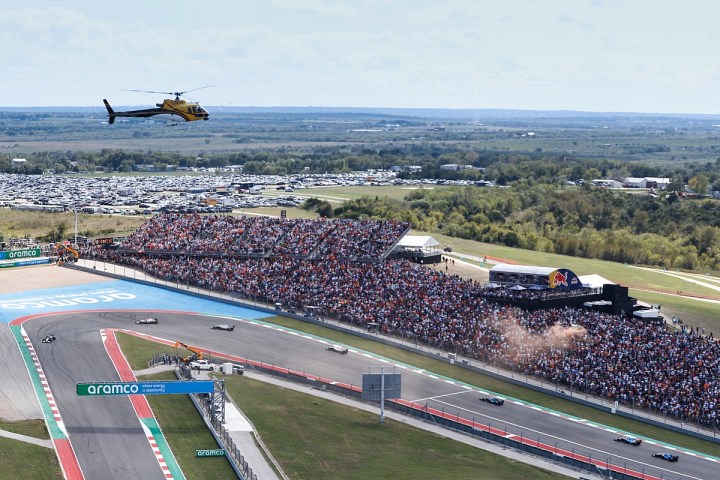
F1 does not need to be carbon neutral, and realistically, it never will be. The sheer scale of the events, with hundreds of thousands of fans traveling from all over the world by plane and car, makes this an impossible goal. Celebrities are flown in by helicopter throughout the race weekend, and everyone on-site indulges in food, drink, and festivities. Such a large-scale event can never be CO2 neutral, even before a single lap is driven on the track. It’s time to stop this nonsense!
Budget Caps: A Step in the Right Direction

One of the few positive changes has been the introduction of budget caps. By limiting the spending of teams, the FIA has managed to reduce the development disparities that previously made a season predictable and monotonous. This has brought the field closer together, making for more competitive races. However, the sport still lacks the frequent overtaking and strategic depth that fans crave.
Overtaking in general (not in F1) is definitely possible, even on very narrow circuits like Monaco. The Formula E proves this year after year. In 2024, for example, there were just 4 overtaking maneuvers at the Monaco F1 Grand Prix, compared to 197 at Formula E, while the later competes with a shorter race distance and fewer laps. So it’s down to the vehicles, not just the track.
The Need for Smaller, Lighter Cars
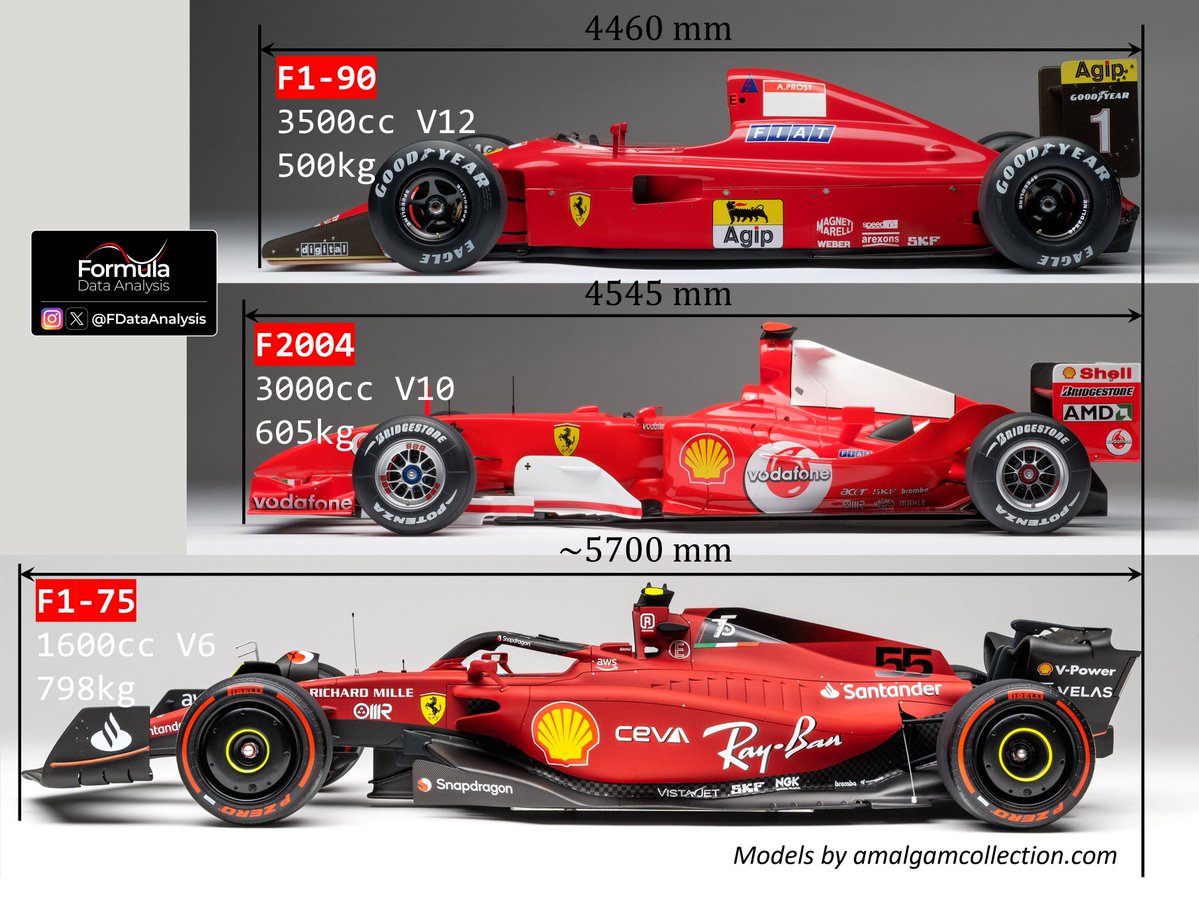
To truly improve F1, the cars need to be significantly smaller and lighter. Currently, they are far too large and heavy, which diminishes the potential for exciting, close racing. Cars have simply become oversized monsters over the years, not least because of the hybrid technology. I propose a maximum length of 4.5 meters, a width of 1.8 meters and a maximum weight of 600 kg. These changes would make the cars more agile and easier to handle, making space on the track, leading to more overtaking opportunities and more exciting races.
Limiting Aerodynamics and Downforce
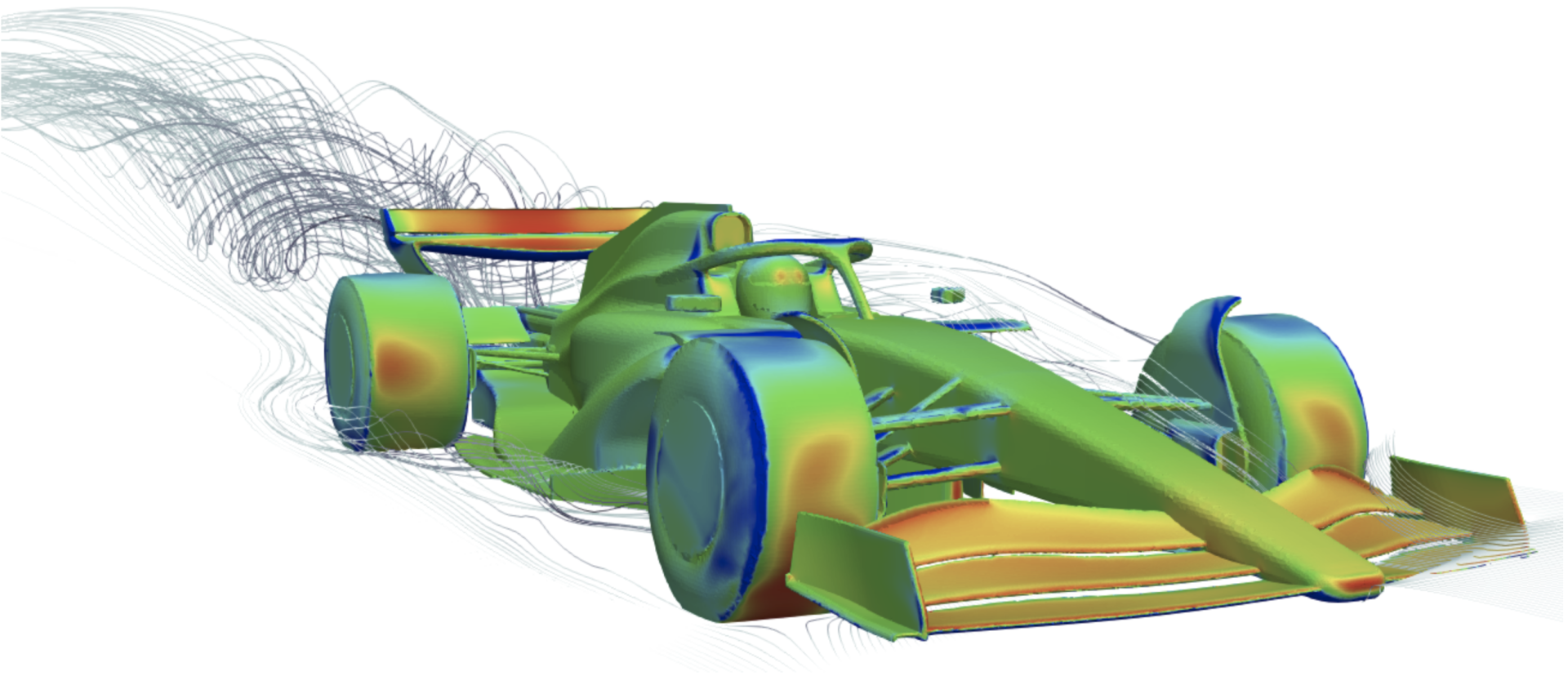
Aerodynamics play an oversized role in F1 today, to the point where the design genius of someone like Adrian Newey can be more critical for a team than the driver’s skill. This is not how it should be. The F1 has tried to limit aerodynamics for years, but they are simply not going far enough. The impact on pursuing cars is still far too great. There are no slipstream duels. Null. Zero. Overtaking is only possible by using the Drag Reduction System (DRS). This is a kind of cheating as it gives the pursuer an advantage on the straight, but at the same time does not require any skill. By drastically limiting aerodynamics and downforce, controlling the car in curves would become more challenging, and following cars would have an easier time overtaking. This shift would place a greater emphasis on driver skill, rather than engineering wizardry.
Reducing Electronic Assistance
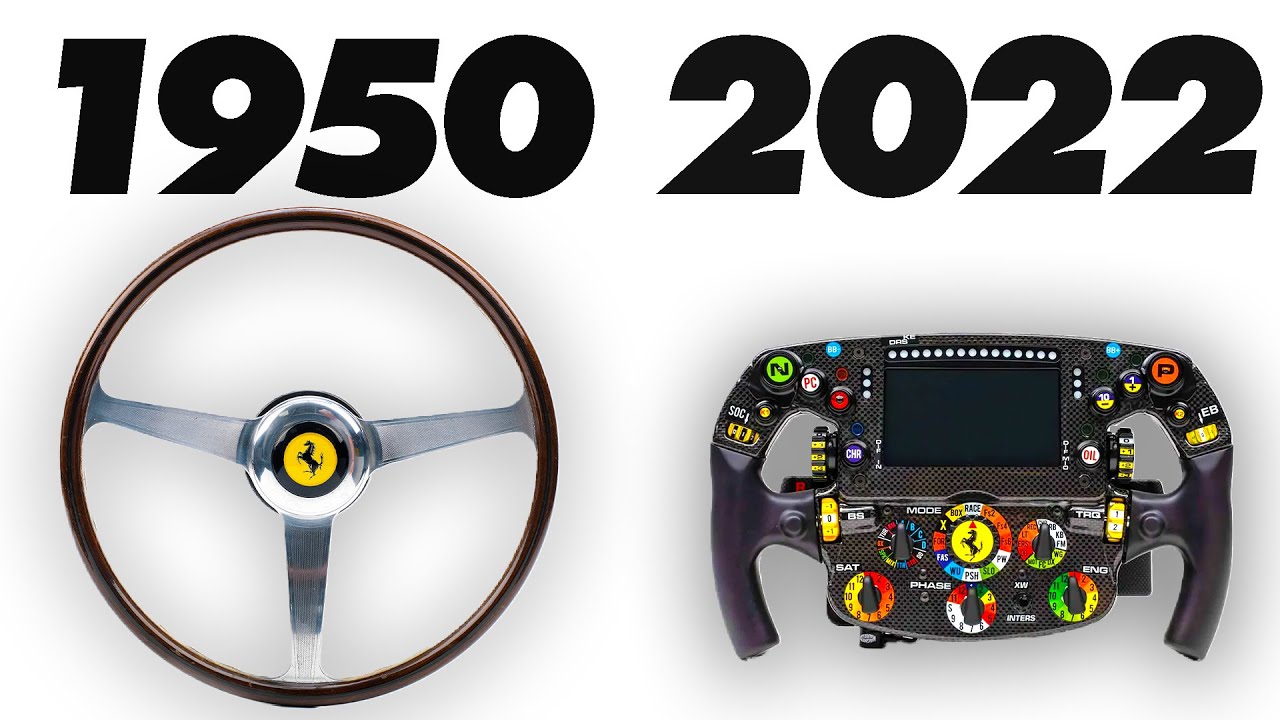
Modern F1 cars are laden with electronic aids that diminish the role of the driver. To make the sport a true test of driver skill, many of these aids should be eliminated. Drivers should be responsible for decisions like gear shifts and brake balance adjustments, bringing back the human element that made past eras of F1 so compelling. For me it seems sometimes that today’s drivers are more like computer operators and engineers rather than controlling a super-fast car under extreme conditions by pure racing skills. Also, drivers are constantly communicating with their race engineers in the pit, receiving advice on changing settings, finding the right racing line, and more. Essentially, they are being coached throughout the entire race. This should also be forbidden, and communication should only be allowed to warn the driver of dangerous situations. We need more Kimi, please! Returning to my initial statement that F1 is like a modern battle of gladiators, it now looks more like a battle of science nerds, including the drivers themselves.
Reintroducing Refueling and Smaller Pit Crews
Pit stops have become a matter of under two seconds, with teams employing large specialized crews (20+ people) to change tires at lightning speed. To add strategic depth and excitement, refueling should be reintroduced, and the pit crew size should be limited to six people. I like the pit stops as implemented in the Indy Car series. Longer pit stops due to a smaller crew plus refueling creates more excitement in terms of race strategy.
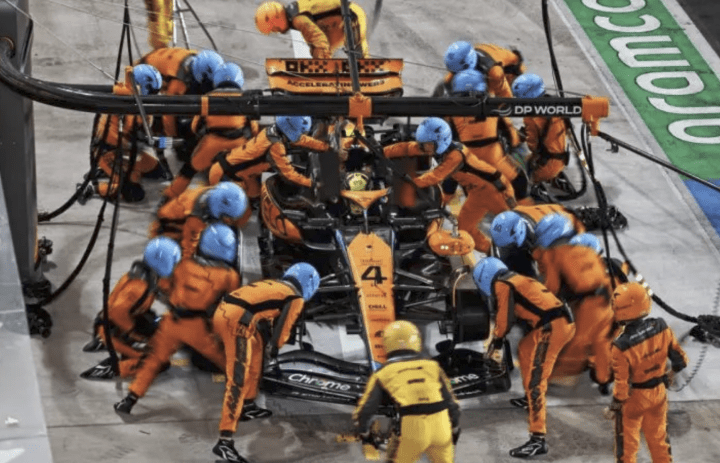
Refueling is also part of the DTM and I find it a good addition to the usual tire change. With reduced overall weight, different fuel quantities are much more relevant and so it is an additional challenge for the teams to decide how much fuel to use in the race.
Bring back the V10!
Finally, the return of the V10 engine would reignite the passion of F1 fans. My personal experience at the F1 Grand Prix in Imola, Italy, brought this into sharp focus. The current V6 hybrid engines are disappointingly quiet. Even the Porsche Supercup and F2 cars were significantly louder. In the past, with the V10 engines, you couldn’t spend a single lap at the track without hearing protection. This time, it was no problem to watch the entire race without earplugs.
However, there was a magical moment before the race that underscored what we’ve lost. As we relaxed in the shade, suddenly, a roar echoed through the park—a sound that gave us goosebumps. Sebastian Vettel was taking Ayrton Senna’s 1993 McLaren MP4/8 for a few laps. The thunderous V8 engine could be heard all around the track, and people jumped up to experience it. That breathtaking noise, the visceral thrill that made everyone stop in their tracks, is what’s missing from today’s F1 cars. And that was just a V8!!!
Now to the V10: The V10 engines were more than just power units; they were the heartbeat of F1’s golden age. Their return would bring back the excitement and raw emotion that have been missing in recent years. It’s that unique feeling, the spine-tingling sound, and the sheer spectacle that F1 desperately needs to recapture.
Conclusion
The new regulations for the 2026 F1 season are a missed opportunity. Instead of making superficial changes to appease a sustainability agenda, F1 should focus on what truly matters: smaller, lighter cars, limited aerodynamics, reduced electronic assistance, and a return to the thrilling sound and power of V10 engines. Only then can F1 recapture the excitement and passion that made it the pinnacle of motorsport.
The push for a green image in F1 is not only unnecessary but also implausible. Let’s face it, F1 is not about being eco-friendly. It’s about being loud, stinky, and outrageously over-the-top. This sport thrives on its ability to break free from the norm and offer something spectacular, a crazy show that fans love.
People come to F1 races to escape their everyday lives and immerse themselves in the electrifying atmosphere of pure racing. They want to see and hear the power, to feel the ground shake under the roaring engines. They crave the smell of burning fuel and the sight of cars pushing the limits of speed and control. It’s a visceral experience that no other sport can match.
F1 should be about pure racing—burning fuel, pushing boundaries, and delivering an archaic thrill that speaks to our primal love for speed and competition. It’s about creating unforgettable moments where the roar of the engines drowns out everything else, and the excitement of the race takes over.
Let’s bring back the raw power and passion that made F1 the pinnacle of motorsport. Let’s embrace the noise, the smell, and the sheer adrenaline that comes with it. This is what fans want. This is what F1 should be: a celebration of speed, skill, and the relentless pursuit of victory.
As always… just my 5 cents.
//Alex
 alexreusch
2 comments