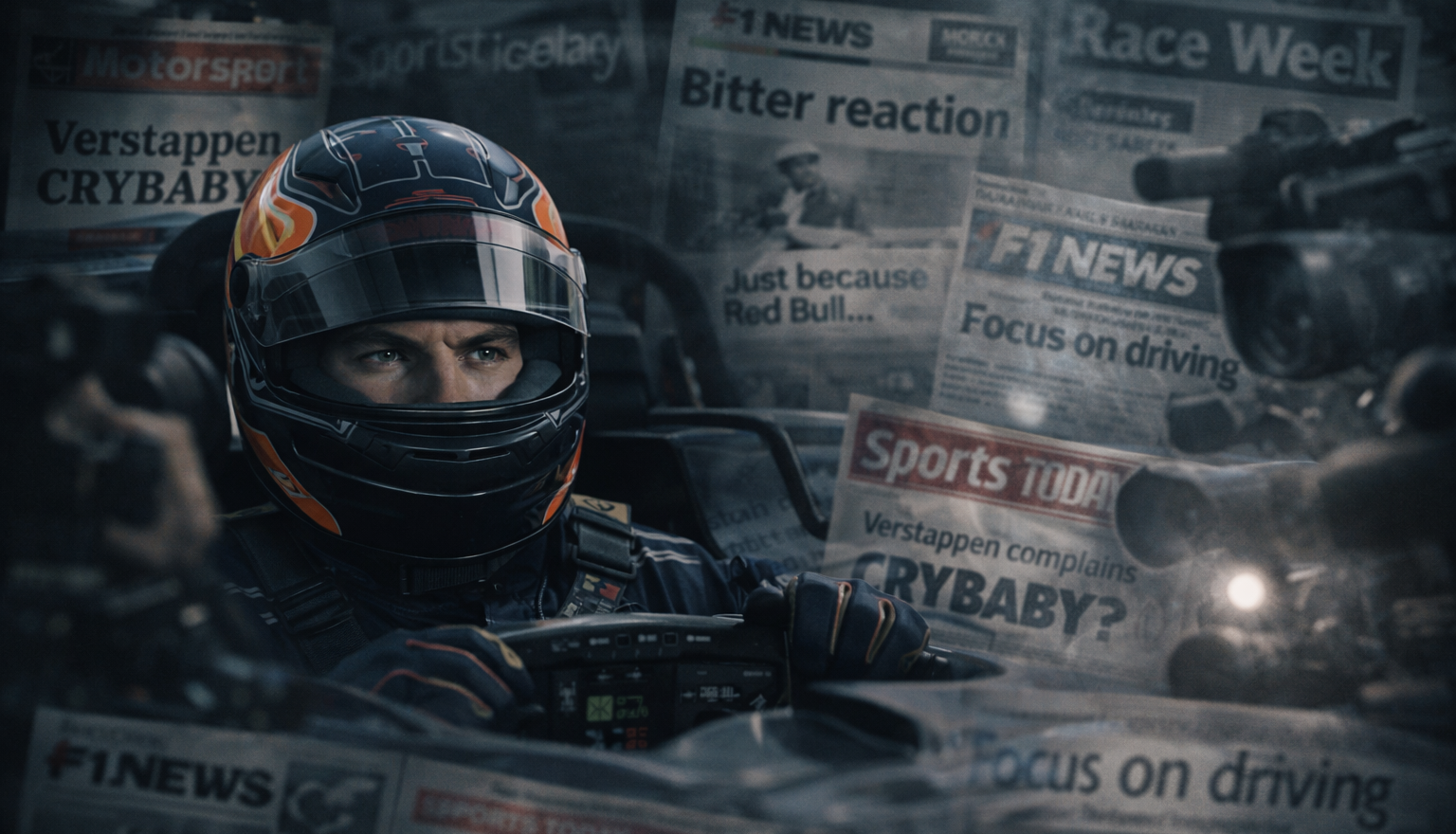
There is something deeply ridiculous about the way parts of the Formula 1 media are now going after Max Verstappen.
Increasingly, some journalists and pundits are pushing the same lazy line. He should stop complaining. He should focus on driving. He should stop acting like a crybaby. And then comes the laziest argument of all: He is only saying these things because Red Bull is no longer comfortably ahead and his car is not as dominant as it used to be. That is not analysis. That is a cheap deflection.
I am not writing this as some blind Max Verstappen worshipper. I am not even naturally part of his fan club. But I do have enormous respect for him, because unlike so many polished, media-trained corporate athletes in modern Formula 1, Verstappen is something far rarer and far more authentic.
MAX IS THE PURE RACER
That is exactly why his criticism matters. When one of the greatest natural drivers of this era says the current format is moving in the wrong direction, people should listen. Instead, much of the reaction has been defensive, dismissive and suspiciously eager to protect the product. Which tells you a lot. Broadcasters have paid fortunes for the rights. Entire editorial ecosystems depend on Formula 1 remaining commercially irresistible. Presenters, pundits, digital formats, post-race shows and social media teams all live from the idea that the product must remain shiny, dramatic and above criticism. If the racing itself starts looking compromised, then the machine around it starts looking vulnerable too.
So when Verstappen attacks the format, he is not just criticizing a technical direction. He is disturbing a business model. That is why some people would rather portray him as bitter than engage with what he is actually saying. And that is where this becomes insulting. Because Verstappen is one of the very few people in the paddock who still seems to care primarily about the thing that should matter most: The racing itself.
Max Verstappen is not just a champion. He is a racing addict.
What makes Verstappen special is not simply that he wins. Plenty of drivers have won. Plenty of drivers have looked brilliant in dominant cars. That alone does not make someone unique. What makes Verstappen different is that Formula 1 is clearly not enough for him.
This is a man who can finish a Grand Prix weekend, do the podium, survive the media circus, and then go home and continue racing because one category is apparently not enough to satisfy him. He races in simulators, he dives into endurance racing, he shows up in GT machinery, he goes after Nürburgring fantasies, and he seems perfectly happy doing all of it simply because he loves the act of racing itself. It is not branding. It is not image cultivation. It is not some carefully designed extension of his profile. He does it because he is wired that way. That is rare.
In terms of raw obsession with driving, Verstappen feels like a throwback to another era. Not because he is a carbon copy of Ayrton Senna, but because the same central instinct is visible: Racing is not a job wrapped in fame, sponsors and camera angles. Racing is the point. For people like that, the cockpit is not a workplace. It is the natural habitat.
That is why his words carry weight. When somebody with that kind of instinct tells you the current Formula 1 direction is wrong, it is not whining. It is testimony from someone who genuinely understands what racing should feel like.
F1 Today: Built for Managers, Not Racers
This is my first major problem with the current Formula 1, and in many ways it is the central one. The sport no longer consistently rewards the pure act of taking a racing car and extracting everything from it. Instead, drivers are increasingly forced to manage complex systems. They are managing energy deployment, battery recovery, tire degradation, brake temperatures, engine modes, and a whole catalogue of invisible engineering constraints that often have very little to do with pure racing instinct.
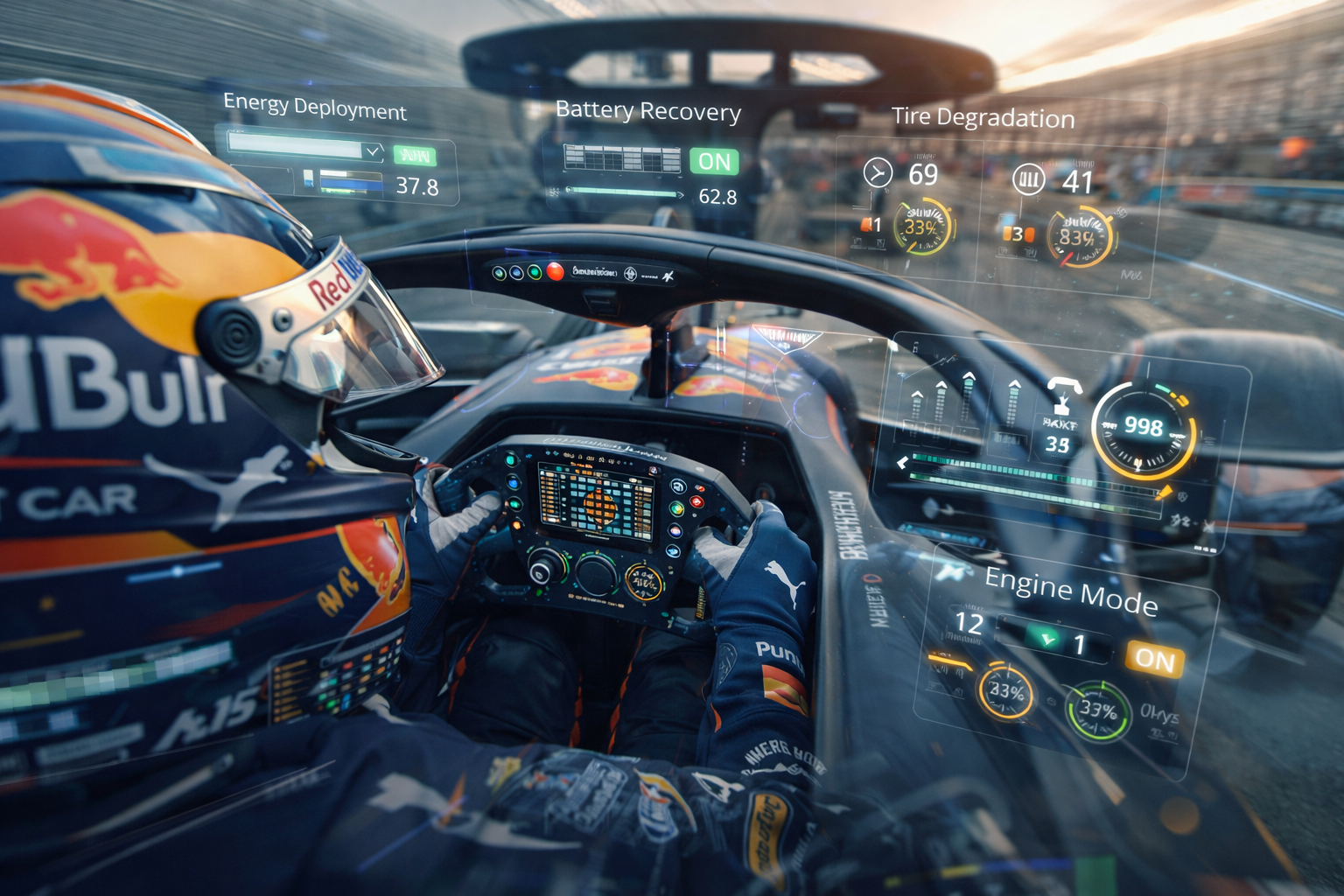
That is not what people want to watch. A racing fan wants to see the best drivers in the world attack a corner at the absolute edge of possibility. They want to see brilliance under braking, confidence on turn-in, commitment in fast sections, and that tiny but decisive difference in technique that separates the truly exceptional from the merely excellent. That is where great drivers reveal themselves.
But modern Formula 1 too often interrupts exactly that. Drivers are lifting absurdly early before corners because of battery management. They are coasting into sections where instinct tells them to attack. They are not always driving the car in the most committed or skillful way possible because the architecture of the machine no longer allows that to be the priority. And that is a terrible trade.
On the straights, anyone can look competent. The real artistry lives in the braking zones, in the transitions, in the loaded corners, in the difficult sequences where the driver’s feel, courage and precision make the difference. If the regulations increasingly flatten those moments by turning them into energy-management exercises, then the sport is not enhancing the role of the driver. It is reducing it.
Even qualifying now seems to require cosmetic touch-ups just to resemble real racing. That alone tells you plenty about the format. If the spectacle needs this much tidying up just to appear less artificial, then something is wrong at a much deeper level. These little corrections may briefly improve the optics, but they do nothing to fix the philosophy underneath, and they certainly do not make the races themselves any better.
That is why I understand exactly what Verstappen means. The current Formula 1 increasingly feels like an anti-racer formula. Not because the drivers are not brilliant. They are. But because the philosophy of the category keeps moving away from the pure spectacle of elite drivers extracting the absolute maximum from wild machines, and toward a form of high-speed technical administration. Impressive on paper, perhaps. Less impressive in the soul.
Hybrid made F1 cars worse
My second major issue is the hybrid concept that Formula 1 keeps dragging around as if it were some sacred badge of relevance. Hybrid is not the future in any clean or convincing sense (also see my article here). It is a compromise. If the future is fully electric, then fine, that category already exists. It is called Formula E, and those who want to watch that vision play out can do exactly that. But Formula 1 does not need to keep pretending that it must carry the burden of demonstrating responsible road relevance through a bloated technical compromise that makes the racing worse. Because that is what has happened.
The hybrid era has contributed to cars that are too large, too heavy and too cumbersome. They take up too much space, they are less agile, they are harder to throw around, and they make overtaking more difficult than it should be. These are not slick racing cars anymore. They are tanks. And as I wrote earlier in It’s Not Just the Monaco Circuit, Dummy. It’s the Tanks We Call F1 Cars, that is not a side issue. It is one of the central reasons why the racing keeps getting worse.
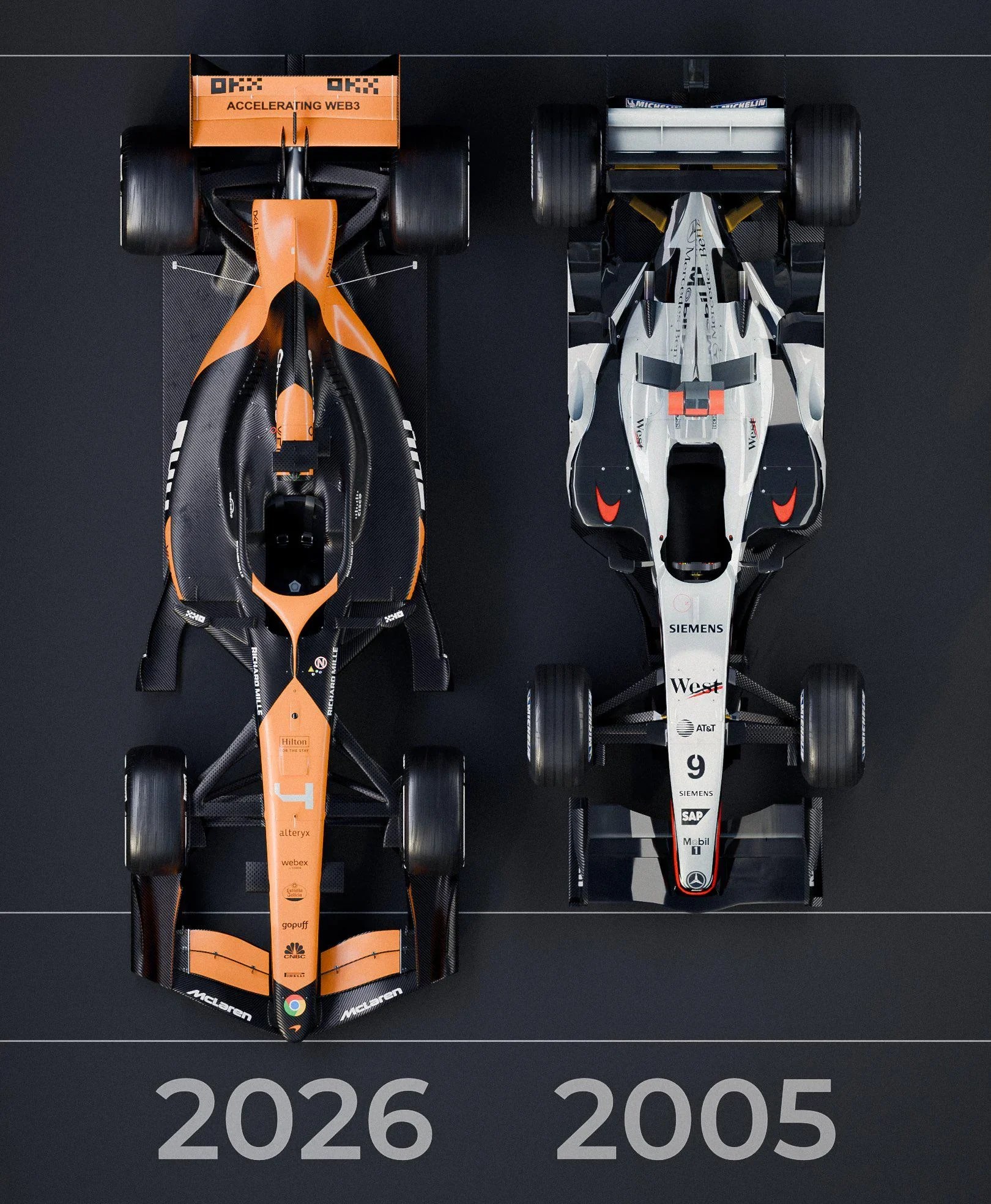
That matters because Formula 1 is not compelling when it becomes too rational. The appeal of the category was never that it should resemble a mobility conference with front wings. Fans do not watch Formula 1 because they want a morally approved demonstration of sustainability strategy at 320 kilometres per hour. They watch because they want spectacle, violence, noise, danger, difficulty, audacity and genius. That is the appeal. It always was.
And the whole argument that Formula 1 must act as some noble technological role model for the road car industry feels increasingly hollow anyway. That train left the station a long time ago. The automotive world no longer waits breathlessly for Formula 1 to reveal the future of mobility. In many respects, the road industry has long moved on from the fantasy that Grand Prix racing still sits at the centre of that story. So why keep sacrificing the spectacle for a mission that is no longer even convincing?
The Moral Lecture Nobody asked for
There is a broader cultural issue underneath all of this. Formula 1 seems desperate to justify itself. It wants to be seen as responsible, sustainable, efficient, relevant, educational and aligned with the future. How exhausting!
This is supposed to be the most spectacular racing series on earth. It does not need to apologise for excess. Excess is the point. The attraction of Formula 1 was never that it mirrored daily life. The attraction was that it escaped daily life. And daily life, frankly, already offers more than enough limitation. On public roads, we are slowed down, monitored, regulated, pushed into traffic, trapped in speed restrictions and lectured endlessly about what is sensible and permitted. Driving in normal life has become a managed, joyless utility exercise. That is precisely why it matters to have a category that is gloriously unreasonable. Once a week, people want to see something outrageous. They want to see the best drivers in the world wrestling machines that are loud, difficult, slightly insane and clearly not designed by a committee trying to pass an ethics review. That is the fantasy. That is why people care.
Bring back the Driver
This is where the memory of Ayrton Senna matters. When you think of those legendary laps, especially Monaco in the McLaren, what gives you goosebumps is not some optimised energy map. It is the sight of a driver barely seeming to have both hands on the wheel for more than a moment, because he was constantly reaching for the gear lever, constantly shifting, constantly wrestling that violent machine through the lap. The car was vibrating, bucking, brutal, full of noise and force. It looked alive! It looked dangerous. It looked like it demanded something extraordinary from the man driving it.
That was the thrill. A human being fighting a machine, not managing a software package. That is what people want to see again. So yes, Formula 1 needs to take two steps back. Smaller, lighter, more agile cars. Less technical clutter. More nervousness. More responsiveness. More machine. More driver.
And the communication should go backwards too. Why are drivers in constant contact with the pit wall? Because the cars have become too dependent on management. Tire management, engine management, battery management, mode management, recovery management, strategy coaching, corner-by-corner reminders. It is all very sophisticated, and all very deadening. Cut it back brutally. Communication from the pit wall to the driver should be limited to genuinely critical safety situations. If there is an immediate accident ahead and you need to stop someone ploughing into a dangerous scene, fine. That is what radio should be for. Beyond that, let the driver drive. Use pit boards. Put information on the straight. Let him read the race, judge the conditions, adapt for himself and live with the consequences.
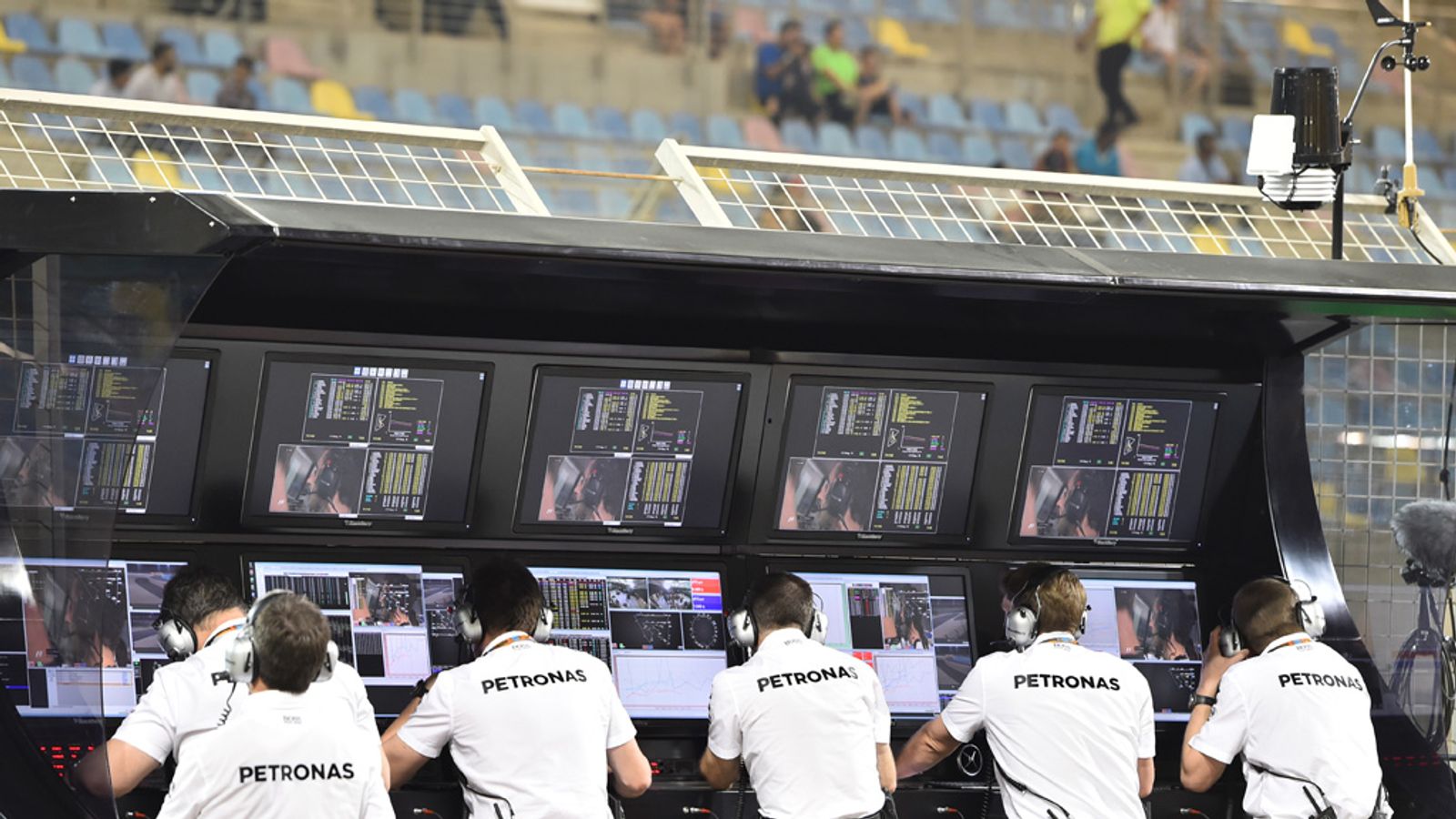
That would immediately restore something important: Responsibility. It would also put the driver back at the centre, which is exactly where he belongs in a racing series that still wants to call itself the pinnacle of motorsport.
The Engine: Loud, Raw and Unapologetic
As for the engine formula, give us a screaming V10 combustion engine. Naturally aspirated would be magnificent. If someone insists on a turbo, fine, I can live with that. The exact theology is less important than the spirit of the thing.
But: Make it loud. Make it sharp. Make it aggressive. Make it smell like fuel, heat and bad decisions. Make it rev into madness. Make it feel alive. That is what Formula 1 should be. Once a week, that is exactly what the sport should provide.
Max Verstappen, the racer, is the warning sign
One uncomfortable truth remains. If even Max Verstappen, the purest racer in modern Formula 1, starts sounding as if he no longer really cares for what this category has become, then the alarm should be deafening. This is a man who would race anything with wheels, anywhere, at any time, simply because racing is in his bloodstream. If someone like that begins to feel emotionally distant from Formula 1 itself, then something has gone badly wrong. That is the real problem.
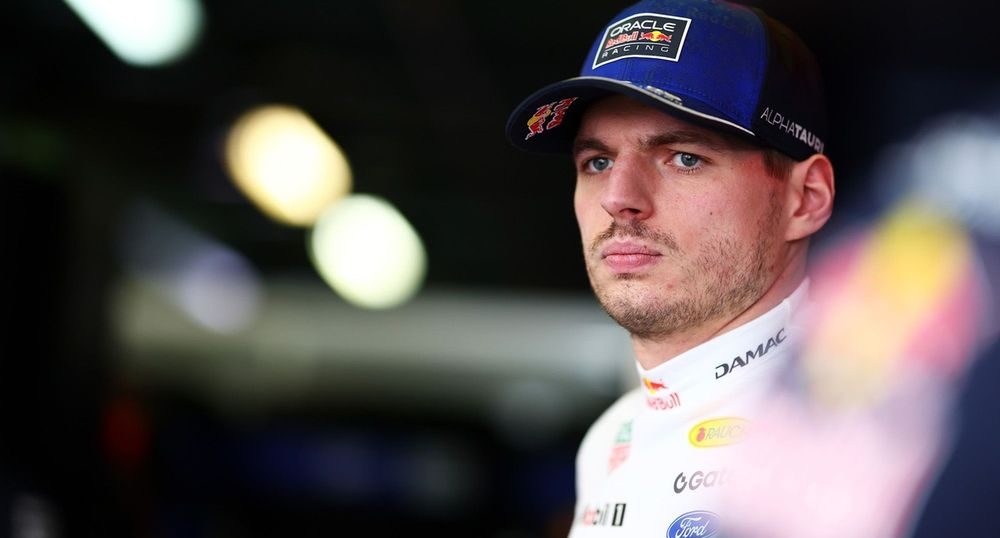
Instead of attacking the greatest racer of our time, Formula 1 media should perhaps start asking itself a more uncomfortable question: What if he is right? Real fans saw through the lie a long time ago. They know the difference between genuine racing and a bloated technical compromise that wants to be admired rather than enjoyed. That is why it would be refreshing, and frankly overdue, if more of Formula 1’s media stopped protecting the show and started doing their job properly: Speaking honestly, critically and in the true interest of the sport.
Formula 1 does not need another cosmetic fix, another clever justification or another sermon about relevance. It needs to find its way back to racing. Back to cars that are lighter, louder and less compromised. Back to a format that rewards bravery and instinct more than harvesting and preservation. Back to a sport in which the driver is not a caretaker of systems, but the central figure in the drama.
That would not just be better for Max Verstappen. It would be better for Formula 1 itself.
As always. Just my five cents.
//Alex
 alexreusch